.svg&w=384&q=75 "Pitchgist logo")
StubHub's World Cup Ticket Cancellations Spark Legal Battles
Mark Gallagher did everything right. Bought early. Paid big. Cleared every hurdle in FIFA’s digital maze.
And then, hours before kick-off in Vancouver, his World Cup dream vanished from his phone.
Now he’s taking StubHub to court.
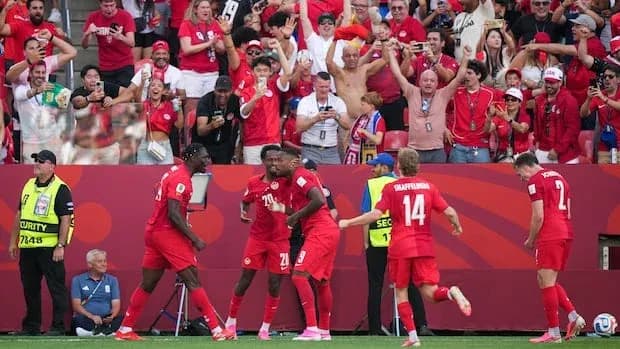
The Vancouver resident has filed a proposed class action on behalf of Canadian ticket buyers after the resale giant cancelled his $11,407 pair of prime seats for Canada vs. Qatar on June 18 — tickets he’d secured back in February and been repeatedly assured would arrive in his FIFA account.
They never did.
He got his money back. He did not get the night back. That, he says, is the point — and the damage.
Gallagher’s lawsuit, filed in Vancouver, accuses StubHub of a “conspiracy of deception,” alleging the company advertised and sold tickets “which they knew would not or could not be honoured.” The claim hasn’t yet been tested in court, but it makes him the first in Canada to launch a class action over StubHub’s World Cup cancellations, following similar legal fights in New York and California.
StubHub, which trades heavily on its “FanProtect Guarantee,” insists its goal is simple: get every fan into every event, and if something goes wrong, find replacement tickets. “We never want to give a refund and no fan wants to receive one — we want you to get to your event,” the company said in a statement.
The stories piling up behind that slogan tell a very different tale.
The trip is on you — even when the tickets vanish
Ask Kelly Mongillo what StubHub protection feels like.
She drove 10 hours from Barrie, Ont., to New Jersey with her elderly father for a June 13 World Cup match. She spent $1,800 on tickets and about $2,500 more on hotels, gas and food. The kind of trip you plan around, save for, talk about for months.
StubHub cancelled on game day. As they waited outside the stadium gates.
Mongillo says the company has been dismissive and that its FanProtect Guarantee offers little more than a mirage. It promises tickets or refunds, but not the “significant financial losses and disappointment” that come when a once-in-a-lifetime outing is blown up at the turnstiles.
She relied on assurances that replacement tickets would be provided if the originals fell through. She says StubHub has refused to cover any of her travel costs.
There’s a reason for that. The company’s “Global User Agreement” includes a waiver aimed at blocking Canadian and U.S. customers from suing for anything beyond the ticket price — no travel, no hotels, no legal fees tied to cancellations.
When Mongillo went public in June, StubHub stepped in with a partial fix: a refund offer plus replacement tickets to a different World Cup game in Toronto. Her father couldn’t attend, but she took the tickets.
The cash? She says StubHub has since backed away from the refund.
Lawyer up, get paid faster
For some fans, the refund battle drags on for weeks.
Jennifer Hale of Toronto paid nearly $3,000 for tickets to a Team Canada match on June 12. StubHub cancelled. She immediately asked for her money back.
More than a month later, she was still waiting.
Hale says she has spent hours on the phone, repeatedly told to wait another 72 hours. Then another. One agent told her it could take up to 45 days. No refund. No follow-up.
Others have decided to fight fire with legal fire.
After a month of similar delays and explanations, Georgetown, Ont., resident Denis Radetic hired a U.S. lawyer who has been contacted by hundreds of angry StubHub users. In a sharply worded letter, Radetic demanded both a refund and $3,000 US in legal fees, accusing the company of “potential fraud … negligent misrepresentation, breach of contract.”
StubHub suddenly moved.
On Sunday, the company contacted Radetic and refunded his credit card.
He suspects that’s no coincidence. Many fans, he says, are reluctant to hire a lawyer. StubHub, in his view, is banking on exactly that — testing who will push and who will simply give up.
The final twist: after refunding him, StubHub sent a survey asking how he enjoyed the game he never saw.
The message is clear. Those with legal muscle see action. Those without wait.
The arbitration maze
Officially, StubHub tells dissatisfied customers to take their fight to arbitration in the United States, filing “notices of dispute” through a formal process.
In practice, that path can feel like quicksand.
Menlo Park lawyer Brad Clements, who represents Radetic and hundreds of other StubHub buyers and sellers in both Canada and the U.S., says the system is built to wear people down, not help them.
On paper, he says, the policy reads like consumer care. In reality, he calls it a “total farce,” designed to intimidate, delay and deter anyone thinking of pressing a claim.
One example: according to Clements, StubHub has changed the certified-mail address for dispute notices seven times in 14 months. Send your paperwork to the wrong one and you’re back to square one.
On StubHub.ca, the Canadian site, there is no clear information on where or how to file a formal dispute at all.
StubHub declined to explain the address changes or the lack of guidance on its Canadian platform.
Clements believes the strategy is deliberate. “They don't want people bringing cases,” he says. The harder the process, the fewer fans will see — or talk about — successful claims that include refunds, interest and punitive damages.
When tickets are cancelled, StubHub can still win
Most fans assume that if a ticket order collapses, everyone loses.
Not quite.
Randy Nichols, a New York-based band manager who has studied StubHub’s model, says the company can profit even on failed transactions. When StubHub refunds a buyer, it doesn’t simply absorb the hit. It charges the seller the full ticket price as a penalty, even though StubHub never owned the ticket in the first place.
On paper, that’s meant to discourage bogus or fraudulent listings. In practice, Nichols says, it means “StubHub makes money on every order that they don’t fulfill.”
StubHub’s seller policies back up the basic structure. If a seller “drops” a sale, the company warns it will charge the greater of 100 per cent of the ticket price or the full amount StubHub spends to fix the problem.
StubHub declined to comment on how often that happens or how much it earns from such penalties.
For fans left locked out of stadiums, it’s a jarring reality: the platform they trusted can emerge from a collapsed deal in better financial shape than before.
StubHub holds the cash — and keeps the interest
Then there’s the money that never makes it to the turnstiles at all.
Spokane, Wash., resident Jeff Ripley bought World Cup tickets in December. On game day, StubHub cancelled. He’s now in arbitration, arguing the company owes him more than face value.
His case turns on time.
Ripley says StubHub sat on his money for months, earning interest while he waited for tickets that never materialized. He wonders how many thousands of fans are in the same position.
StubHub’s own numbers show the scale. In its November 2025 earnings report, the company reported $41 million in interest income over the previous year. The platform facilitated $9.2 billion in ticket resales globally over that period.
StubHub declined to answer questions about the interest it earns on fans’ money.
Ripley likens the operation to a bank taking in deposits — only without the regulatory scrutiny or obligations. Customers pay upfront, StubHub holds the funds, earns interest, and in too many cases, he argues, fails to deliver the product.
“There’s something wrong,” he says. “They almost work like a financial institution in that I deposited money in a savings or checking account and they got interest.”
His demand is simple: accountability for companies that take money, profit from it, and then cancel the experience it was meant to buy.
For Gallagher in Vancouver, Mongillo on the New Jersey turnpike, Hale in Toronto, Radetic with his lawyer’s letter, and Ripley in Spokane, the pattern feels familiar: big promises, last-minute cancellations, slow refunds, and a system that seems designed to test their patience.
The World Cup will move on. The matches are gone. The question now is whether the courts — and regulators — will let the business model stay exactly where it is.