.svg&w=384&q=75 "Pitchgist logo")
Senegal’s World Cup Challenge: Sadio Mané’s Final Journey
Senegal arrive at the 2026 World Cup with something rare in international football: a clear identity and a core that has already tasted glory. AFCON champions, battle-hardened, and built on a defence that conceded just two goals on their way to the continental title.
This time, the stakes are higher. The opposition sharper. And the margin for error, slimmer.
Defence: A Wall With Hairline Cracks
The Lions of Teranga still lean heavily on their backline. At the heart of it, as ever, stands Kalidou Koulibaly. The captain remains the defensive reference point, the organiser, the enforcer. But at 34, the miles are starting to show.
He missed the AFCON final through a combination of suspension and injury and saw red in the group stages against Benin. Is it just misfortune, or the first real sign that the leader of this defence is no longer untouchable over a long, intense tournament? Senegal will find out quickly against some of the hottest strikers in the group phase.
Around him, though, the structure looks strong. Ligue 1 provides much of the backbone. Moussa Niakhaté of Lyon is primed to partner Koulibaly in central defence, a left-sided balance and physical presence that suits Senegal’s compact shape. On the flanks, Krepin Diatta of Monaco and West Ham United’s El Hadji Malick Diouf are expected to offer energy and width from full-back, combining defensive discipline with the ability to push high when the game demands it.
Chelsea’s Mamadou Sarr adds Premier League pedigree to the pool, while Nice’s Antoine Mendy and Maccabi Haifa’s Abdoulaye Seck provide depth and flexibility. The competition is real. So is the pressure.
Rayo Vallecano’s Nobel Mendy is the latest to knock on the door. His first international call-up for the March friendlies against Peru and Gambia underlined his rise. Breaking into this group is no easy task, but he has put himself firmly in the conversation for a World Cup seat.
Behind them, there is no debate. Edouard Mendy, now 34 and a two-time AFCON winner, will stand in goal. Experience, calm, and a big-game temperament make him one of the first names on the teamsheet.
Midfield: Premier League Steel, European Poise
If the defence gives Senegal structure, the midfield gives them bite. And this time, it comes with fresh legs.
Pape Matar Sarr and Habib Diarra are both back from injury in time for the tournament after missing the AFCON triumph. Their return changes the dynamic. Sarr, from Tottenham, offers range and intelligence, while Diarra, now at Sunderland, brings drive and aggression.
They join a core already rich in top-flight experience. Idrissa Gueye remains a key figure, his Everton pedigree and relentless work out of possession giving Senegal control in the middle third. He knows how to slow a game down, speed it up, or simply shut it off.
Everton’s Iliman Ndiaye adds something different. He is not just a midfielder; he is a line-breaker, a creator, a forward-thinking presence who has been one of the bright sparks in the Premier League this season. His form has already drawn speculation about a potential move to Manchester United. A strong World Cup, and those rumours will only grow louder.
La Liga quality also runs through this midfield. Villarreal’s Pape Gueye and Rayo Vallecano’s Pathe Ciss bring composure and experience from Spain, giving coach Thiaw options to mix physicality with technical security. Monaco’s Lamine Camara adds further depth and youth, another sign that Senegal are not simply leaning on the old guard.
The likely shape is a functional three-man unit: Diarra, Idrissa Gueye, and Pape Gueye. It is a blend designed less for flair and more for control, allowing the real inspiration to come from higher up the pitch.
Attack: Mané’s Last Mission
Up front, Senegal do not lack firepower. They possess something even more valuable: a talisman on a farewell tour.
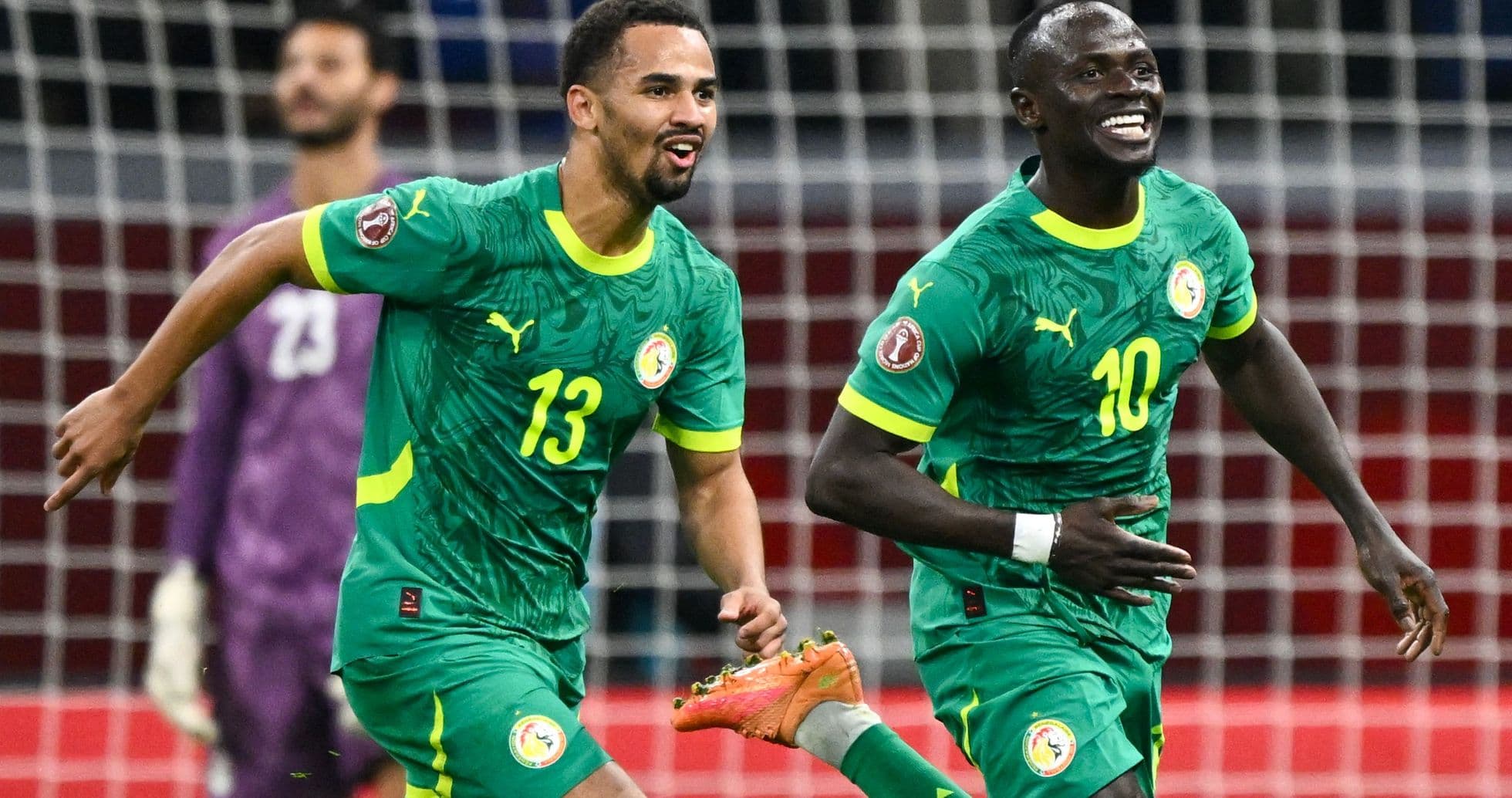
Sadio Mané, now at Al-Nassr, remains the undisputed star of this team. The country’s all-time leading scorer with 51 goals, a Premier League and Champions League winner with Liverpool, and the driving force behind their AFCON success. He has already confirmed that this World Cup will be his last act in a Senegal shirt.
He wants to leave with something more than memories.
Mané will operate from his familiar left-sided role, cutting inside, dragging defenders with him, and setting the emotional tempo for the side. Every touch, every sprint, every finish will carry the weight of a nation that knows it is watching the closing chapter of a golden international career.
Through the middle, Bayern Munich’s Nicolas Jackson is expected to start. His loan move from Chelsea has not been straightforward. Minutes have been hard to come by behind stars like Harry Kane and Luis Díaz, and he heads into the tournament with a point to prove. For Senegal, though, he offers pace, movement, and a ruthless streak when chances fall his way. In the green of his country, he looks a different player: more trusted, more central, more dangerous.
On the right, Iliman Ndiaye is likely to be pushed higher into the front three, giving Senegal a fluid, interchanging attack. He can drop between the lines, drift inside, or stretch the pitch wide. For opposing defences, that unpredictability is a problem.
The options off the bench only deepen the threat. PSG’s Ibrahim Mbaye brings youthful spark and direct running, ideal for the final half-hour of tight games. Cherif Ndiaye (Samsunspor), Boulaye Dia (Lazio), and Habib Diallo (Metz) all carry genuine goal threat and different profiles, from penalty-box poacher to hard-running forward.
Mamadou Diakhon of Club Brugge, fresh from his first call-up in March, is a wildcard. Assane Diao at Como offers another angle in wide areas. And then there is Bamba Dieng. The Lorient striker has forced his way back into the fold with strong Ligue 1 performances, a surprise return that gives Thiaw one more weapon if he needs to change the rhythm of a game.
The XI Taking Shape
For all the depth, the core of Senegal’s likely starting side already feels settled. In a 4-3-3, the structure almost picks itself:
- Edouard Mendy in goal.
- A back four of Krepin Diatta, Kalidou Koulibaly, Moussa Niakhaté, and El Hadji Malick Diouf.
- A midfield trio of Habib Diarra, Idrissa Gueye, and Pape Gueye.
- A front line of Iliman Ndiaye on the right, Nicolas Jackson through the middle, Sadio Mané from the left.
It is a team built on balance: experience and youth, steel and flair, proven winners and rising stars.
The AFCON title proved Senegal can climb the mountain in Africa. The World Cup asks a different question. With Mané heading for the exit and Koulibaly edging towards the twilight, is this the moment the Lions of Teranga turn a golden era into something truly historic?