.svg&w=384&q=75 "Pitchgist logo")
Scotland's World Cup Campaign: A Journey of Frustration and Hope
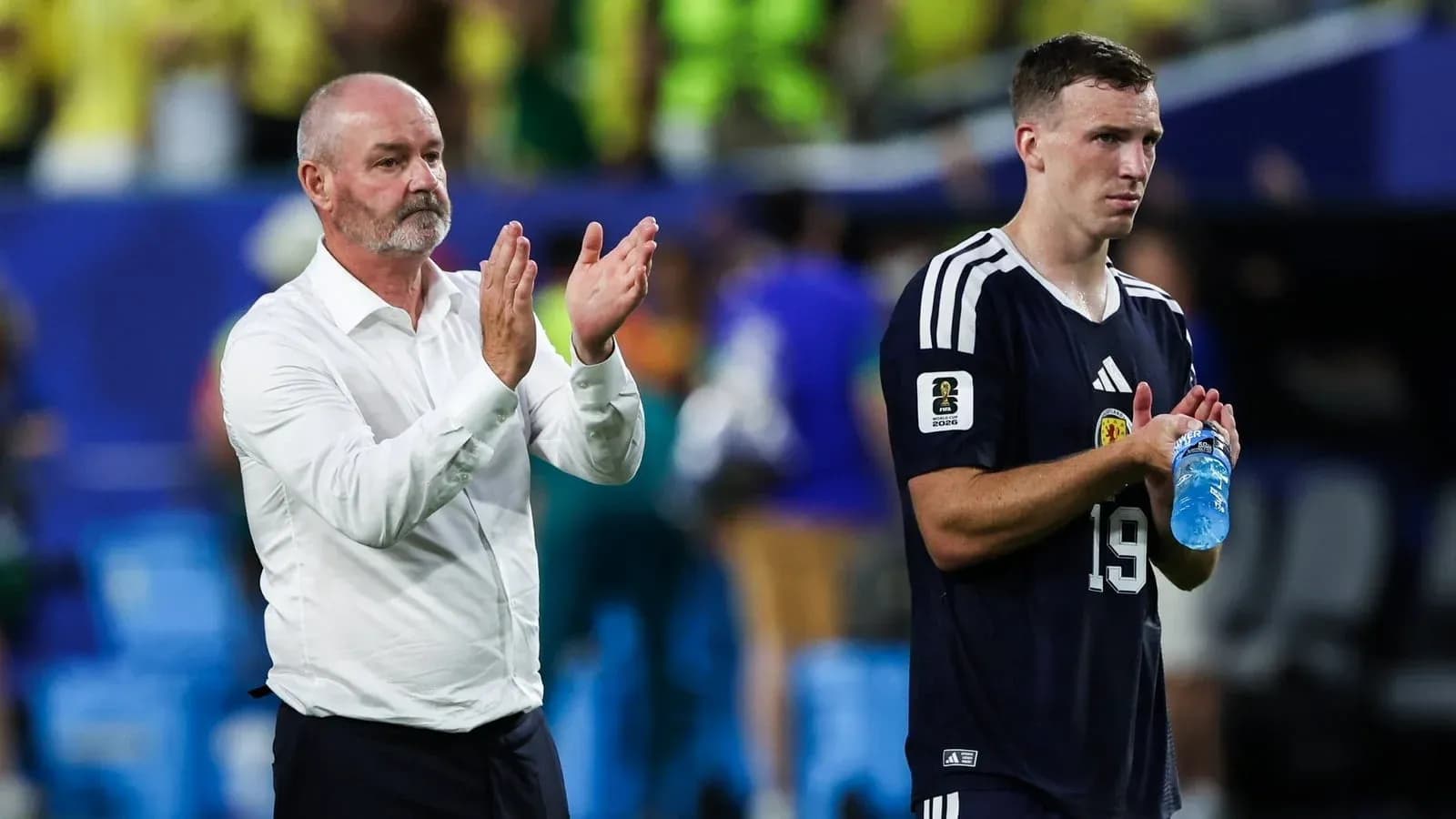
Lewis Ferguson walked off the pitch in Miami with a familiar ache in his stomach and a blunt verdict on Scotland’s World Cup campaign so far.
“We just let ourselves down a bit.”
No dressing it up. No soft landing. A 3-0 defeat to Brazil has left Steve Clarke’s side clinging to the tournament by their fingertips, three points on the board, a minus-three goal difference and a place in the queue of third-placed teams hoping someone else slips.
From bright start to anxious wait
It all began with promise. A tight, disciplined 1-0 win over Haiti gave Scotland the platform they wanted. Narrow margins again against Morocco, but this time in the wrong direction, a 1-0 defeat that left everything riding on Brazil.
The gulf showed in Miami.
Three goals conceded, none scored, and the kind of damage to goal difference that can quietly kill a campaign. As half of the 12 groups completed their fixtures, Scotland sat as the eighth-best third-placed side, technically in position but with the worst record of the chasing pack. They now need a run of favourable results elsewhere just to sneak into the knockouts.
“It’s going to be nervy watching some of the games and looking out for the results, and that’s not what we want, that’s not the position we want to be in,” Ferguson admitted after returning to the team’s base in Charlotte, North Carolina. “We wanted to do it on our part and get the points necessary.”
They didn’t. Now it’s a waiting game.
Ferguson shines amid frustration
If there has been a consistent positive for Clarke, it is Ferguson. The Bologna midfielder has been Scotland’s standout performer across the three group matches, busy and brave in possession, refusing to hide even when the pressure has tightened.
None of that dulled his honesty.
Hurt, anger, frustration – he listed them all. Not as clichés, but as the raw mix that sits in a dressing room after a night like Miami.
“We wanted to go and give ourselves a chance to get through, we’ve done that by getting the three points, but I think the last two games we probably let ourselves down a little bit,” he said. They had belief, real belief, that they could bloody a few noses, even against “top-level sides” like Brazil and Morocco.
Instead, they “just came out short”.
The 1-0 win over Haiti might yet prove crucial. Three points can be enough in this format. But Ferguson knows the numbers: “Just the feeling right now is that you know the goal difference probably doesn’t stand us in good stead.”
Senior voices, fragile mood
This is the part of a tournament few talk about when the draw is made – the dead time between games when your fate sits in someone else’s hands.
Scotland will spend it in Charlotte, training, recovering, and refreshing live scores on their phones like everyone else. Ferguson knows how quickly the mood can sag in that limbo and how important the older heads now become.
“This is the time for the more experienced lads to get around everybody,” he said. “We’ve got those kind of guys within the squad that can do that and can lift the spirits. We’ve got a couple of days now, and we’ll need to try and build that positivity back up.”
The task is as much psychological as tactical. How do you prepare for a knockout tie that might never come? How do you demand higher standards while the table still shows you technically alive?
No hiding from what must change
Ferguson didn’t pretend Scotland have been good enough. Not across a full match. Not yet.
“I think we’ve showed in spells that we can be a really good team,” he said, “but we’ve never quite just had that proper 90-minute performance, which we’re going to need if we do get through the knockout stages.”
That is the brutal reality. In the groups, you can survive a poor half, a bad 20 minutes, a lapse in concentration. In the knockouts, one mistake can end a World Cup.
“There are no second chances there,” Ferguson added. “You need to be on it for the full 90 minutes, and any sort of slip of any mistake can cost you, especially at this level.”
He didn’t sugarcoat the scale of the work ahead. “We need to improve. We know we need to improve in a lot of aspects. We’ll try and put those things right over the next few days, and if we do get the chance to get into the next round, then we need to be better if we’re going to progress again.”
For now, Scotland wait. Not out, not safe, somewhere in between – a team that has shown flashes of what it wants to be, and one stark question hanging over the next few days:
If the door to the last 16 opens, will they finally deliver that full 90 minutes they keep talking about?