.svg&w=384&q=75 "Pitchgist logo")
Bafana Bafana vs Canada: A Historic Knockout Clash
Bafana Bafana and Canada step into the unknown on Sunday in Los Angeles, two nations with long World Cup memories but no knockout scars. One of them will leave Inglewood having written a new chapter in their history. The other will wonder how a rare chance slipped away.
Both have been here before, but only halfway. South Africa graced the World Cup in 1998, 2002 and as hosts in 2010. Canada turned up in 1986 and again in 2022. Every time, the journey ended at the group stage. This time, at last, someone goes further.
South Africa’s slow burn
South Africa arrived at this tournament looking like they were about to repeat old patterns. A 2-0 defeat to co-hosts Mexico in the opening game felt painfully familiar: promise, patches of good play, no points.
When they then fell behind again to Czechia, the script seemed written. Group-stage exit, brave words, early flight home.
Then the mood shifted.
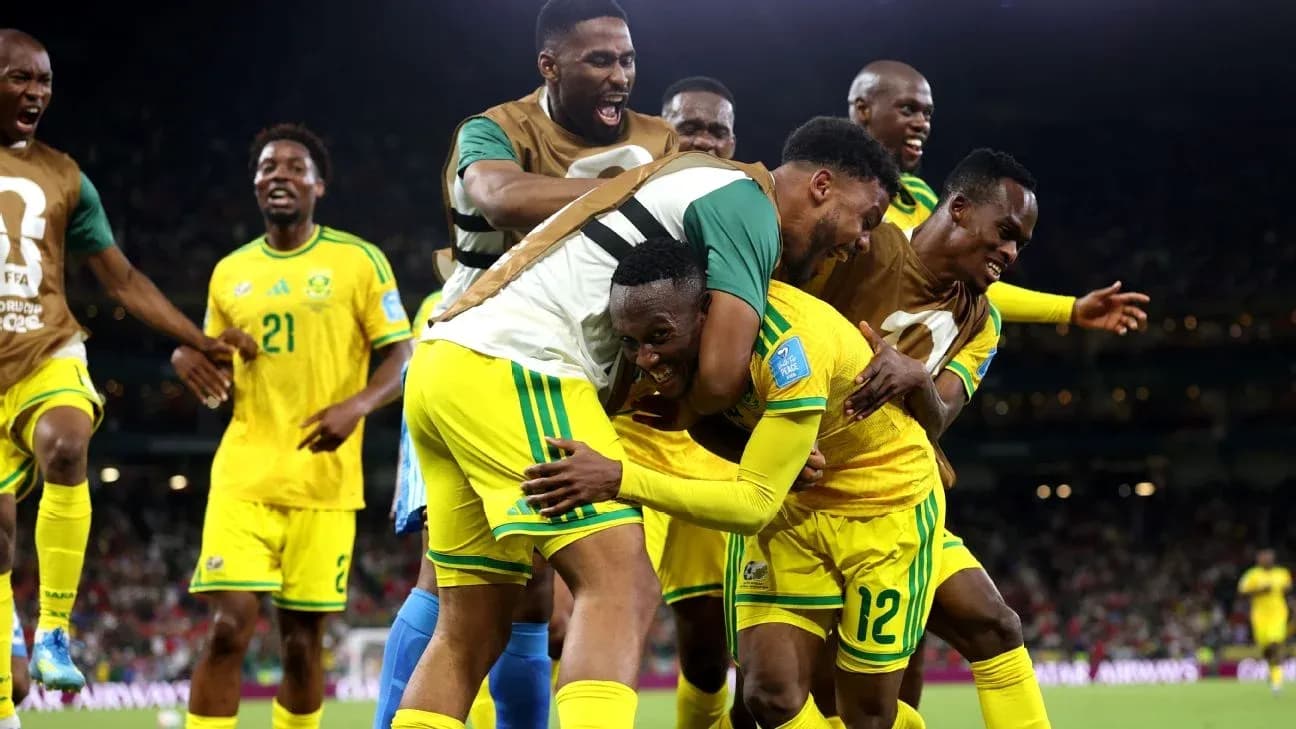
Teboho Mokoena dragged Bafana Bafana back into the tournament with an 83rd-minute equaliser against Czechia, the kind of goal that changes not just a game but a belief system. From there, South Africa grew teeth.
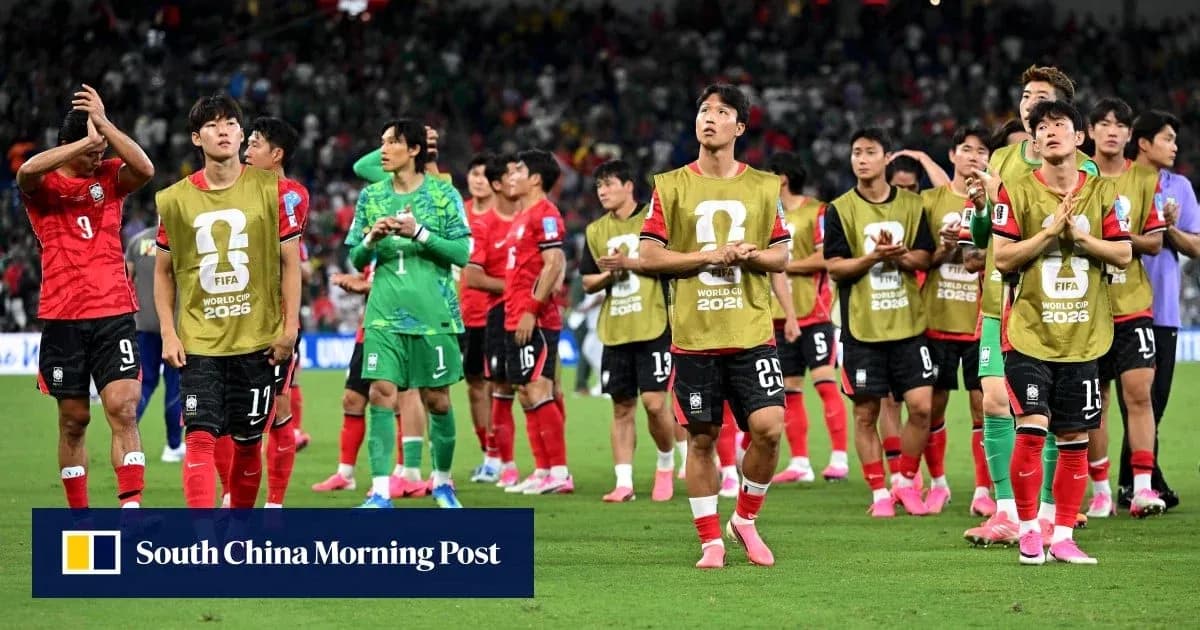
Against South Korea, they did more than just survive. Thapelo Maseko struck in the 63rd minute, and Hugo Broos’ side clung to that 1-0 lead with a defiance that suggested something had finally clicked. Second place in Group A was secured, and with it, a first-ever knockout berth.
Mofokeng’s influence in that win over South Korea underlined the new confidence coursing through the team. The young playmaker led the game in key passes with four, according to FlashScore, constantly threading balls between the lines and asking questions of a tiring defence.
Now South Africa arrive in Los Angeles not as hosts carrying a nation’s emotion, as in 2010, but as a dangerous, liberated underdog. This time, there is no opening ceremony to distract, no global spotlight to weigh heavy. Just a straight shot at history.
Canada’s coming-of-age test
On the other side stands a Canadian team that has grown used to being told their time is coming. Under Jesse Marsch, that future is starting to look very present.
Canada’s Group B campaign began in a low-key way, a 1-1 draw with Bosnia & Herzegovina that hinted at potential but not much more. Then the attack exploded. A ruthless 6-0 demolition of Qatar showcased the full range of their attacking weapons, a statement win that jolted the rest of the field.
A 2-1 defeat to Switzerland in their final group game checked some of that momentum but did not derail the mission. Second place in the group was enough. For a team co-hosting this tournament with Mexico and the USA, that was the bare minimum. Now comes the real examination: can they turn a historic first knockout appearance into a genuine run?
They will try to do it without some of their biggest names at full tilt. Star left-back Alphonso Davies has yet to play a minute, still working his way back from a hamstring injury. Ismaël Koné, the Sassuolo midfielder whose dynamism was expected to be central to Canada’s campaign, broke his leg against Qatar and will miss the rest of the tournament. Marsch’s squad has had to bend, but not break.
Suspensions, returns and reshuffled decks
South Africa’s preparations have been shaped by disciplinary swings. The appeal against Themba Zwane’s extended suspension failed, meaning the creative attacker will miss three games following his red card against Mexico. For a side that often leans on moments of individual invention, that is a serious blow.
There is, however, a major boost. Mokoena returns from a one-match suspension after collecting yellow cards in Bafana’s first two fixtures. His presence at the base of midfield changes the entire balance of the team. With Sphephelo Sithole alongside him, South Africa gain both bite and rhythm, a platform that allows their front four to push higher and press braver.
Canada’s reshuffle has been more injury-driven. With Davies absent so far, Marsch has leaned on versatility and work rate across the back line and midfield. Richie Laryea is expected to start on the left of the defence, with Derek Cornelius and Luc de Fougerolles in central defence and Alistair Johnston on the right. In front of them, Ali Ahmed, Mathieu Choiniere, Nathan Saliba and Tajon Buchanan offer legs, width and delivery for a front line spearheaded by Tani Oluwaseyi and Jonathan David.
David, in particular, carries the burden of end product. In games like this, one clean chance can define a career.
Tactical edges and old echoes
On paper, the shapes are clear. South Africa will likely line up with Ronwen Williams in goal; a back four of Aubrey Modiba, Mbekezeli Mbokazi, Ime Okon and Khuliso Mudau; Sithole and Mokoena anchoring midfield; and an attacking trio of Oswin Appollis, Mofokeng and Maseko buzzing around central striker Evidence Makgopa.
Canada, with Maxime Crepeau in goal, will trust their wide players to stretch the game and their two strikers to occupy South Africa’s centre-backs. The battle between Bafana’s double pivot and Canada’s energetic midfield four will dictate the tempo. If Mokoena finds time on the ball, South Africa can build. If Saliba and Choiniere swarm him, Canada can turn it into a transition battle, where David and Oluwaseyi thrive.
There is a small piece of shared history. The only previous meeting between these nations came in 2007, when Teko Modise scored both goals in a 2-0 South Africa win in Durban. It means little tactically now, but it lingers as a reminder that Bafana have found a way past Canadian resistance before.
The stage and the stakes
The setting feels fitting. Los Angeles Stadium in Inglewood, a city that understands spectacle, will host two teams unused to this stage but desperate to prove they belong. Kickoff is set for Sunday, June 28 at 12 p.m. local time (9 p.m. CAT, 8 p.m. BST, 7 p.m. GMT).
In South Africa, the game will be carried by SuperSport on DSTV channels 201, 202 and 235, with SABC providing free-to-air coverage and SportyTV offering a streaming option. Canadian fans can turn to TSN, RDS, CTV and Crave, while US-based viewers have FOX, Telemundo and Peacock.
Portuguese referee João Pinheiro will take charge. An experienced official with Champions League pedigree, he also arrives with a reputation, having drawn criticism for his handling of Bayern Munich’s semi-final against Paris Saint-Germain. In a match of such fine margins, his decisions will be watched closely.
A sleeping giant and a rising power
For South Africa, this is about more than one game. For years, Bafana Bafana have been described as a sleeping giant of African football, rich in talent but short on results. In Los Angeles, they can finally show that the giant is not just stirring, but standing tall.
For Canada, this is the next step in a long-term project. Co-hosting the World Cup brings pressure, but it also brings opportunity. A first-ever knockout win on home soil – shared though it is with neighbours – would harden belief that this generation is not just exciting, but truly competitive at the highest level.
One nation will wake up on Monday with a landmark victory and a quarterfinal to plan for. The other will be left staring at the kind of chance that does not come around often.
Who seizes it in Inglewood will say a lot about where these two footballing stories are really heading.