.svg&w=384&q=75 "Pitchgist logo")
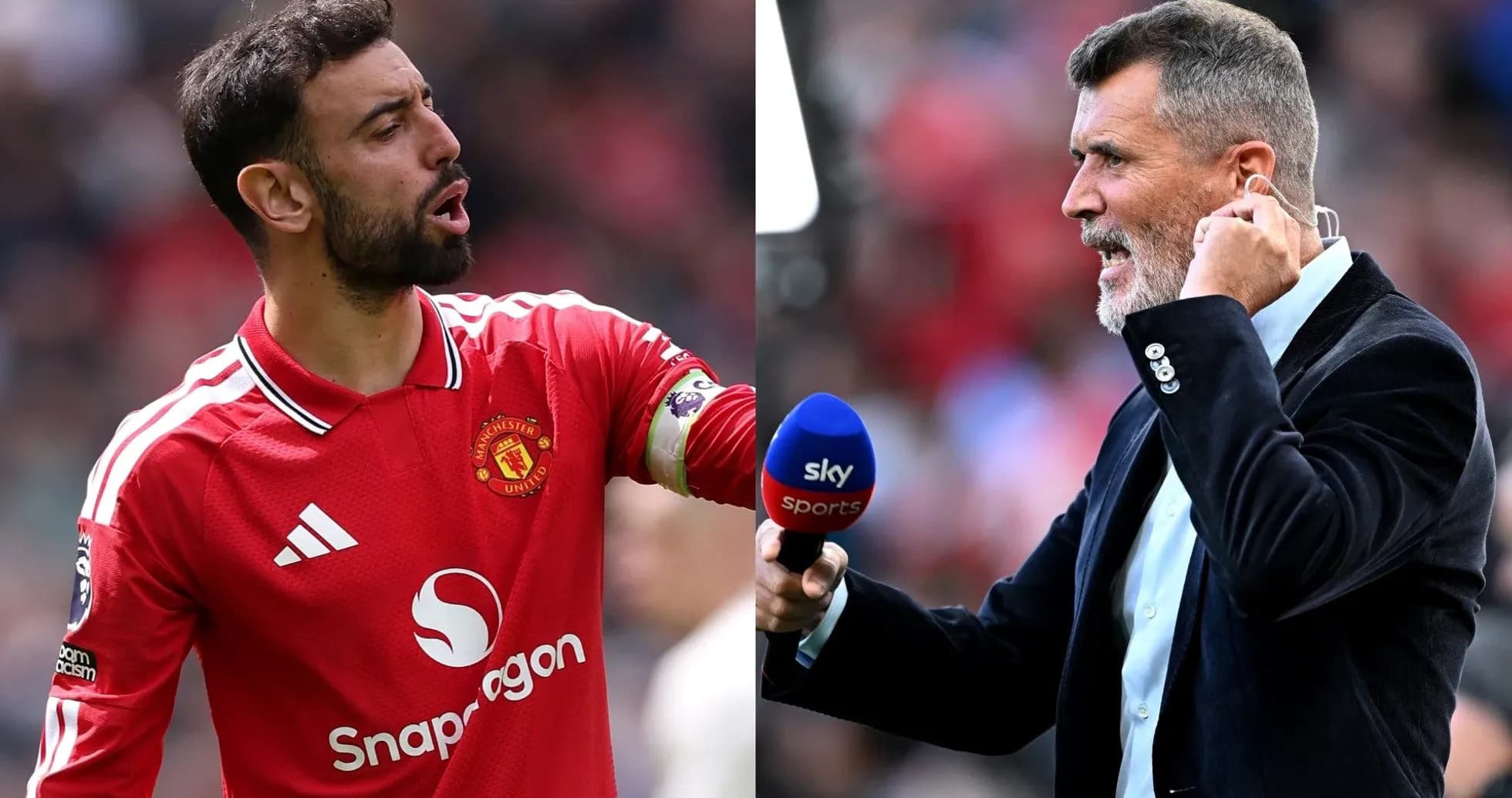
Roy Keane vs Bruno Fernandes: A Clash of Captains
The assist that was supposed to crown a season has instead lit the fuse on a feud between two Manchester United captains from very different eras.
Roy Keane’s fury was clear on The Overlap last Monday. As others celebrated Bruno Fernandes equalling the Premier League’s single-season assist record in a win over Nottingham Forest, Keane heard something very different: a captain seduced by statistics.
For Keane, that crossed a line.
"When you're the captain of a club and you're supposed to be driving the club forward, do not be getting bogged down by just your role in the team, just assists," he said. He described listening to the post-match chatter at United and feeling “raging” that so much of it centred on Fernandes’ numbers.
The moment that really stuck with him was the Portuguese’s interview after the game. Keane claimed Fernandes admitted he had chosen passes over shots in pursuit of the record, asking how a Manchester United captain could think about anything other than winning the match.
"Wow," Keane exclaimed. "How can your mindset be not to win the match but be about an individual record?"
That was the accusation. Fernandes has now fired back.
Bruno pushes back
Sitting opposite Steven Bartlett on The Diary of a CEO podcast, Fernandes cut a different figure to the one so often caricatured on television panels: calm, measured, but clearly stung.
He insisted the version of events Keane relayed simply never happened. In fact, he argued, the broadcast footage proves the opposite.
The actual quote from that post-match interview was highlighted on the podcast: "There were probably moments today when I should have passed instead of shot. I'm very happy for the assist, but more than that, I'm happy for the win and to finish the season on a high."
The contrast is stark. One version has a captain chasing a personal milestone. The other has a playmaker admitting he took on shots when he might have passed, then putting the result first.
Fernandes did not hide his frustration at that gap.
"I don't mind criticism," he told Bartlett. "I always take criticism from everyone and never reply to anyone whatsoever. People have an opinion, they think it's good, bad or whatever."
"What I don't like is when people lie about things, and in this case, what you said about Roy Keane, basically, what he said is a lie. Luckily for me everything is on record, imagine if it wasn't, then people will think Bruno is always the guy going for the assist."
The word “lie” is not one players usually attach to a club legend on a public platform. Fernandes went further, revealing he had even tried to address it privately.
"I even asked Ole [Gunnar Solskjaer] his number to text him to have a word with him," he said, "to say 'I don't mind the criticism, I don't like when people lie about the things that I say, because this goes over the top of the things I think are acceptable.'"
A modern captain, bristling at a pundit’s narrative, trying to settle it off-camera. A former captain, unconvinced by what he sees as a new, softer version of leadership. It is a clash that goes far beyond one assist.
Different eras, different captains
Keane’s doubts about Fernandes have never really been about statistics alone. They speak to a broader scepticism about his style of leadership: the arm-waving, the visible frustration, the emotional spikes that jar with the iron control Keane once demanded of himself and his team-mates.
That scepticism remains. Keane is still not sold on Fernandes as the standard-bearer for United.
Inside Old Trafford, though, the view is very different.
New permanent manager Michael Carrick, himself a former United midfielder with a quieter authority, has thrown his weight firmly behind his captain. Fresh from signing a new two-year deal, Carrick has made it clear that Fernandes is central to his vision as the club prepares to step back into the Champions League elite.
Speaking about Fernandes’ future and influence, Carrick did not hesitate.
"He’s such an influence for us and he’s been the captain and led by example in different ways," he said. "I’ve got no reason to think otherwise [regarding him staying]. We’ve loved what he’s done and he loves being here, I think you can see that."
Carrick’s backing matters. Managers live and die by their choice of captain. He sees Fernandes not as a problem to solve, but as a cornerstone to build around.
The weight of the armband
Strip away the noise and this is what remains: a modern United captain, accused by a legendary predecessor of chasing personal glory, responding by accusing that legend of misrepresenting him on national television.
The footage supports Fernandes’ version of the quote. The feeling behind Keane’s critique still resonates with a section of the fanbase that grew up on his unforgiving standards.
That tension will not vanish with one podcast appearance or one TV segment. It speaks to a club still wrestling with its identity in the post-Ferguson era, and to a broader question about what leadership looks like in a dressing room that has changed beyond recognition since Keane’s day.
Fernandes has drawn his line. Keane will not soften his. Carrick has nailed his colours to the captain’s mast.
The assists will keep coming. The scrutiny will, too. The real test now is not whether Bruno can create another goal, but whether he can carry this armband, this team, and this argument into a season where excuses will run out fast.