.svg&w=384&q=75 "Pitchgist logo")
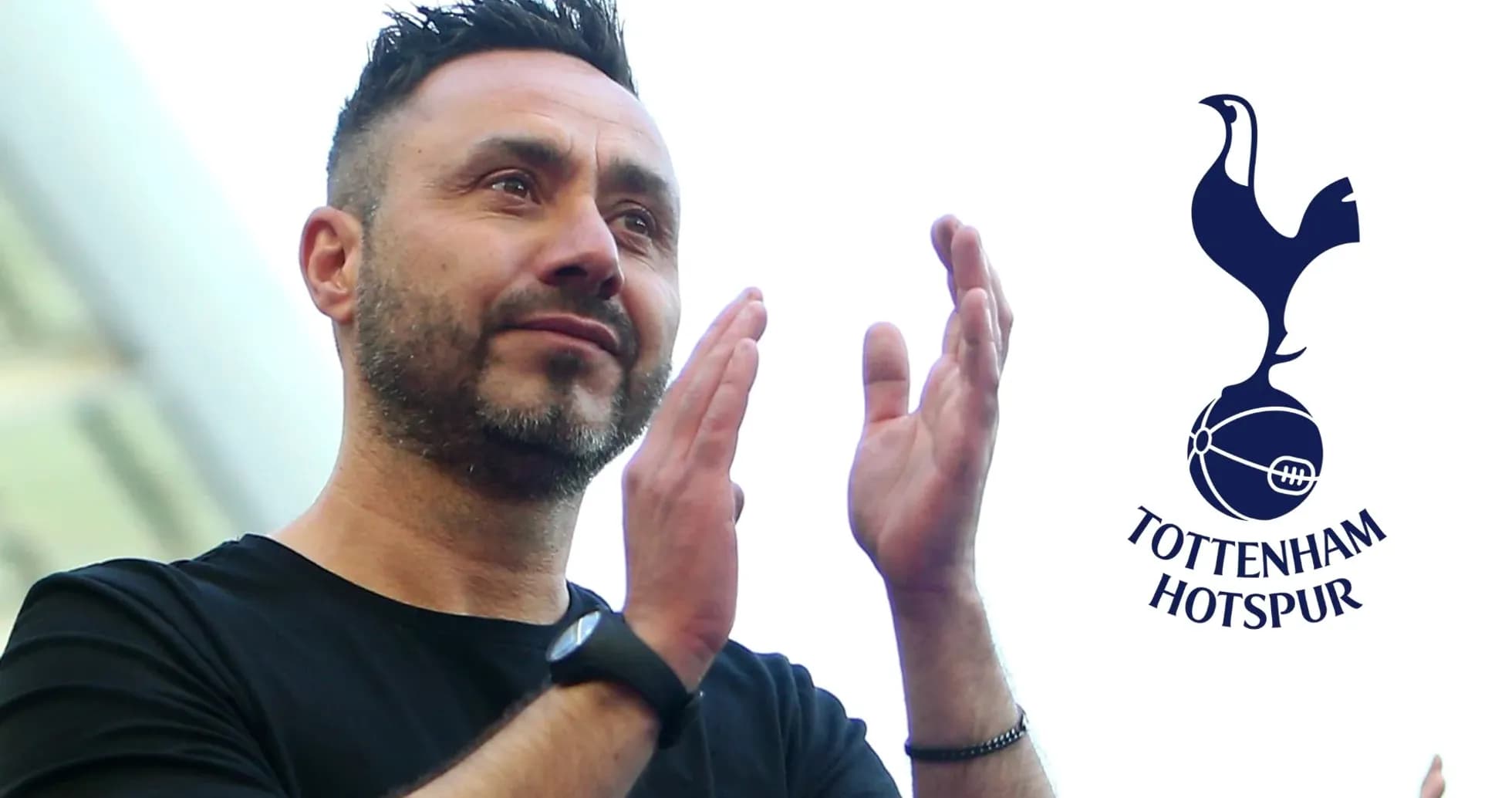
Roberto De Zerbi: The Key to Tottenham's Revival
In the age of sporting directors, data dashboards and recruitment committees, the old‑fashioned manager with real transfer power has become an endangered species. At most clubs, signings arrive by consensus, not conviction. The head coach is handed a squad and told to make it work.
Tottenham may be no different over the coming weeks as another transfer window opens and the global scouting machine whirs into life, drawing up lists of players who tick the right boxes on the right spreadsheets. Names will be flagged, profiles compiled, recommendations filed.
But it is the man on the touchline who has to live with those decisions. He has to turn those signings into a team.
That is where Roberto De Zerbi comes in.
The Italian has never been one to stand quietly in the corner while others decide what his football should look like. He is demanding, outspoken, and utterly clear about how his sides must play. Those around him are expected to fall into line, not the other way round.
Tottenham have handed him the keys after back‑to‑back 17th‑place finishes and two seasons spent staring into the relegation abyss. This is not a cosmetic appointment. This is a club asking a volatile, highly driven coach to drag a listing giant upright again.
Brad Friedel believes they have chosen the right man – as long as they actually let him shape the squad.
The former Spurs goalkeeper, speaking to GOAL in association with MrQ, dismissed the idea of a third straight relegation fight in 2026-27. “Nope, they’ll flip the script now. They have the right guy in De Zerbi,” he said, before cutting to the heart of the matter: recruitment.
“I just hope they let him get who he wants in the summer. I know they’re going to have to do it financially prudent. I know they bring in a great deal of revenue, but let De Zerbi get what he wants to a point, at least.”
This is the crux. Tottenham can talk about strategy and sustainability, but if De Zerbi is to impose his football, he needs more than a polite consultation. He needs a real say.
Friedel put numbers on it. “Let’s say they’re going to go for six players. Let at least three of them be De Zerbi’s guys, like solely De Zerbi’s guys. He knows what he wants. He knows how he wants his teams to play.”
The evidence is already there. De Zerbi walked into a dressing room burdened by one of the worst injury records to key players in the Premier League and a confidence level scraping the floor. Survival looked like a coin toss.
He still kept them up.
Friedel pointed to the fine margins involved, referencing the day they faced Aston Villa and the slice of fortune in the opposition’s team selection. Spurs stayed up “by the skin of their teeth”, as he put it, but they stayed up all the same – and they did it with a squad that had been patched together and broken apart by injury.
That experience only sharpens the argument: do not overcomplicate this.
“De Zerbi is a good coach, and he knows, in his system, how he wants to play,” Friedel said. The message is simple. Recruit to that system. Stop forcing square pegs into round holes and expecting a miracle.
Tottenham’s hierarchy will talk about financial prudence, wage structures and long‑term planning. All of that matters. But the choice in front of them is stark. Either they lean fully into the manager they have hired, or they repeat the same cycle that has dragged them down the table.
Friedel can already see the alternative. Back De Zerbi properly, sign players tailored to his aggressive, high‑tempo style, and the climb could be rapid. “I think you could actually see a very quick resurrection in them into the top six,” he said.
For a club that has spent two seasons flirting with disaster, that is not a wild promise. It is a challenge: will Tottenham truly hand their new coach the power he needs, or will another window slip by with compromise written all over it?