.svg&w=384&q=75 "Pitchgist logo")
Real Madrid's Smart Signing: Cucurella's Impact on Every Front
Real Madrid signed Marc Cucurella this summer to relatively little fanfare. No presentation at the Bernabéu under the floodlights, no weeks of transfer saga drama. Just a deal done, a fullback through the door, and a box ticked.
It is already looking like one of the smartest moves of their window.
From “no Spain players” to a World Cup winner
Before Cucurella arrived, Luis de la Fuente’s Spain squad for the 2026 World Cup did not feature a single Real Madrid player. A strange, almost jarring detail for a club that has long seen La Roja as part of its natural habitat.
Cucurella changed that overnight.
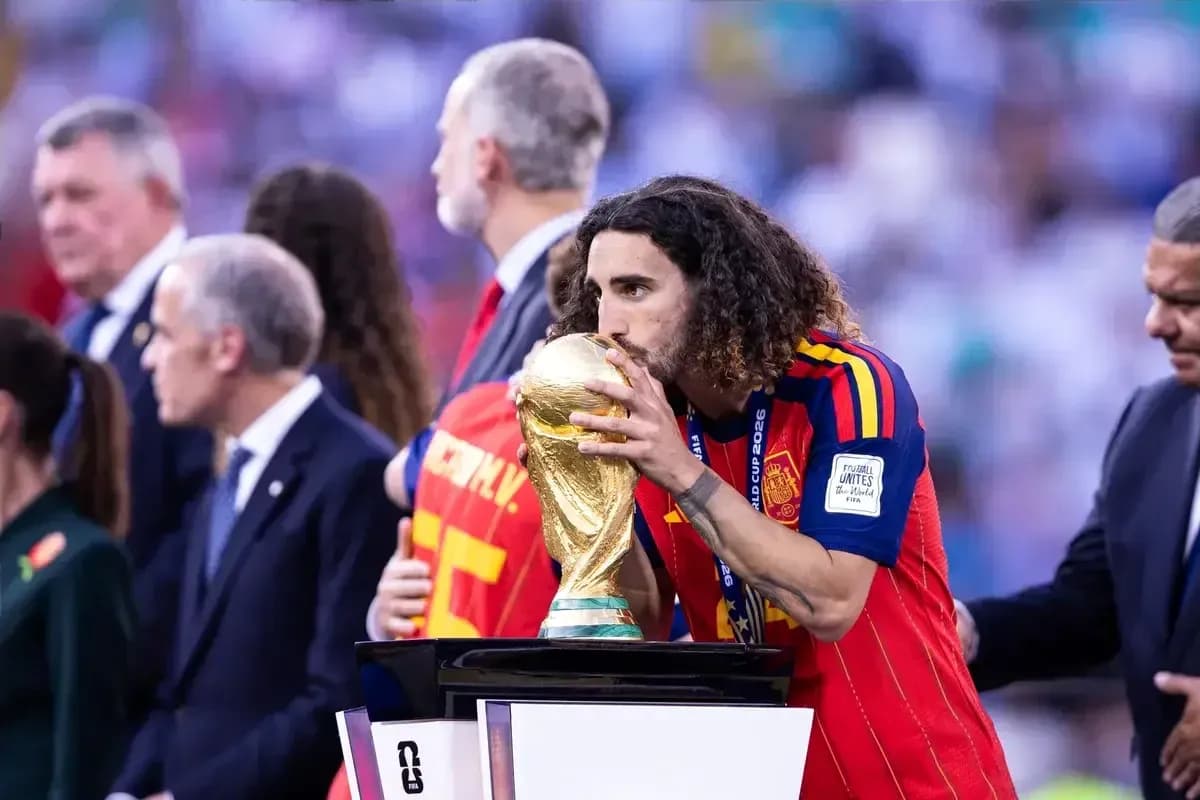
His signing instantly gave Madrid a presence in a Spain side that went on to lift the biggest trophy of all. When Spain were crowned world champions, a slice of that glory inevitably flowed back to the Bernabéu. The club that had just brought in the left-back could now point to a World Cup winner in their ranks, a symbolic shift as much as a sporting one.
The impact did not stop with the medal.
World Cup shine, market value surge
Cucurella’s performances in the tournament resonated far beyond Madrid and Spain. Fans voted him into the FIFA World Cup Best XI, one of only three Real Madrid players to make that list. For a new signing, parachuted into the club days before the competition, it was a statement.
The market reacted just as sharply.
After the World Cup, his valuation on Transfermarkt jumped to €60 million. Real Madrid had signed him only days earlier and were already watching the value of their new asset climb. No negotiation, no add-ons, no performance clauses required. Just a clean rise in worth driven by what he did on the pitch.
For a club that thinks in balance sheets as much as in trophies, that matters.
More than a left-back: solving a UEFA puzzle
On the grass, Cucurella arrives as a top-level option on the left flank, a position where Real Madrid have searched for long-term stability in recent seasons. But his importance runs deeper than the tactical board.
With his arrival, Madrid also hit a crucial regulatory mark.
UEFA rules demand that every 25-man squad registered for the Champions League and other European competitions must include at least eight locally trained players. For Real Madrid, “locally trained” covers footballers who spent their development years, between 15 and 21, either in their own academy or in any other academy in Spain.
Cucurella fits that profile perfectly.
He came through Barcelona’s youth system, continued his footballing education at Eibar and Getafe, and only then made the leap to Chelsea. Those formative years on Spanish pitches mean that, on UEFA’s paperwork, he counts as locally trained.
With one signing, Madrid did not just strengthen the left side of their defence. They also secured compliance with a key squad-building rule that can quietly shape transfer strategies and limit options if ignored.
A deal that keeps paying out
In the space of a few weeks, Cucurella has become far more than “just” a new fullback.
He has brought Real Madrid back into Spain’s World Cup-winning dressing room, landed in the fans’ World Cup Best XI, increased his own market value, and helped the club meet UEFA’s locally trained quota without compromising on quality.
For a move completed with little noise, it has delivered almost everything a modern superclub could ask for.