.svg&w=384&q=75 "Pitchgist logo")
Real Madrid vs Oviedo: Clash of Contrasting Realities
Estadio Santiago Bernabéu stages a clash of contrasting realities on 14 May 2026, as title-chasing Real Madrid host bottom‑placed Oviedo in La Liga’s Regular Season round 36. Madrid arrive in second place with 77 points and a +37 goal difference, still locked into the Champions League places and likely with an eye on keeping pressure on the summit. Oviedo sit 20th on 29 points with a -28 goal difference, fighting to avoid relegation to LaLiga2.
With only three league matches left, the stakes are clear: Real Madrid are protecting an elite campaign and formidable home record; Oviedo are playing for survival.
Form and momentum
In the league, Real Madrid’s body of work is imposing. They have 24 wins, 5 draws and just 6 defeats from 35 matches, scoring 70 and conceding 33. At the Bernabéu, they have been particularly ruthless: 14 wins, 1 draw and 2 losses in 17 home games, with 39 goals scored and only 14 conceded.
Across all phases, their form string is long and largely positive: “WWWWWWLWWWWDDDWLWWWWWWWWLLWWWLDWDWL”. Within that sequence they have put together an eight‑match winning streak and a three‑match drawing streak, underlining both consistency and resilience. They average 2.0 goals per game overall (2.3 at home) and concede just 0.9 (0.8 at home), supported by 12 clean sheets and only 4 matches all season where they failed to score.
Oviedo, by contrast, have endured a brutal first La Liga campaign in this dataset. In the league they have 6 wins, 11 draws and 18 defeats, with only 26 goals scored and 54 conceded. Away from home they have 2 wins, 4 draws and 11 losses, shipping 37 goals in 17 away games (2.2 per match) and scoring 17 (1.0 per match).
Across all phases their form line “LLWLLLWLLDDLDLDLDDDLLWLDLLDWLWWDLLD” tells the story: short-lived upturns immediately followed by extended slumps. They have a longest winning streak of just two games and a longest losing streak of three. A notable quirk is their defensive organisation at home (9 clean sheets), but that solidity has not travelled: only 1 away clean sheet and 9 away matches without scoring.
The gap in momentum and reliability between these sides is substantial.
Tactical outlook: structures and patterns
Real Madrid have been tactically flexible across the season, but with a clear preference for back‑four systems. Their most-used formation is 4‑4‑2 (16 matches), followed by 4‑2‑3‑1 (9) and 4‑3‑3 (6). That blend allows them to alternate between a two‑striker setup, a No.10 behind a lone forward, or a classic three‑man frontline.
Given the injuries and question marks, 4‑2‑3‑1 or 4‑3‑3 looks a logical base. With F. Mendy out (muscle injury) and Eder Militao also unavailable, the back line will likely lean on remaining senior centre‑backs and a more conservative full‑back balance, especially if D. Carvajal (toe injury) remains only “Questionable”. The double pivot in a 4‑2‑3‑1 would be tasked with protecting a reshuffled defence and feeding a star‑studded attack.
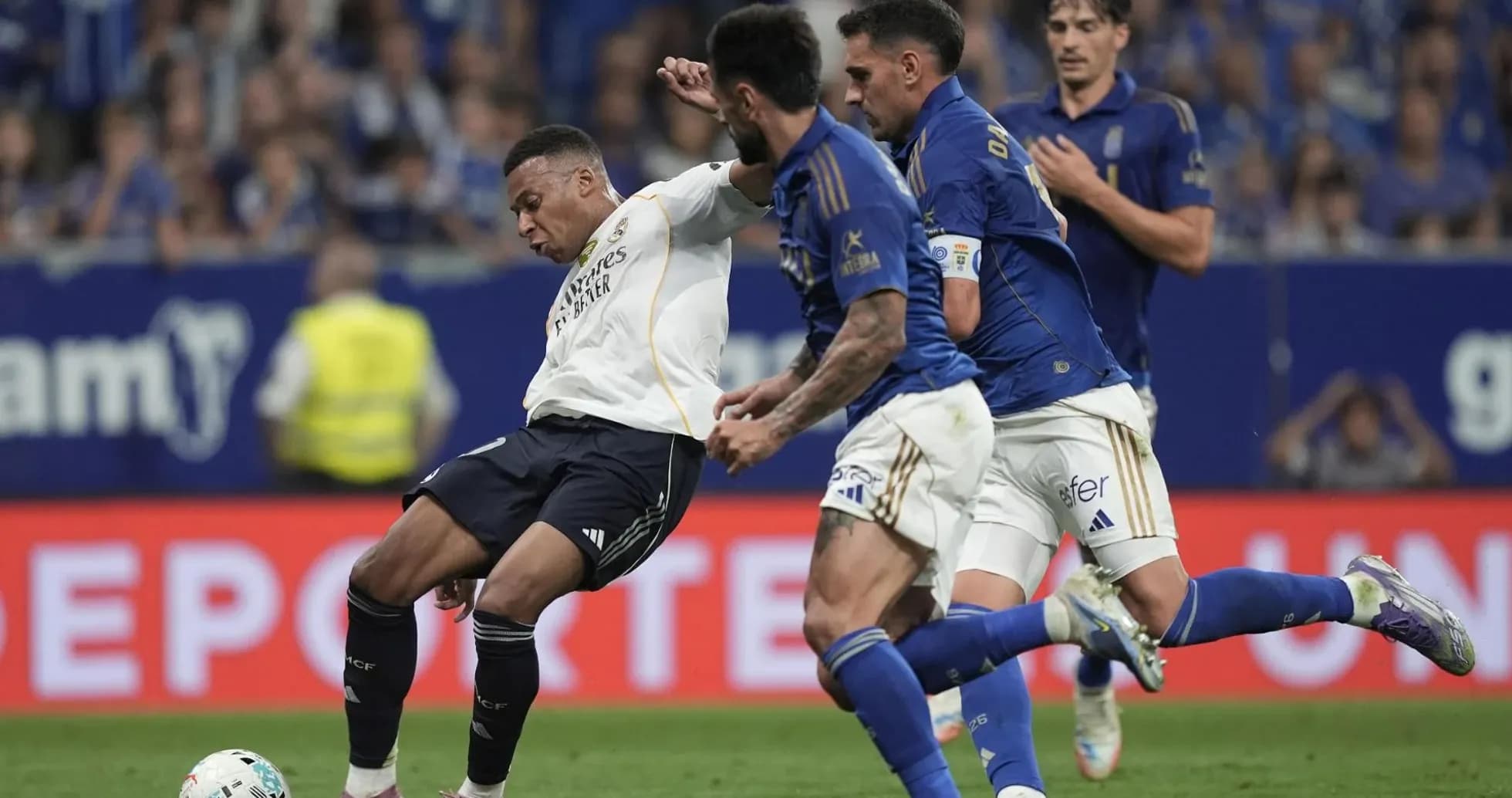
In the final third, Real Madrid’s edge is obvious. Kylian Mbappé is the league’s leading scorer in this dataset: 24 goals and 4 assists in 28 appearances, with 100 shots (61 on target) and a 7.6 average rating. He is also a major penalty threat, having scored 8 spot‑kicks but with 1 miss, and has drawn 31 fouls with 76 successful dribbles from 140 attempts. Vinícius Júnior adds 15 goals and 5 assists in 34 appearances, with 72 shots (45 on target) and 86 successful dribbles from 189 attempts. His 80 fouls drawn and heavy involvement in duels (390 total, 194 won) show how often he destabilises defences.
Even with Mbappé listed as “Questionable” (muscle injury), Real Madrid’s attacking depth is significant. Rodrygo is ruled out (knee injury), and F. Valverde is also missing (head injury), reducing some vertical running from midfield and wide rotations, but the core goal threat remains potent. The team’s 12/12 record from the penalty spot across all phases adds another layer of danger in the box.
Oviedo’s tactical profile is more conservative. Their primary shape is 4‑2‑3‑1 (24 matches), with occasional switches to 4‑3‑3 and 4‑4‑2. Away to Real Madrid, the emphasis is likely to be on compactness: two holding midfielders screening the back four, a narrow band of three behind a lone forward, and deep defensive lines to protect against Mbappé and Vinícius attacking space.
However, Oviedo’s defensive numbers away from home are worrying: 37 goals conceded in 17 away matches, with their heaviest away defeat being 4‑0. Their biggest away win is 0‑3, suggesting they can be dangerous on the counter when the game state allows, but they have failed to score in 9 away fixtures across all phases. With B. Domingues out (knee injury) and J. Lopez plus K. Sibo suspended (red cards), their options in both midfield and defence are further thinned. Question marks over E. Bailly and L. Dendoncker (both “Questionable” with injuries) only deepen the selection headache.
Oviedo’s penalty record (2 scored from 2) offers a slim lifeline in tight matches, but they rarely reach those margins against top opposition, especially away.
Head-to-head
The recent competitive head‑to‑head sample in the data is limited to one La Liga meeting in this season:
- On 24 August 2025 at Estadio Nuevo Carlos Tartiere, Oviedo 0-3 Real Madrid in La Liga Regular Season round 2. Real Madrid won 3-0 away.
That result underlines the gulf between the sides when they met earlier in the campaign, with Madrid keeping a clean sheet and scoring three without reply on Oviedo’s home turf.
Team news and selection implications
Real Madrid’s absentee list is long but unevenly distributed:
- Missing: D. Ceballos (coach’s decision), Eder Militao (muscle injury), A. Guler (muscle injury), F. Mendy (muscle injury), Rodrygo (knee injury), F. Valverde (head injury).
- Questionable: D. Carvajal (toe injury), D. Huijsen (illness), K. Mbappe (muscle injury).
Defensive rotations are almost certain, with Militao and Mendy out and Carvajal a doubt. In midfield, Valverde’s absence removes a high‑intensity runner and ball‑winner, which may tilt the selection towards more technical control. In attack, Rodrygo’s absence narrows the wide options and Mbappé’s fitness status is pivotal: if he is not fully available, the scoring burden shifts even more heavily onto Vinícius and whichever central forward partners or replaces Mbappé.
Oviedo’s situation is arguably more damaging relative to their squad depth:
- Missing: B. Domingues (knee injury), J. Lopez (red card), K. Sibo (red card).
- Questionable: E. Bailly (injury), L. Dendoncker (injury).
Suspensions for Lopez and Sibo strip out defensive and structural options, while the doubt over Bailly and Dendoncker threatens both back‑line experience and midfield ballast. For a side already conceding heavily away, this is a serious concern heading into the Bernabéu.
The verdict
All available indicators point strongly towards Real Madrid. In the league they are 2nd with 77 points and a +37 goal difference; Oviedo are 20th with 29 points and -28. Madrid’s home record (14‑1‑2, 39 scored, 14 conceded) contrasts sharply with Oviedo’s away struggles (2‑4‑11, 17 scored, 37 conceded). Across all phases, Real’s attacking metrics and defensive solidity are those of a title contender; Oviedo’s numbers are those of a side battling to stay in the division.
Even with a lengthy injury list and several key players questionable, Real Madrid retain far more firepower and structural stability. Oviedo’s absences, especially in defence and midfield, make the task of resisting Mbappé, Vinícius and company even more daunting.
Barring a dramatic collapse or an extraordinary defensive performance from Oviedo, the data suggests a high‑probability home win, with Real Madrid likely to control territory, chances and the scoreline at the Bernabéu.