.svg&w=384&q=75 "Pitchgist logo")
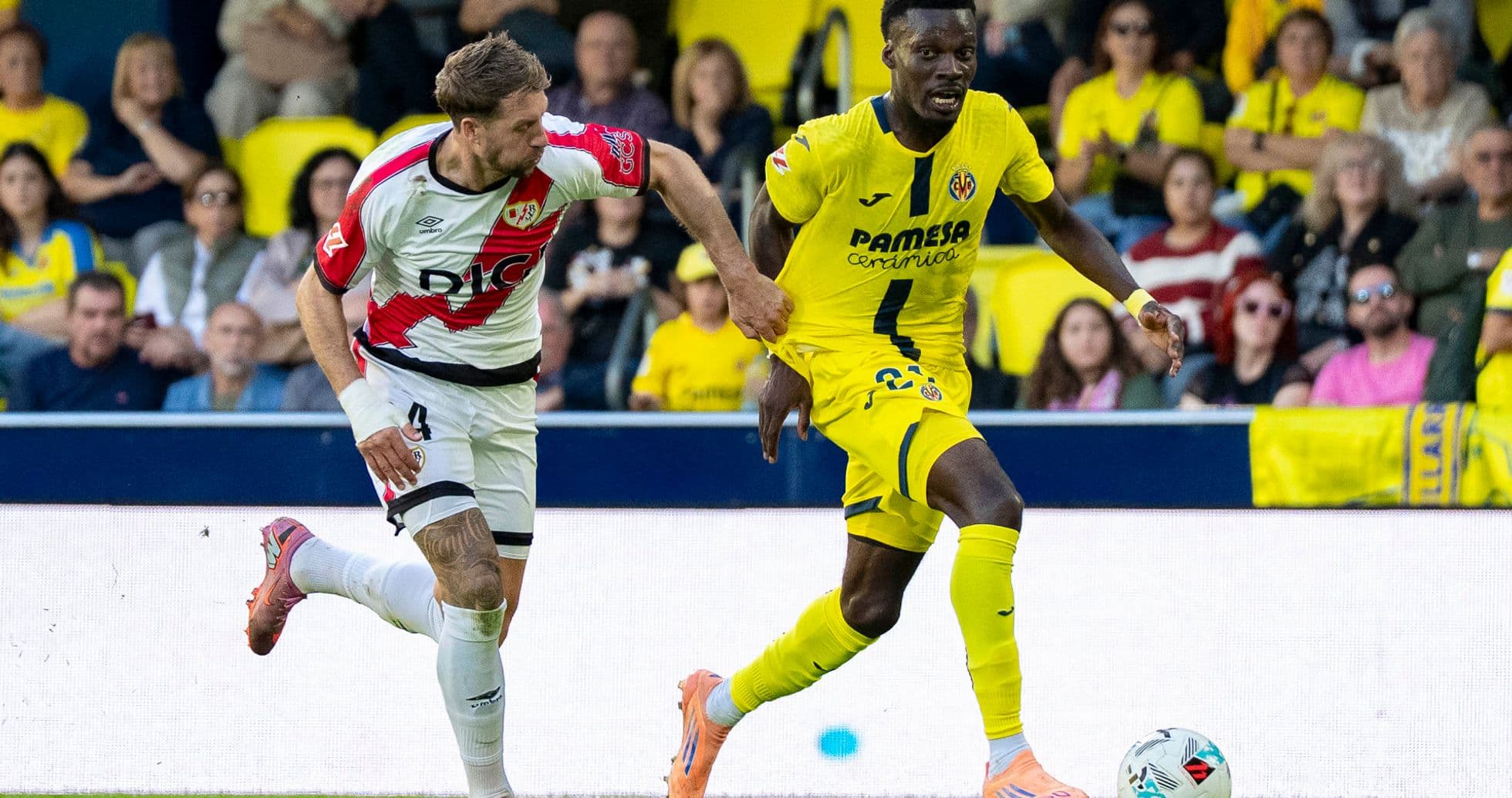
Rayo Vallecano vs Villarreal: La Liga Clash on 17 May 2026
Campo de Futbol de Vallecas stages a high‑stakes clash on 17 May 2026 as Rayo Vallecano host Villarreal in La Liga’s penultimate round. With Rayo sitting 10th on 44 points and Villarreal 3rd on 69, the visitors are closing in on Champions League qualification, while the hosts are chasing a top‑half finish and a statement win over one of the division’s most potent attacks.
Context and stakes
In the league, Rayo’s season has been built on stubborn resilience rather than fireworks. They have 10 wins, 14 draws and 12 defeats from 36 matches, with a negative goal difference of -6 (37 scored, 43 conceded). Villarreal, by contrast, have been one of La Liga’s most entertaining sides: 21 wins, 6 draws and 9 losses, scoring 67 and conceding 43 for a +24 differential.
Rayo’s recent form line in the table reads “DDWDW”, reflecting a team hard to beat and edging games by fine margins. Villarreal arrive with “LDWWD” in their last five, a reminder that while they have been largely excellent, there are still occasional slips, especially away from home. With Champions League qualification already indicated in the standings description, the visitors are now playing for seeding and prestige; Rayo are playing for position, pride and revenge.
Rayo Vallecano: home solidity and structured 4‑2‑3‑1
Across all phases, Rayo have been far stronger in Madrid than on their travels. At home in the league they have:
- Played 18: 6 wins, 10 draws, only 2 defeats
- Goals: 22 for, 15 against
That record underlines how difficult Vallecas is: only 2 home losses all season, backed by 7 clean sheets. They concede just 0.8 goals per home game on average, and fail to score in only 3 of 18 at home. The trade‑off is obvious: a cautious, control‑oriented approach that prioritises structure over risk.
Tactically, the season stats point to a clear identity. The most used shape is 4‑2‑3‑1 (22 matches), with occasional switches to 4‑4‑2 and 4‑3‑3. The double pivot in front of the defence has been crucial in keeping games tight; Rayo’s biggest home defeat is only 1-3, and they have never been blown away at Vallecas.
The key attacking reference is Jorge de Frutos. The forward has:
- 10 league goals and 1 assist in 33 appearances
- 47 shots, 26 on target
- A solid passing contribution (363 passes, 27 key passes, 76% accuracy)
He is more than just an outlet; his duel numbers (248 total, 106 won) and 26 successful dribbles from 53 attempts show how often he is involved in direct confrontations, carrying Rayo up the pitch. He has also won 3 penalties and scored 1, reinforcing his threat in one‑v‑one situations in and around the box.
Rayo’s penalty record as a team is strong: 3 taken, 3 scored. In a match that could be decided by fine margins, that composure from the spot is significant.
Defensively, the data suggest a team that holds its shape and accepts a degree of pressure. They have 11 clean sheets overall, but when they do lose control, the scorelines can stretch – their heaviest away defeat is 4-0 and they have conceded up to 3 at home. Against a high‑scoring Villarreal, the balance between aggression and compactness will be critical.
Villarreal: high‑octane attack, solid but not flawless away
Villarreal’s season has been driven by a prolific attack. Across all phases:
- 67 goals in 36 games (1.9 per match)
- Only 43 conceded (1.2 per match)
At home they are devastating (43 scored, 18 conceded), but their away profile is more human:
- Away record: 7 wins, 5 draws, 6 defeats from 18
- Goals: 24 for, 25 against
They still average 1.3 goals scored away, but concede 1.4, which opens the door for a competitive contest at Vallecas.
Formationally, Villarreal are remarkably consistent: 35 of 36 league matches in a 4‑4‑2, with only one outing in 4‑3‑3. That twin‑striker framework underpins their attacking threat and allows midfielders to break lines in support.
Two players stand out in the data:
- Georges Mikautadze: 12 goals and 6 assists in 31 appearances, 51 shots (29 on target). He combines penalty‑box finishing with link play (378 passes, 26 key passes, 74% accuracy), and draws fouls frequently (45 won), helping Villarreal gain territory and set‑piece opportunities.
- Alberto Moleiro: 10 goals and 5 assists from midfield, with 36 key passes and a 78% pass accuracy. He also contributes defensively (29 tackles, 8 interceptions), making him a key two‑way presence in the 4‑4‑2.
Villarreal’s penalty record is perfect at team level: 6 taken, 6 scored. Neither Mikautadze nor Moleiro has scored a penalty in this dataset, but Moleiro has won one, hinting at his dribbling and movement in the final third.
Defensively, Villarreal are not impenetrable. They have 8 clean sheets overall and have conceded 3 or 4 goals in some of their heaviest losses (including a 4-1 away defeat as their worst road result). At Vallecas, where Rayo grind out results, that vulnerability could be tested, especially if the match becomes stretched late on.
Head‑to‑head: Villarreal dominance, Rayo frustration
The last five competitive meetings, all in La Liga, paint a clear picture:
- 4-0 on 1 November 2025 at Estadio de la Ceramica – Villarreal home win.
- 0-1 on 22 February 2025 at Estadio de Vallecas – Villarreal away win.
- 1-1 on 18 December 2024 at Estadio de la Cerámica – draw.
- 3-0 on 28 April 2024 at Estadio de la Cerámica – Villarreal home win.
- 1-1 on 24 September 2023 at Estadio de Vallecas – draw.
Across these five, Villarreal have 3 wins, Rayo have 0, and there have been 2 draws. Rayo have not beaten Villarreal in this sequence and have failed to score in two of the last three encounters, including that 0-1 home defeat in February 2025.
Tactical battle zones
- Rayo’s block vs Villarreal’s 4‑4‑2: Expect Rayo’s 4‑2‑3‑1 to sink into a compact mid‑block, with the double pivot tasked with screening passes into Mikautadze’s feet and tracking Moleiro’s late surges.
- Wide areas: De Frutos’ direct running against Villarreal’s full‑backs could be Rayo’s best route to goal, especially in transitions when Villarreal’s wide midfielders push on.
- Set pieces and penalties: Both sides show composure from the spot, and Villarreal’s volume of attacking play often generates dead‑ball chances. Rayo, with their disciplined defensive record at home, will try to limit cheap fouls around the box.
- Game state: If Villarreal score first, Rayo’s low‑scoring profile (just 37 goals in 36 matches) may force them into a more open game than they prefer, which could suit Villarreal’s counter‑attacking strengths. Conversely, a tight, goalless first hour favours Rayo’s grinding style and the influence of Vallecas.
The verdict
Data and recent history tilt this fixture towards Villarreal. They have the superior league position, a much stronger goal difference, and a clear edge in the last five head‑to‑heads. Their 4‑4‑2, powered by Mikautadze and Moleiro, has produced one of La Liga’s most dangerous attacks.
Yet Vallecas is a genuine leveller. Rayo have lost only twice at home all season, concede less than a goal a game there, and are tactically well‑drilled in their 4‑2‑3‑1. If they can channel the energy of the stadium, keep the game compact and give Jorge de Frutos enough transition moments, they have a realistic chance of taking something.
The most logical expectation is a tight contest in which Villarreal’s quality creates more clear chances but Rayo’s organisation and home resilience prevent a repeat of the 4-0 seen in Villarreal in November 2025. A narrow Villarreal win or a hard‑fought draw fits the underlying numbers; for Rayo, even a point would be a small but meaningful shift against a recent head‑to‑head trend that has been firmly in Villarreal’s favour.