.svg&w=384&q=75 "Pitchgist logo")
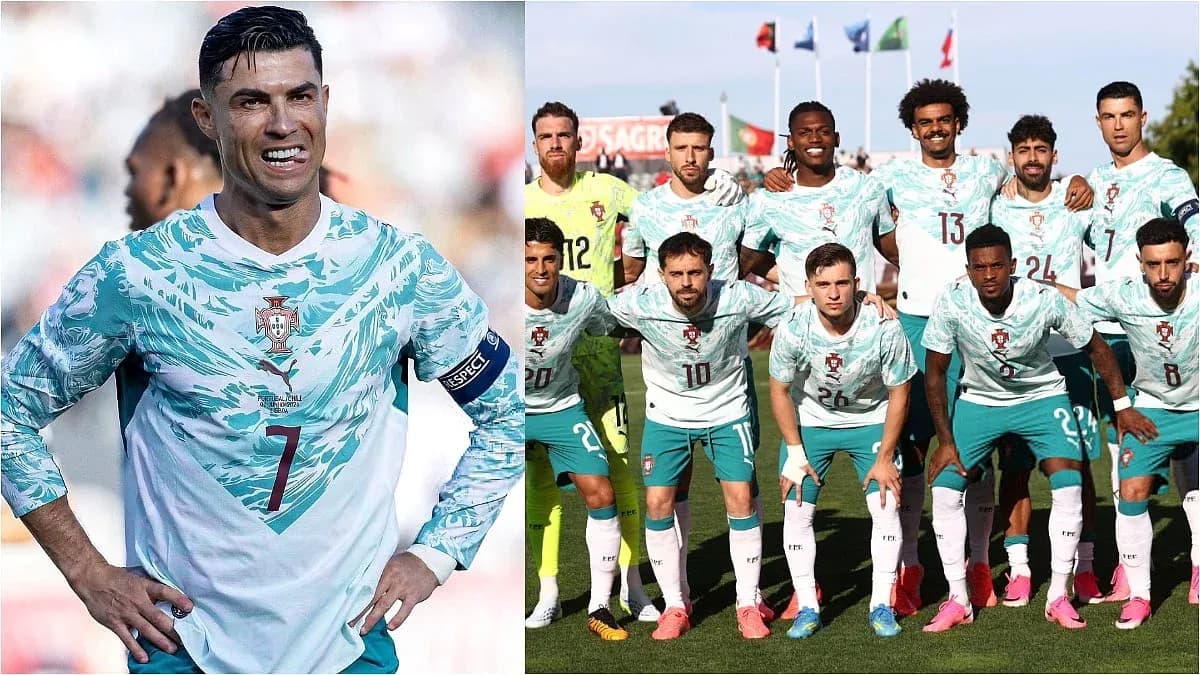
Portugal vs Croatia: World Cup Round of 32 Tactical Analysis
Portugal face Croatia at BMO Field in Toronto in a high-stakes World Cup Round of 32 tie. Both sides advanced as second in their groups — Portugal from Group K with 5 points and a +5 goal difference, Croatia from Group L with 6 points and a neutral goal difference — so this knockout match is a pivotal gateway to a deep run in 2026, with elimination here sharply redefining each team’s tournament narrative.
Head-to-Head Tactical Summary
The recent head-to-head record is tight but slightly tilted towards Portugal in competitive play. On 18 November 2024 in Split (UEFA Nations League League A - 6), Croatia drew 1-1 with Portugal at Stadion Poljud, after Portugal led 1-0 at half-time. Earlier in that 2024 Nations League campaign, on 5 September 2024 at Estádio da Luz in Lisbon (League A - 1), Portugal beat Croatia 2-1, having led 2-1 at half-time. In a 2024 friendly on 8 June at Estádio Nacional in Jamor, Croatia edged a 2-1 win, leading 1-0 at half-time and holding off Portugal’s response.
Looking back to 2020 Nations League meetings, Croatia lost 3-2 at Stadion Poljud on 17 November 2020 (League A - 6), after leading 1-0 at half-time, and were beaten 4-1 in Porto at Estádio Do Dragão on 5 September 2020 (League A - 1), with Portugal 1-0 up at the break. Overall, Portugal have claimed three competitive wins (4-1, 3-2, 2-1), Croatia have one friendly victory (2-1), and there is one Nations League draw (1-1), underlining Portugal’s capacity to outscore Croatia in open games while Croatia have shown they can exploit moments, especially away, when Portugal open up.
Global Season Picture
- League Phase Performance:
In the group stage, Portugal finished 2nd in Group K with 5 points from 3 matches (1 win, 2 draws, 0 defeats), scoring 6 goals and conceding just 1, for a +5 goal difference. Croatia finished 2nd in Group L with 6 points from 3 matches (2 wins, 0 draws, 1 defeat), scoring 5 and conceding 5, for a goal difference of 0. Portugal arrive with a more solid defensive record (1 goal against) and higher scoring margin, while Croatia’s numbers point to more open, higher-variance matches (5 for, 5 against). - Season Metrics:
Across all competitions, Portugal’s profile in this World Cup shows a strong attacking tilt and controlled defensive exposure: 6 goals scored in 3 fixtures (2.0 per game) and just 1 conceded (0.3 per game). Their biggest win is a 5-0 home result, highlighting their capacity to overwhelm weaker opponents. They have 2 clean sheets from 3 games and have failed to score once, suggesting that when they do click, they are explosive, but there is at least one data point of attacking stagnation. Disciplinary output is moderate, with yellow cards spread across early and late phases of matches, but no reds so far.
Croatia, across all competitions in this World Cup, are more volatile: 5 goals scored and 5 conceded in 3 matches (1.7 scored and 1.7 conceded per game). Their biggest away win is 1-0, while their heaviest away defeat is 4-2, underlining that when they chase games, they can both score and leak chances. They have 1 clean sheet and have not failed to score yet, reinforcing a consistent attacking presence but a more fragile defensive structure. Yellow cards cluster around the 61–75 and 91–105 minute ranges, pointing to late-game physicality and possible fatigue under pressure. - Form Trajectory:
Portugal’s form string in the group stage is “DWD”, indicating an unbeaten run with one win and two draws. The trajectory suggests a side that started cautiously, then found a convincing win, and closed the group still hard to beat. Croatia’s form “WWL” points to a strong start with back-to-back wins before a setback in the final group game, hinting at momentum that has been slightly checked but not derailed. Portugal bring stability and defensive control; Croatia bring proof they can win but also evidence of vulnerability when the level rises.
Tactical Efficiency
Portugal’s World Cup data paints them as a high-ceiling, controlled side. Their attacking efficiency is underlined by 6 goals in 3 matches and a biggest win of 5-0, implying that when they establish territory and rhythm, they convert pressure into goals. Defensively, conceding only 1 goal in 3 games and recording 2 clean sheets signals a compact block and effective game management, particularly given they have largely used a 4-2-3-1 structure across all fixtures. Card distribution across early and late phases suggests they can impose themselves physically without drifting into reckless territory.
Croatia’s tactical efficiency is more balanced but less stable. With 5 goals scored and 5 conceded, their attack is consistently present but their defensive line is more easily disrupted, particularly away from home where their heaviest defeat (4-2) occurred. Their formations (primarily 4-2-3-1 with one outing in 3-4-2-1) indicate flexibility: they can mirror Portugal’s shape or switch to a back three to create overloads in midfield. However, the lack of multiple clean sheets and the tendency to concede in wins and losses alike point to a side that trades control for offensive thrust.
In a knockout context, this contrast matters. Portugal’s “attack/defense balance” profile is that of a side comfortable winning through control: they can keep scores low and trust their frontline to find moments, which aligns with their +5 goal difference in the group stage (6 for, 1 against). Croatia’s profile is that of a risk-tolerant team: they are likely to create and concede chances at similar volumes, making them dangerous if they score first but exposed if they have to chase the game against a disciplined opponent.
The Verdict: Seasonal Impact
This Round of 32 clash is a clear inflection point in both nations’ 2026 campaigns. For Portugal, coming off an unbeaten group stage with a dominant goal difference, elimination here would represent a significant underperformance relative to their statistical base and historical edge over Croatia in competitive matches. A win, by contrast, would validate their controlled, defensively sound approach and set them up as credible contenders for at least the quarter-finals, with their scoring power suggesting they can handle stronger opposition as the bracket tightens.
For Croatia, advancing would flip the narrative of their numbers: from a side with a neutral goal difference and defensive volatility to one whose attacking consistency carries them through high-pressure knockout football. It would also show that their flexible structures can solve a well-organized opponent, reinforcing belief for a run toward the last 8 and beyond. A defeat would confirm the warning signs in their data — conceding as often as they score — and frame this World Cup as a campaign where they were competitive but ultimately undone by defensive looseness at the first major knockout hurdle.
In strategic terms, this tie will likely define how each federation evaluates its 2026 project. Portugal are playing to confirm themselves as a tournament heavyweight built on control and efficiency; Croatia are playing to prove that their more open, high-variance style can still deliver deep-tournament outcomes. The seasonal impact is therefore binary and brutal: progression reinforces project credibility and keeps title aspirations alive; elimination forces a reassessment of tactical identity and squad balance heading into the next international cycle.