.svg&w=384&q=75 "Pitchgist logo")
Pep Guardiola in Talks to Become Italy's Next Head Coach
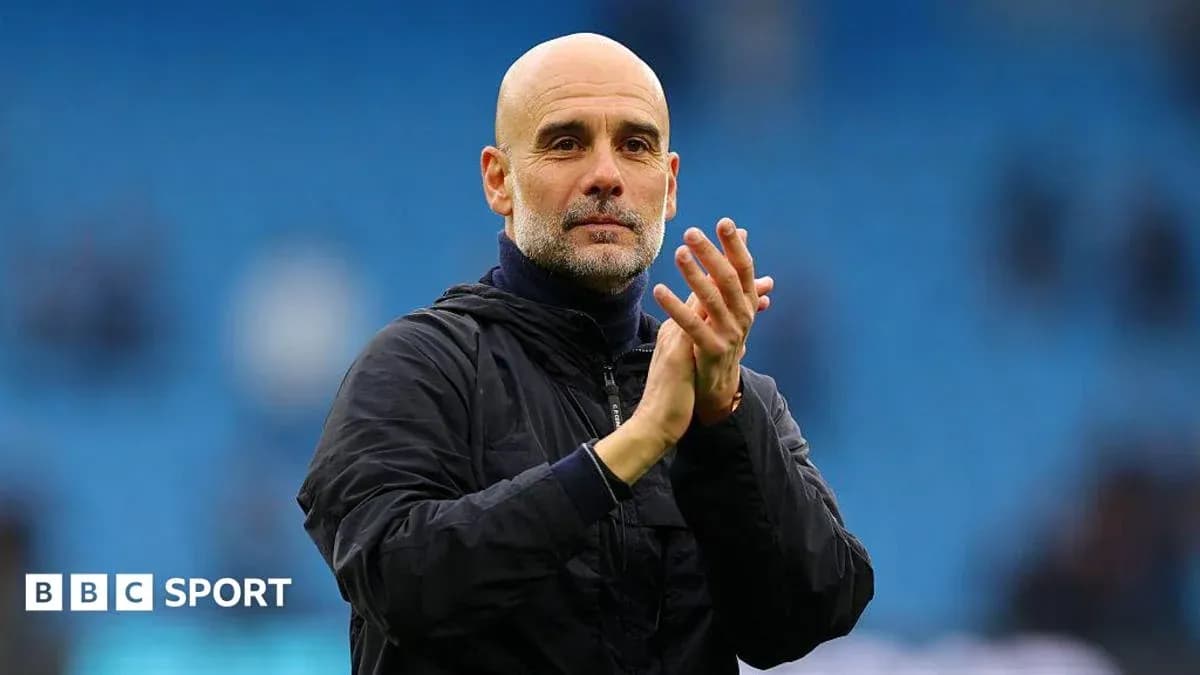
Pep Guardiola has held talks about becoming Italy’s next head coach, Italian Football Federation president Giovanni Malagò has confirmed, opening the door to one of the most intriguing international appointments in modern football.
The former Manchester City manager, who walked away this summer after a decade of relentless success in England, is in the frame to take over a national team still reeling from another World Cup failure and searching for a new identity.
Italy turn to Guardiola
Italy have been without a head coach since Gennaro Gattuso resigned in April, days after the Azzurri failed to qualify for a third consecutive World Cup. For a country that once measured itself by how deep it went into major tournaments, the drought has become a national trauma.
So the FIGC has looked up, not sideways. Sky Italia first reported on Monday that contact had been made with Guardiola, now 55 and freshly out of work for the first time since 2013.
Malagò has now gone further. Speaking to Italian digital platform Cronache di spogliatoio, he confirmed that discussions have taken place and that the federation is prepared to bend its own financial rules to land a coach of Guardiola’s stature.
“[Financial] exceptions have been made, exceptions that for example may concern the name that is so overbearing in these hours: Pep Guardiola,” Malagò said. “Exceptions for obvious reasons that I am not here to explain, but it is not certain that this thing will go through.”
The message is clear: Italy want Guardiola badly enough to change the usual parameters. But there are no guarantees he will say yes.
A serial winner on the market
Guardiola leaves behind a monumental body of work at Manchester City. Six Premier League titles, three FA Cups, five League Cups and the Champions League across 10 years have redrawn the expectations of what domestic dominance looks like in England.
His decade in Manchester followed trophy-laden spells at Barcelona and Bayern Munich, where his high-possession, positionally disciplined football reshaped club identities and tactical trends across Europe.
When his spell at City ended in May, Guardiola cut a drained but fulfilled figure. “I am so tired. Seriously, I am so tired,” he admitted, reflecting on a career that has already spanned three superclubs and an unprecedented haul of silverware. Yet a swift return to the dugout at international level would represent a new challenge, and perhaps a different rhythm, after the grind of club football.
Not the only name on the list
Italy, though, are not putting all their hopes on one man. Malagò stressed that Guardiola is part of a broader search rather than the sole candidate.
Another former Manchester City manager, Roberto Mancini, is also under consideration. Mancini, of course, delivered Italy’s last great moment on the international stage when he guided them to Euro 2020 glory, only for that triumph to be followed by the shock failure to reach the 2022 World Cup.
Andrea Pirlo, currently in charge of Dubai United, is another name in the frame. The former Italy midfielder would represent a very different profile: less experienced on the touchline, but a symbolic figure of the modern Azzurri and a coach still building his reputation.
Asked whether Guardiola, Mancini and Pirlo were the only options, Malagò was emphatic: “Absolutely not. We think about a certain profile and certainly these names fall into that category.” The federation is clearly casting a wide net, but the calibre of those mentioned underlines the scale of its ambition.
A rare foreign bet
If Guardiola does take the job, he will step into a role historically reserved for Italians. Across more than a century, the men’s national team has almost always been led from within.
There have been only two exceptions. Hungarian coach Lajos Czeizler formed part of a technical committee in charge during the 1950s. In the following decade, legendary Argentine tactician Helenio Herrera briefly shared the role with Ferruccio Valcareggi. Both cases were unusual, both short-lived.
A foreign coach in charge of Italy is not just a tactical decision; it is a cultural statement. Choosing Guardiola would signal a willingness to break with tradition in order to restore the Azzurri to the top table.
Italy, Guardiola and unfinished business
Guardiola has never managed in Italy, but the country is not unfamiliar territory. He spent two seasons in Serie A between 2001 and 2003, in two spells at Brescia and one at Roma, and he speaks fluent Italian. Those years did not bring great success on the pitch, yet they added another layer to his understanding of European football’s different schools of thought.
Now, as Italy search for a way out of their prolonged slump, the idea of the game’s most influential modern coach walking into Coverciano carries obvious appeal. A nation built on defensive steel dreaming of reinventing itself under the architect of positional play: the symbolism writes itself.
The FIGC knows it will have to move quickly and decisively. Guardiola, even “so tired,” will not lack offers. The question is whether the man who has conquered club football wants to stake his reputation on reviving a fallen giant of the international game – and whether Italy are truly ready to let an outsider redraw their footballing soul.