.svg&w=384&q=75 "Pitchgist logo")
Paolo Maldini Appointed as Italy's New Technical Director
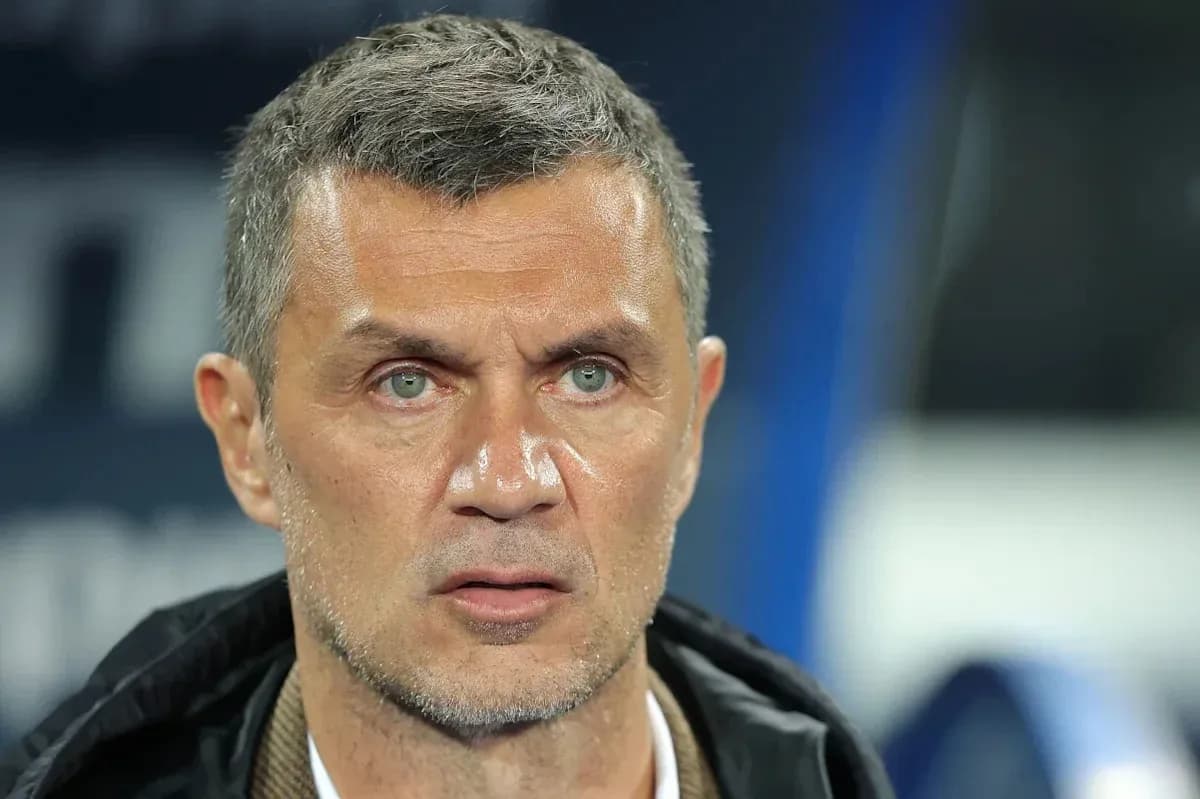
Paolo Maldini is back where Italian football believes he belongs: at the heart of its future.
On Saturday night, the FIGC confirmed the appointment that many in the country had been quietly hoping for. Maldini, the iconic former defender who defined an era for both Milan and the Azzurri, has been named Italy’s new technical director. At his side will be Leonardo, brought in as an advisor. Together, they have been handed a mandate that goes far beyond picking a coach. They have been asked to help rebuild a national team identity.
Italy have watched the last three World Cups from the sofa. A footballing superpower reduced to a TV audience. The need for a reset had become urgent, almost existential. Giovanni Malagò, the new FIGC president, has chosen Maldini as the face and brain of that reset, and the reaction has been immediate: approval, relief, even a sense of pride.
First Task
The first task is clear. Maldini and Leonardo must identify the next Italy head coach. Antonio Conte and Roberto Mancini are currently seen as the leading candidates, names that carry weight and familiarity. Italian media have already started to float bolder ideas, including Pep Guardiola and Didier Deschamps, the kind of “what if” options that show the scale of the ambition, even if they remain firmly in the realm of speculation.
For now, the concrete move is Maldini. And that, for many, is enough to change the mood.
Dino Zoff's Verdict
Dino Zoff, who knows what it means to sit on the Azzurri bench on a big night, worked with Maldini at Euro 2000 and felt the sting of losing a final to France. His verdict on the appointment was emphatic.
“Paolo has given so much for our football, to Milan in particular but also for the national team,” Zoff said. “He was also one of my players when I was in charge and I can't forget his father Cesare either, who was Bearzot's assistant when I won the World Cup in 1982.
“Maldini is a perfect appointment in terms of character, charisma and competence. I also understand the choice of Leonardo as an advisor. It's right that a leader surrounds himself with people he trusts.”
Zoff went further, touching on the delicate issue that has haunted Italy’s benches for years: interference, pressure, the noise around every decision.
“Maldini has to be free to follow his beliefs, without external interference,” he said. Coming from a 1982 World Cup winner, a man who has navigated the storms of Italian football, that line carried weight.
The chorus of approval did not end there. Alessandro Costacurta, Maldini’s long-time partner in Milan’s defence and a serial winner at San Siro, framed the move as a turning point.
“This is great news for Italian football, because we have brought in one of the most illuminated and sincere people in the sport,” the former defender said.
Costacurta’s words cut to the core of why Maldini’s return matters. This is not just nostalgia. It is about credibility. About putting someone in charge who has lived the highest standards for club and country, and who understands what those standards demand on a daily basis.
“Malagò made the best possible choice. In fact, picking Maldini is perhaps more important than choosing the new coach,” Costacurta added.
It was a striking line, but one that reflects a widely held belief: Italy’s problems run deeper than the dugout. They concern structure, vision, and the ability to make coherent, long-term decisions. A technical director with Maldini’s authority can shape that framework in a way no single coach can.
At his previous role with Milan, Maldini worked closely with Leonardo. The FIGC is now betting that this partnership can be just as effective in the national-team environment. Costacurta drew a sharp, almost cinematic contrast between the two.
“Leonardo is more of a dreamer, a visionary, whereas Paolo is more practical, looks to his knowledge and instinct,” he said.
The key, as Costacurta pointed out, lies in the way they interact.
“The best thing about them is that they listen to each other, despite starting from different ideas, and always manage to find a common solution.”
That ability to argue, adjust and converge on a shared path will be tested immediately. Italy’s next coach will inherit a team scarred by failure but still rich in potential, playing in a landscape where France, Spain, Argentina and England are pushing deep into major tournaments and setting the bar.
Maldini now has the authority to decide who leads Italy back onto that stage. The country has given him its trust. The question is simple, and brutally clear: can he turn that trust into a new era, or will the Azzurri remain spectators when the world is watching?