.svg&w=384&q=75 "Pitchgist logo")
France's World Cup Exit: A Dismantling by Spain
ARLINGTON, Texas — It ended not with drama, but with a dull, merciless certainty.
France, the tournament’s most gifted squad from back to front, finally went behind at this FIFA World Cup on Tuesday afternoon in Jerry Jones’ vast Texas palace. Once Spain struck, Les Bleus never looked remotely capable of clawing their way back. A 2-0 defeat felt harsh on the scoreboard, generous in the description. This was not a near miss. This was a dismantling.
And with it, an era closed.
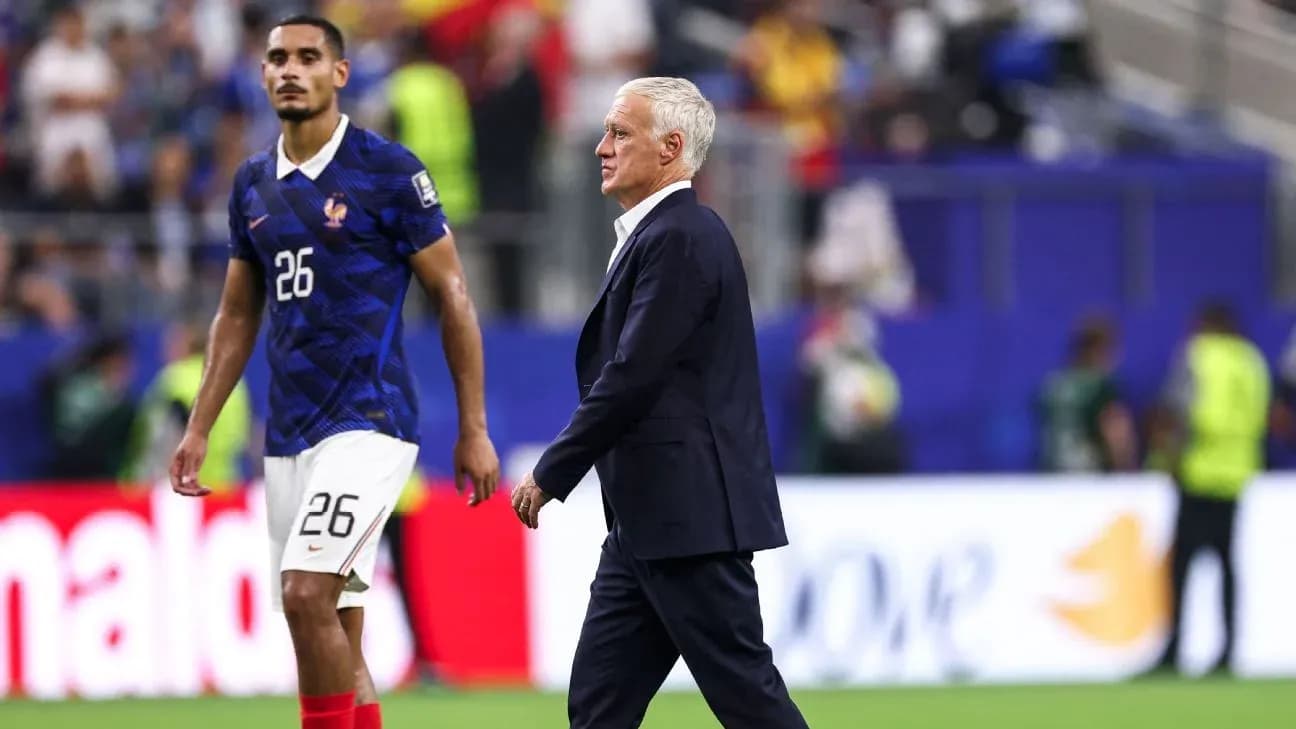
Didier Deschamps walks away after 14 years, 184 games, three major finals and a Nations League title. He came within a Randal Kolo Muani finish of becoming only the second man to win two World Cups as a coach, adding to the one he lifted as a player. That sliding-door moment in 2022 now feels like a lifetime ago.
Here, against Spain, his France side produced something close to a tactical and emotional no-show.
Spain expose a timid giant
You can lose to Spain. This Spain, with its crisp passing and relentless positional play, is no soft touch. But you cannot go out like this — flat, predictable, stripped of conviction.
For 64 minutes, France’s vaunted front four generated 0.04 xG. That number, as cold as it is, captures the mood: almost no jeopardy for Spain, almost no threat from a group of attackers many had billed as the most frightening in the competition. Kylian Mbappé, Michael Olise, the whole glittering cast – reduced to spectators in their own semifinal.
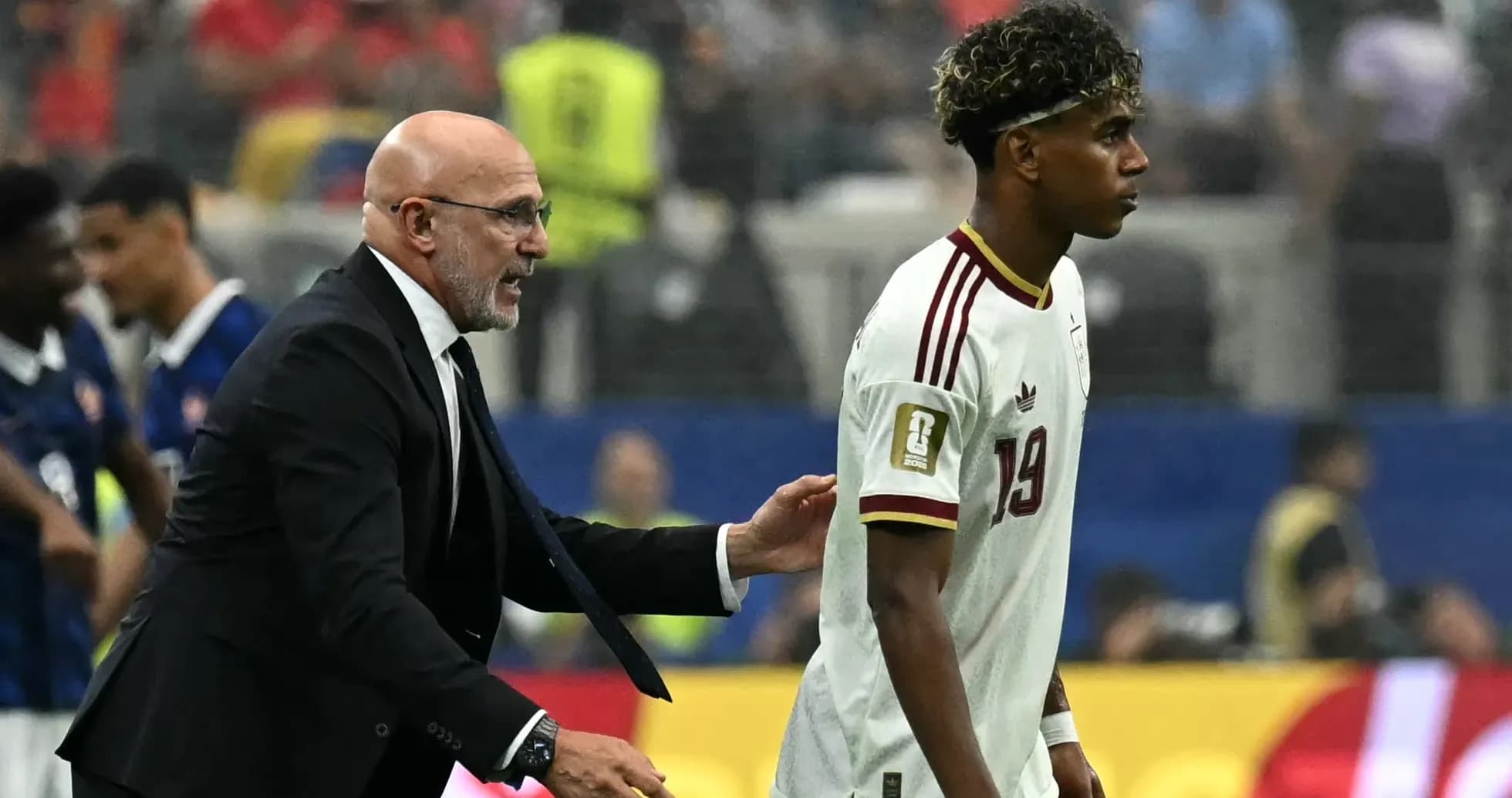
Luis de la Fuente saw this version of France coming. He has seen it before. This is the third time in three years he has taken Deschamps apart: the Euro 2024 semifinal, the wild 5-4 Nations League game in 2025 when Spain led 5-1, and now this World Cup exit. The pattern has hardened into something close to a coaching mismatch.
Either De la Fuente has become Deschamps’ bespectacled, bald, bearded kryptonite, or the Frenchman has simply refused to learn. Each meeting, France have looked less adaptable, less imaginative, less capable of altering the script once Spain seized control of the ball.
And everyone in the stadium knew how Spain would play. They would dominate possession, stretch the pitch, pull blue shirts into uncomfortable spaces. The question was what France would do about it. Press high? Pack midfield? Add an extra body to avoid the two-vs.-three imbalance Mbappé himself flagged before the game?
Deschamps’ answer was blunt: no. France would “play their game” and let Spain worry about them.
Spain did not worry. They went to work.
Deschamps’ old formula runs dry
Deschamps has built a remarkable career on simple, clear principles. Keep the dressing room happy. Keep the structure straightforward. Let superior talent tilt the balance. It worked when he was a water-carrying midfielder behind Zidane, Patrick Vieira and Thierry Henry in 1998. It worked when he guided France to the World Cup in 2018 and to the brink again in 2022.
In a low-scoring sport, overcomplicating things can be fatal. Deschamps trusted the old wisdom: do not suffocate your stars with schemes; give them space, give them clarity, and they will decide the game.
But that only holds when your stars see the ball and feel the space.
Spain denied both. They hoarded possession, then snapped into the press the moment France tried to break. The pitch shrank. Passing lanes closed. The game became a maze with no exit. Without time or room, Michael Olise was reduced from creative fulcrum to a player barely more effective than a bystander.
That is the moment when a coach must intervene, when a plan B has to appear. It never really did. Deschamps’ changes – Manu Koné for Adrien Rabiot, Désiré Doué for Bradley Barcola – felt like moves everyone in the stadium could see coming five minutes before they happened. Logical, tidy, utterly uninspired.
On a good night, such predictability can be comforting, helping a team maintain shape and rhythm. On this night, it merely stretched out the suffering.
His loyalty followed the same pattern. Rabiot kept his place again. Olise stayed on despite a nightmare display. Deschamps has always valued trust and continuity; they helped him build a winning culture. Here, they turned into shackles.
The very traits that made him the most successful coach in French history ultimately dragged him down when he finally had his deepest, most gifted squad.
Zidane steps into the void
So what now? The answer, in all likelihood, is Zinedine Zidane.
His CV glitters: three UEFA Champions League titles, two LaLiga crowns with Real Madrid. He managed egos, navigated crises, and kept the biggest club in the world pointed toward trophies. On paper, he is the dream candidate.
Then the questions start.
Zidane has not worked in five years. His last title came in 2020. His only coaching experience is at Real Madrid, a job unlike any other in the sport. At club level, you see your players every day. You can drill patterns, refine details, demand replacements if someone does not fit. International football offers none of that comfort. You get a handful of windows, a few training sessions, and no transfer market to bail you out.
At the Bernabéu, Zidane avoided elaborate tactical constructions. He preferred broad principles, clear roles, and the trust that his stars would find solutions. In that sense, he mirrors Deschamps. They were teammates for France and Juventus, they won the 1998 World Cup together, and they share a belief in simplicity and man-management.
That is not inherently a problem. Deschamps’ record proves as much. But Tuesday in Arlington offered a warning Zidane cannot ignore.
Sometimes you cannot just send out your best players, deliver a rousing speech and wait for talent to crush the opponent. Sometimes balance matters more than reputation. Sometimes the other coach has a plan that neutralizes your strengths, and you must respond with something bolder than a like-for-like swap.
Zidane knows, better than most, what it means to win a World Cup with a flawed team. He lifted the trophy in 1998 with Stéphane Guivarc’h as his center forward. Deschamps was there too. Both lived through a triumph built on structure, discipline and sacrifice as much as stardust.
The lesson from this World Cup exit is not that France lack quality. Far from it. The gap in pure talent between them and Spain was narrow. The gap in cohesion, in clarity, in collective edge was not.
If Zidane has been watching closely, he will have seen a blueprint – and a warning. He inherits one of the deepest pools of attacking talent the international game has ever seen. He will know every strength, every weakness, every ego in that dressing room.
Match Deschamps’ haul, and he will be hailed as a success.
But with this generation, this depth, and this painful reminder in Texas of what happens when talent drifts without a guiding hand, will simply matching it be enough?