.svg&w=384&q=75 "Pitchgist logo")
Nobby Stiles: World Cup Icon's Death Sparks Legal Battle Over Brain Injuries
Nobby Stiles, one of English football’s most enduring World Cup icons, died with a traumatic brain injury and chronic traumatic encephalopathy (CTE), a court has heard – and a coroner has now ruled that his death must be examined at a full inquest.
The decision drags one of the game’s most recognisable faces from 1966 into the heart of football’s escalating battle over brain injuries and responsibility.
World Cup hero at centre of legal storm
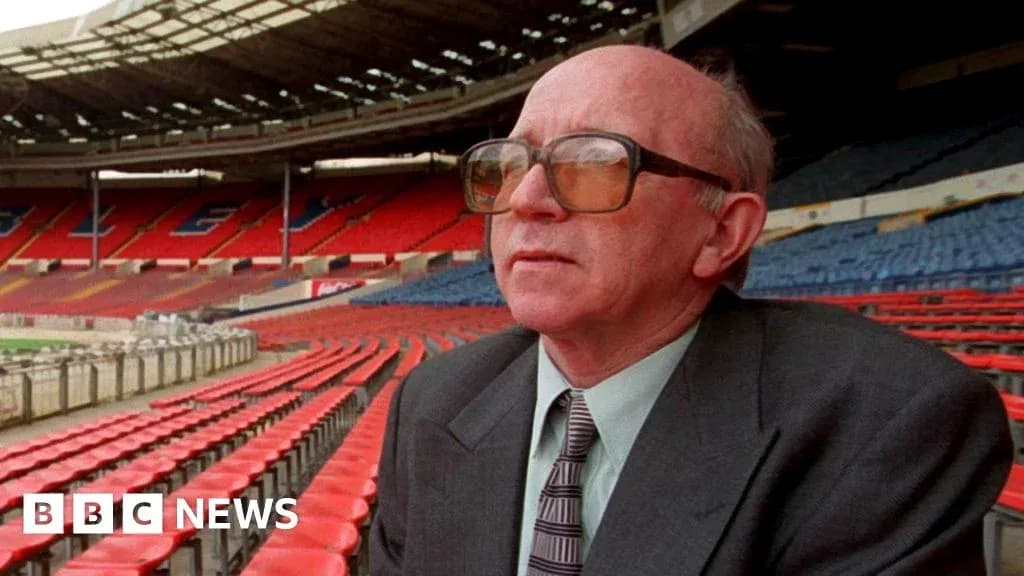
Stiles, the toothless, tough-tackling defensive midfielder who danced with the Jules Rimet Trophy in ’66, died in 2020 aged 78. On the pitch he was relentless, a key figure for both England and Manchester United. Off it, in the years before his death, his health deteriorated as his family watched on and began to ask why.
Born in Manchester in 1942, Norbert “Nobby” Stiles played nearly 400 games for Man Utd and won 28 caps for England. He built his reputation on timing, aggression and an unflinching willingness to put his head where others feared to put a boot. That style, the very thing that made him indispensable, is now at the centre of a legal and medical reckoning.
At Stockport coroner’s court, area coroner for Greater Manchester South Chris Morris confirmed that Stiles had been diagnosed with CTE, a condition linked to repeated head trauma and often associated with contact sports. He told the court that a brain expert, reviewing Stiles’s medical records, had concluded that high-stage CTE had contributed to his death.
Morris also cited “stage three limbic predominant age related TDP-43” and small vessel cerebrovascular disease as contributing factors. But it was the inclusion of a traumatic injury within the cause of death that changed everything.
“On the basis of that cause of death, particularly the inclusion of a traumatic injury included in the cause of death, I'm satisfied an inquest is required into the sad death of Mr Stiles,” he said.
A missed step – and a late intervention
In a detail that will concern many families of former players, Morris told the court that Stiles’s death had not been reported to the coroner’s office at the time.
“For reasons not entirely clear to me,” he said, the case only came to the coroner’s attention after information was provided by Stiles’s family. Only then did the formal investigation begin.
Now, almost four years after Stiles passed away, that process moves into full public view. A complete inquest hearing has been scheduled for Wednesday at the same court, where the circumstances and medical evidence around his death will be examined in detail.
Families pushing back
The Stiles family has long been at the forefront of calls for football to confront the cost of repeated heading and concussions. Their fight is no longer a lonely one.
John Stiles, Nobby’s son, heads Football Families for Justice (FFJ), a group demanding that football’s authorities do more for former players living with the consequences of their careers. He is one of dozens of former professionals and relatives now suing the Football Association, the Football Association of Wales and the English Football League.
The claim is stark: that these governing bodies were “negligent and in breach of their duty of care” to players, and that they failed to protect them from the long-term dangers of repeated head impacts.
Lawyers acting for the players and their families argue that football’s rulers knew, or should have known, that repeatedly heading a ball in training and matches carried a serious risk of brain injury – and that such risks had been flagged for decades.
Football’s defence – and the scientific fight
The authorities are not backing down easily.
In March, lawyers for The Football Association told the High Court that “it has not been established by science” that heading a ball or “occasional” concussion leads to permanent brain damage. That line of defence hinges on the complexity of proving direct causation in individual cases, even as the wider pattern of neurodegenerative disease among former players continues to draw scrutiny.
Yet the landscape is shifting. In January, an inquest into the death of Gordon McQueen, the former Scotland, Man Utd and Leeds United defender, found that heading the ball was “likely” to have contributed to the brain injury that played a part in his death. That conclusion sent a clear signal about how coroners may interpret the evidence in such cases.
Now Nobby Stiles’s name joins that growing list.
A generation under review
For many fans, Stiles will always be frozen in time: socks rolled down, teeth missing, arms aloft at Wembley. The inquest ordered this week forces a different image into focus – that of an ageing World Cup winner, his brain ravaged by disease, his family left to pick up the pieces and push for answers.
The hearing will not rewrite history or change the medals on his mantelpiece. It may, however, add legal and medical weight to a question that football can no longer dodge.
How many more of that generation will it take before the sport fully accepts the true price of those headers?