.svg&w=384&q=75 "Pitchgist logo")
Nigeria names star-studded squad for WAFCON and World Cup chase
Nigeria will go to Morocco with something to protect and something bigger to chase.
Coach Justine Madugu has kept faith with the core of the side that claimed a record 10th Women’s Africa Cup of Nations crown last year, naming captain Rasheedat Ajibade, goalkeeper Chiamaka Nnadozie and talismanic forward Asisat Oshoala in a 25-player squad bristling with experience and expectation.
The mission is two-fold. Defend Africa. Stay on the World Cup stage.
Title defence with a twist
The Super Falcons will attempt to extend their dominance with an 11th continental title when the tournament runs from July 26 to August 16 in Morocco, the same country where they silenced the hosts 3-2 in last year’s dramatic final.
This time, the stakes rise.
The expanded 16-team WAFCON doubles as a qualifying route for the 2027 FIFA Women’s World Cup in Brazil. Reach the semifinals, and the ticket is stamped. Fall short, and the path becomes complicated, with only the fifth-placed team earning a lifeline via an intercontinental playoff.
Madugu has made that hierarchy of priorities crystal clear.
“The next WAFCON will also serve as qualification for the 2027 FIFA Women’s World Cup, so our priority will first be to ensure that we make it to the World Cup,” he told CAFonline. “The second goal will be to defend the trophy and bring it back to Nigeria.”
Nigeria have never missed a Women’s World Cup since the inaugural edition in 1991. They remain the only African nation with that perfect attendance record and one of just seven countries worldwide to manage it. Protecting that streak is non-negotiable.
Madugu knows what comes with being the hunted.
“We know it won’t be easy because as champions everybody will now be looking at us,” he said. “We are holding something precious that everybody wants, but we will remain resolute and focused and try as much as possible to achieve both objectives.”
Plumptre’s absence, and a message from afar
There is, however, one conspicuous gap in this latest Nigeria squad.
Ashleigh Plumptre, a pillar in defence and a key figure in recent campaigns, misses out as she continues to recover from an injury sustained in March. The centre-back turned to social media to explain her absence and to underline her support.
“The body is asking for more time and I’m listening,” she wrote. “Sad to be missing this WAFCON yet hopeful in the prospect of getting to fight alongside these women again with the support of Nigerians everywhere when the body is ready to compete again.
“So, in the meantime, back these women, back them on their quest for victory once more. Go easy on them, they need you. I am with you ladies.”
Her words underline both the physical toll and the emotional weight carried by a team that has set the standard for an entire continent.
Old guard, new edge
Even without Plumptre, Madugu travels with a squad steeped in big-tournament know-how.
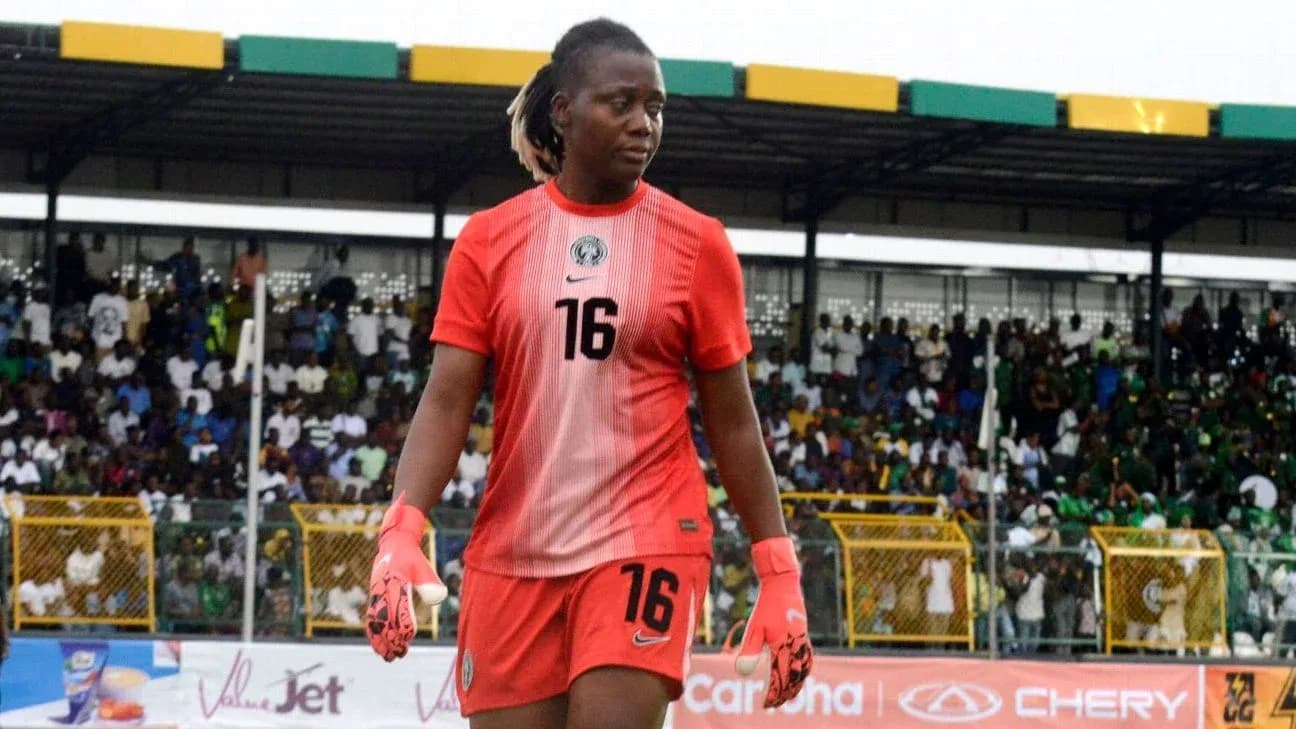
Ajibade returns not just as captain but as the heartbeat of Nigeria’s midfield and attack, a player who sets the tone with her pressing and her goals. Behind her, Nnadozie, widely regarded as Africa’s standout goalkeeper, remains a towering presence and natural leader from the back.
The spine of veterans is formidable: Osinachi Ohale, Michelle Alozie, Christy Ucheibe, Halimatu Ayinde and Oshoala form a core that has seen almost everything international football can throw at them. They know how to suffer in games, how to manage chaos, how to close out tight contests deep into stoppage time.
Around them, a new wave is pushing through.
Midfielders Jennifer Echegini and Deborah Abiodun bring energy, range and modern versatility, the kind of players who can flip a game with one surge through the middle. In attack, Gift Monday, Esther Okoronkwo and Omorinsola Babajide add speed and unpredictability, tasked with easing the load on Oshoala and giving Nigeria fresh ways to hurt opponents.
It is not a complete changing of the guard, but the blend is shifting. The old guard still leads. The next generation is no longer just waiting; it is expected to deliver.
One home-based hope, a global cast
The squad has a truly global feel. Only one player, goalkeeper Fatima Oloko of Abia Angels, is based in Nigeria. The other 24 come from clubs scattered across Europe, North America, Asia and the Middle East, underlining both the export strength of Nigerian talent and the challenge of moulding a cohesive unit from so many time zones and playing styles.
Yet this has long been the Super Falcons’ reality. They have turned that global spread into an advantage before, and Madugu will expect the same again.
Group C and the road ahead
Nigeria have been drawn in Group C alongside Egypt, Zambia and debutants Malawi, with all three group games to be played in Rabat.
On paper, Nigeria will start as favourites. Reality will be harsher.
Zambia’s recent rise in the women’s game, Egypt’s technical quality and Malawi’s hunger on their first appearance guarantee a group with traps at every turn. Any slip could complicate the route to the last four and, with it, automatic World Cup qualification.
Nigeria, though, arrive as Africa’s most decorated women’s side, with 10 WAFCON titles already in the cabinet. One more would not just extend that record; it would make them the first champions to successfully defend the trophy in the competition’s expanded 16-team era.
Madugu has his veterans. He has his emerging stars. He has a clear, unforgiving target.
Now the question is simple: can the Super Falcons carry the weight of history, secure their World Cup place, and still have enough left to keep hold of that “precious” trophy everyone else wants?