.svg&w=384&q=75 "Pitchgist logo")
Manchester United's Midfield Rebuild: Changes and Challenges
Manchester United’s summer was never supposed to look like this. Not torn up, exactly, but redrawn in thick red pen, with names crossed out, arrows scribbled in the margins and a new midfield built on Plan B and Plan C.
The club talked about being “flexible” before the window opened. Omar Berrada used the word. It sounded like a slogan then. It feels like survival now.
From Anderson and Fernandes to Santos and Tielemans
The original blueprint was clear. Elliot Anderson at the top of the list, Mateus Fernandes close behind, Éderson lined up as a clever, mid-range addition. Three deals that would reshape the heart of Erik ten Hag’s team.
Reality bit hard.
Anderson went to Manchester City for £116 million, a fee United always suspected would drift beyond their reach once City’s interest hardened and Nottingham Forest dug in close to £120m. They had seen this film before. In January, with Antoine Semenyo, United thought they were in a strong position after positive talks. Then City walked into the room. Wage expectations shot up, the deal twisted out of shape and Semenyo ended up at the Etihad for £64m.
United had no intention of getting dragged into the same spiral with Anderson. They cooled their interest early, wary of a bidding war they were unlikely to win and unwilling to be used as leverage.
Fernandes was different. Tottenham’s £85m move was not part of United’s pre-summer script. Inside Old Trafford, the expectation was that £80m-£90m would be enough to secure their main midfield target if they pushed. They could have matched Spurs financially. But during talks, there was no clear sign that Fernandes saw Old Trafford as his first choice.
After the experiences of last summer, that mattered.
United’s hierarchy point to Bryan Mbeumo and Matheus Cunha as the template. Both players had options, some with Champions League football on offer, yet each made it clear they only wanted United. Internally, there is a belief that this single-mindedness helped them settle quickly and perform. By contrast, there are still voices at the club who feel Jadon Sancho never fully convinced himself about leaving Borussia Dortmund in 2021, and that doubt bled into his time in Manchester.
With Fernandes, the hesitation cut both ways. When the moment came to decide whether to meet West Ham United’s demands, United stepped back. The commitment did not feel absolute. Tottenham pounced.
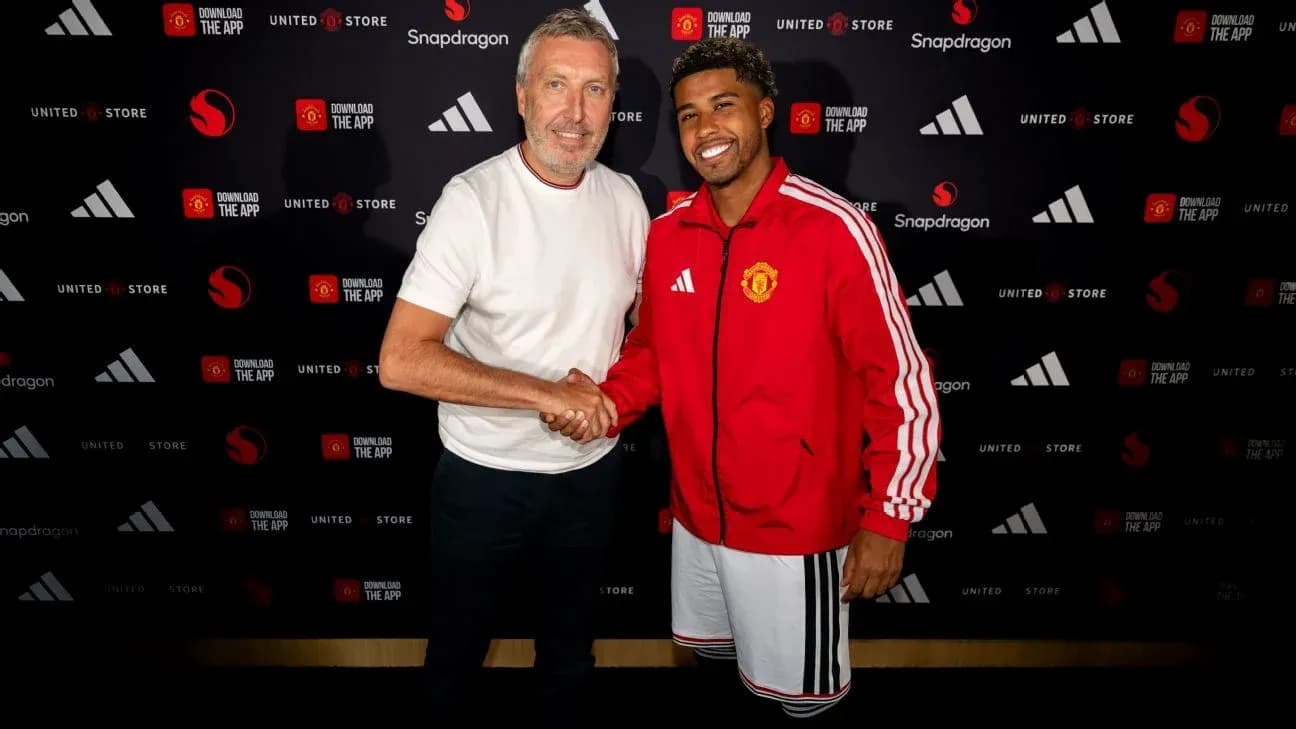
So the midfield rebuild pivoted. Out went Anderson and Fernandes. In came Andrey Santos from Chelsea for £48m and Youri Tielemans from Aston Villa for £35m.
Tielemans ticked a crucial box straight away. Premier League experience, yes. But more importantly, a firm desire to play for United, made clear early in talks. He also came with something Berrada values highly: a release clause. At £35m, it stripped away what staff at Old Trafford grimly call the “United tax” and gave the deal a clean, defined edge in a volatile market.
Santos, at £48m plus £2m in add-ons, fit a similar logic. United had initially placed Fernandes in a £40m-£50m bracket, especially if West Ham dropped into the Championship. When his eventual fee landed at almost double that, alarms sounded internally. There was a fear it could drag the entire midfield market upwards. Santos looked like the more responsible play.
Éderson collapse forces another turn
The Santos and Tielemans moves also followed a setback that had nothing to do with rival clubs or wage demands.
United had an agreement in place with Atalanta for Éderson before the World Cup, a £35m deal that seemed straightforward. Then medical tests highlighted an issue. The club decided they could not proceed.
The deal is not dead forever. People inside Old Trafford have not ruled out revisiting Éderson later in the summer. For now, though, the plug is pulled and the focus has shifted.
The pattern of the window is clear: plans drawn, plans disrupted, plans redrawn.
Tottenham’s spending and a moving budget
United expected competition this summer. They did not expect Tottenham to drop a combined £185m on Fernandes and Sandro Tonali, another midfielder United had assessed ahead of the window. That level of early, aggressive spending from north London took many at the club by surprise and changed the temperature of the market around them.
All of it has landed in a summer where United cannot afford missteps. Champions League qualification has boosted revenue, but the club is still operating under a hard financial ceiling. The idea at the start of the window was simple enough: raise around £90m from sales to cover the cost of a marquee midfield arrival.
On paper, the outgoing list looked promising. Rasmus Højlund to Napoli for £40m, Marcus Rashford potentially leaving, Manuel Ugarte, Joshua Zirkzee, Altay Bayindir. Significant money, if everything fell into place.
It did not.
Barcelona chose not to take up the option to sign Rashford permanently for £25m. Ugarte then suffered a serious knee injury with Uruguay at the World Cup, an issue that could keep him out for most of the year and effectively remove him from the market. The budget line, once neat, suddenly blurred.
Inside the club, staff talk about the transfer budget as something that shifts almost week by week. A blocked sale here, an unexpected injury there, and the numbers change. It is one reason Berrada leans so heavily towards deals with release clauses: they strip out the haggling, the posturing, the premium United so often face simply because of who they are.
Tielemans, at £35m fixed, was exactly that kind of deal.
Third midfielder still on the table
Despite Santos and Tielemans arriving, United have not closed the door on a third midfield signing, particularly after Ugarte’s injury. The recruitment department has drawn up a long, detailed list.
- Bournemouth’s Alex Scott and Tyler Adams are admired.
- Fulham’s Sander Berge is on the radar.
- Crystal Palace’s Adam Wharton has been watched closely, as has Wolves’ João Gomes.
- AS Roma’s Manu Koné features, and so does Lille’s Ayyoub Bouaddi, the 18-year-old who emerged as one of Morocco’s World Cup revelations.
There are bigger names in the conversation too. Real Madrid’s Eduardo Camavinga has been offered to several Premier League clubs. United also asked about Brighton & Hove Albion’s Carlos Baleba last summer, only to be told that any deal would require an initial fee in the region of the £100m Chelsea paid for Moisés Caicedo in 2023. That kind of outlay sits a long way from United’s current reality.
The search continues, but the days of reflex spending appear to be over. Inside Old Trafford, there is a clear message: no panic, no shortcuts, no repeat of past mistakes.
More than a midfield rebuild
Midfield is the headline, not the whole story. Other parts of the squad also need attention.
United want a left-sided player, either a full-back or a winger, and a second striker to ease the load up front. Wales international Karl Darlow, 25, is expected to arrive from Leeds United as experienced cover for current No.1 Senne Lammens.
The demands of next season are obvious. A third-placed finish has to be a platform, not a high point. Champions League football will stretch the squad, test its depth and expose any weak spots ruthlessly. The starting XI needs more quality; the bench needs more trust.
Inside the club, there is a sense of calm that jars with the noise outside. Supporters have voiced frustration at the lack of a single, blockbuster midfield signing, the kind of deal that sends a jolt through a fanbase and a message across the league. United’s response has been consistent: judge the window when it closes, not while the paint is still wet.
They have time. Six weeks until the Premier League kicks off on Aug. 22. Seven until the market shuts on Sept. 1. In that stretch, plans will change again. Targets will move. Deals that look dead will flicker back to life; others will fall apart on medical tables or in late-night contract calls.
For now, United’s summer is a story of adaptation rather than revolution. The best-laid plans have been bent out of shape, but not broken. The question is whether this new, improvised version of their rebuild can carry them where the original blueprint was meant to lead: back into genuine contention, not just for places, but for trophies.