.svg&w=384&q=75 "Pitchgist logo")
Mohebi's Celebration Sparks Political Debate at World Cup
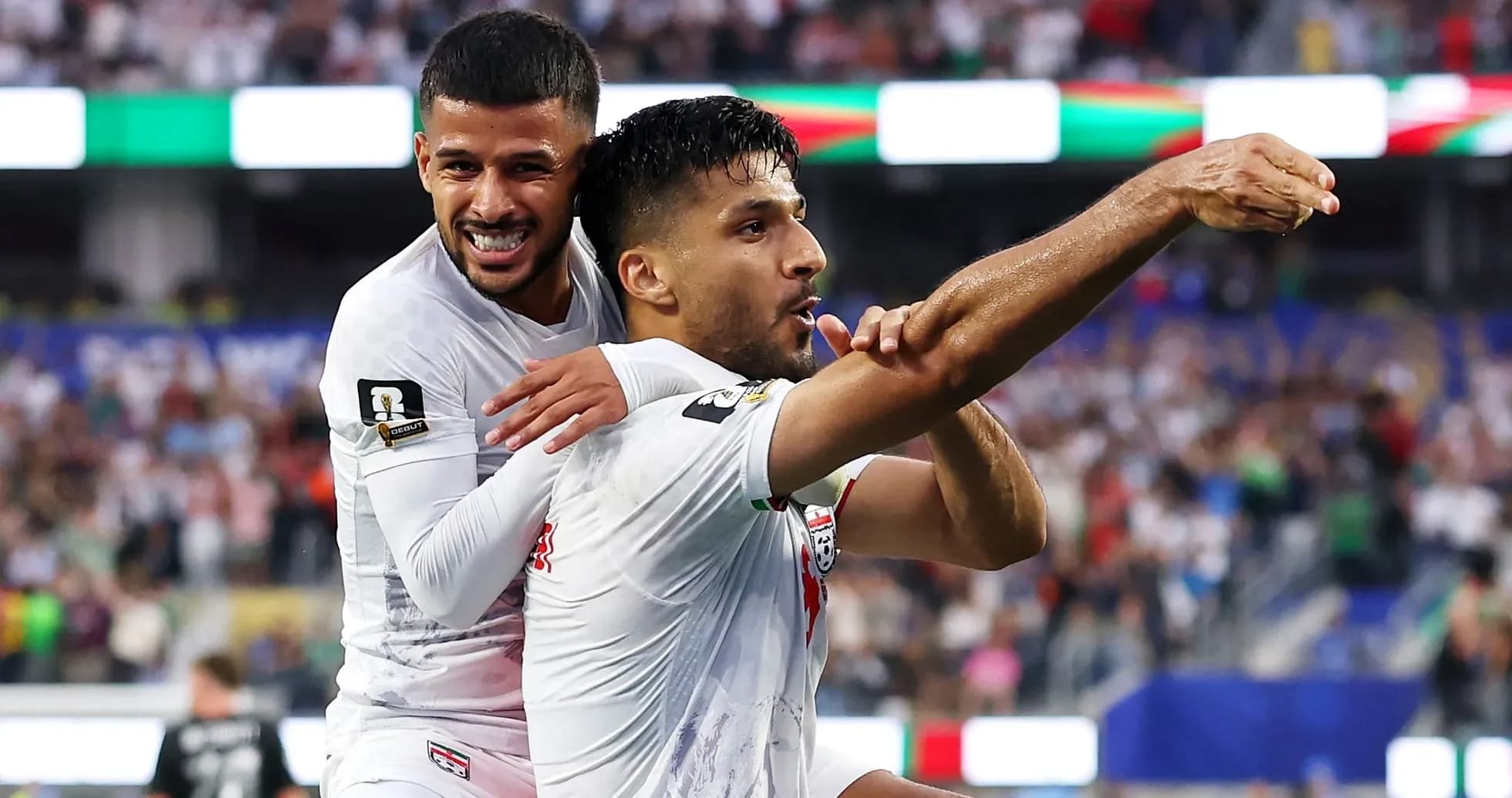
For a few seconds, it was all about the football. In the 64th minute against New Zealand, with Iran trailing in their World Cup opener, Mohebi arrived with the composure of a seasoned international and buried the equaliser that salvaged a 2-2 draw.
Then came the celebration. And the night changed.
The 27-year-old midfielder wheeled away, pointed two fingers toward his arm, then extended two fingers on his right hand and sliced them through the air. To many watching inside the stadium and around the world, the sequence looked unmistakable: a “gun” gesture.
The reaction was instant. Clips of the celebration spread rapidly online, dissected frame by frame. In a tournament already heavy with political tension around Iran, a few seconds of improvisation became the latest flashpoint. Supporters, commentators and observers began calling for FIFA to review the incident, arguing that the gesture crossed a line on a stage that is supposed to be about football.
Mohebi, though, pushed back on that narrative.
Speaking after the match, he insisted there was no deeper message, no hidden code in his movements, only a nod to Iranians thousands of miles from home.
“I wanted to say thank you to all Iranians who live in Los Angeles, they make a great atmosphere,” he said. “The celebration came to mind, and I do this [gestures] for all of the fans, just a celebration, you know.”
He framed it as spontaneous, a moment of emotion in front of a diaspora that had turned the stadium into a pocket of Tehran on American soil.
But the spotlight on Iran’s celebrations did not end there.
Rezaeian, who had also scored in the draw, added a different layer of intrigue. After his goal, the defender sprinted towards the supporters, pulling his shirt over his face as he ran. The image, too, was replayed and debated, and when he faced reporters, he did nothing to cool the speculation.
Asked directly about his celebration, Rezaeian acknowledged that it carried a political element, then immediately closed the door.
“It's something political (his goal celebration), I don't want to talk about that,” he said.
With that, the conversation lurched from the pitch to the wider context that has followed Iran into this World Cup. Rezaeian then tried to drag the focus back to football, drawing a line between the team’s responsibilities and the country’s internal struggles.
“We are here to answer football questions. If there is a problem between us (the Iranian people), it is between us,” he added.
The contrast was striking. Mohebi insisting his gesture was nothing more than a thank you to the crowd. Rezaeian openly labelling his own as political, then refusing to elaborate. One player denying intent, another confirming it but shutting down the discussion.
All of it leaves FIFA with a decision to make.
The governing body has been approached for comment regarding Mohebi’s gesture, and pressure is building for an official response. The organisation has long tried to keep overt political symbolism off the pitch, yet enforcing that line in a tournament where Iran’s every move is watched through a political lens will test that stance again.
Whether FIFA chooses to open a formal investigation or quietly let the storm pass will shape not only the narrative around Iran’s campaign, but also the message sent to players across the tournament about what is tolerated in goal celebrations.
Inside Iran’s camp, the priority must now snap back to football. The draw with New Zealand leaves Group G finely poised, and there is little time to dwell on viral clips and online debates.
Next up is Belgium in Los Angeles on June 21. A different kind of challenge. A different kind of pressure.
On the pitch, Iran will chase control of their group. Off it, they will walk into another night where every gesture, every celebration, every glance towards the stands will be watched and weighed.