.svg&w=384&q=75 "Pitchgist logo")
Mauricio Pochettino and Manchester United: The Inevitable Union That Never Was
For years it felt like a matter of time. Mauricio Pochettino and Manchester United, eventually united at Old Trafford. A modern coach for a giant in search of itself. The fit seemed obvious.
It never happened. And now, it probably never will.
Twice, Pochettino stood at the front of the queue. Twice, United veered away at the decisive moment. The Argentine has since crossed Europe’s biggest stages, fallen from a few of them, and is now rebuilding his reputation not in the Premier League or the Champions League, but in charge of the United States at a home World Cup. Somehow, that feels entirely in keeping with a career defined by near-misses and what-ifs.
The first sliding door
Go back to 2018/19. Pochettino’s Tottenham were still rising, still snarling at the elite. United, by contrast, were drifting. Jose Mourinho had gone, Ole Gunnar Solskjaer had arrived as a smiling interim, and the plan was clear: steady the ship, then go and get Pochettino.
For months, that was the expectation. Pochettino was the long-term target, the moderniser. Solskjaer was the caretaker.
Then United started winning.
Six straight league victories under Solskjaer, including that statement 1-0 at Tottenham in January, flipped the mood. The Norwegian’s audition became a full-blown campaign. Players smiled again. The fanbase surged behind the club legend. Pochettino, watching from the opposite dugout at Wembley as Solskjaer’s stock soared, saw the tide turning in real time.
The decisive moment came in Paris. United’s improbable comeback against Paris Saint-Germain in March felt like a throwback to the club’s most romantic nights. Emotion drowned out strategy. Solskjaer got the job permanently. United stumbled to the end of the season, Spurs reached the Champions League final, and yet the door to Old Trafford had already swung shut on Pochettino.
By the time he left Tottenham a few months later, the chance had gone.
PSG, Ten Hag and a race he could never win
The second opportunity came in 2022, and again Pochettino was right there, close enough to touch it.
He was at PSG by then, nominally chasing the Ligue 1 title but fighting the familiar Parisian battle: expectation versus reality. It was an underwhelming spell, the kind that stains a CV even when the trophy cabinet fills up.
United, once more, were in flux. Ralf Rangnick was the interim, the club were searching for a new identity, and the shortlist quickly narrowed to two names: Pochettino and Erik ten Hag.
From the outside, the story was simple. John Murtough and the United hierarchy were impressed by Ten Hag’s clarity and control in talks. Ajax were on the rise in Europe. The Dutchman felt like a project coach.
Pochettino’s version carries a different edge.
He was still under contract in Paris. PSG had just crashed out of the Champions League to Real Madrid, and the political reality was blunt: win the league, or else. United wanted to move quickly. Their season was unravelling and they were desperate to announce a new manager before the campaign ended. Ajax, more flexible, allowed Ten Hag to engage. PSG did not.
“I couldn’t negotiate,” Pochettino explained. United, he said, were “in a hurry”. The race became one he could not realistically run. Ten Hag walked through the door that many assumed would one day bear Pochettino’s name.
History has not been kind to that decision. Results, performances, and the broader sense of drift at Old Trafford have all raised the same question: did United back the wrong horse?
Ferguson’s favourite that never was
Inside the club, Pochettino has never lacked admirers. Sir Alex Ferguson saw it early. He liked what he saw at Southampton: the intensity, the organisation, the pressing. He sought Pochettino out, found his number, invited him to dinner. When Ferguson endorses you, doors tend to open.
Yet for all that quiet backing, the job never came. Instead, Pochettino’s reputation seemed to soften after he left Tottenham. The PSG stint underwhelmed. The Chelsea season was messy, complicated by ownership noise and squad churn, but looks less damning with hindsight.
Still, for a while, the narrative hardened: Pochettino had peaked. His moment at the top level had gone.
The World Cup is challenging that story.
A World Cup revival
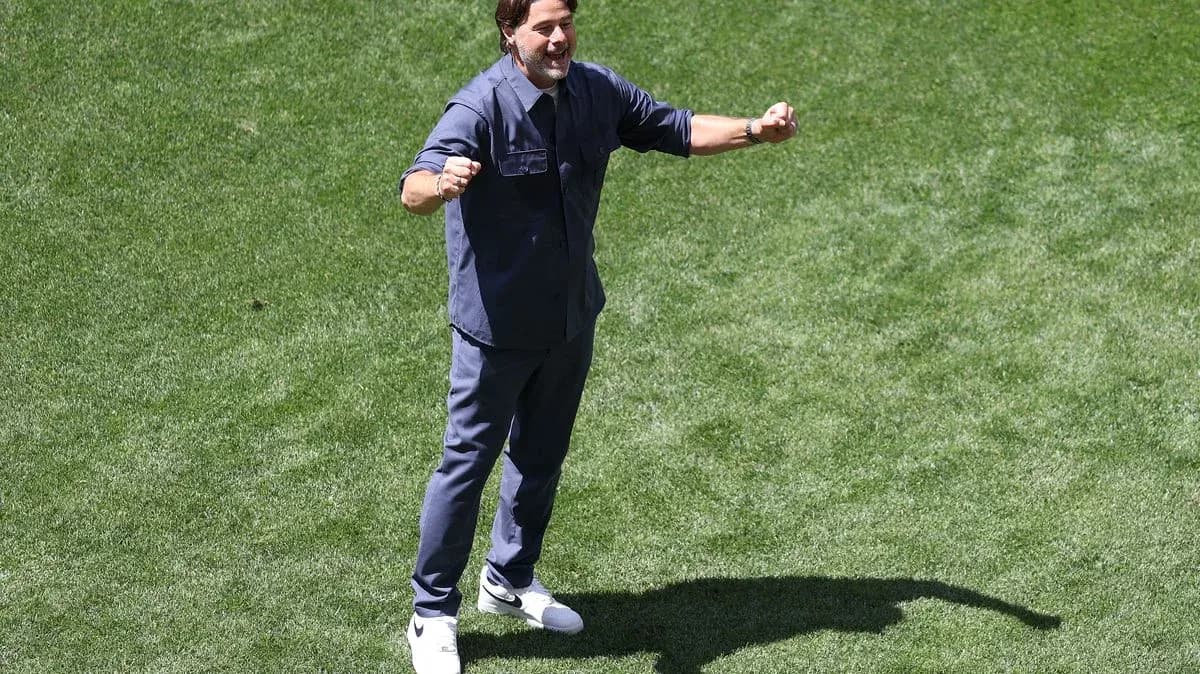
Pochettino’s United States side have ripped into this tournament with a ferocity that stands out. They press high. They swarm. They play with a club-like cohesion that most national teams can only dream of. In a competition often defined by caution, his team have brought intensity and aggression.
They look like a European club side dropped into a World Cup. That is not by accident. It is Pochettino, back in his element: structure, pressing triggers, collective buy-in.
Momentum is building behind the hosts. Keep this level up and a run to at least the quarter-finals feels entirely realistic. That kind of performance, on home soil, with the world watching, changes conversations in boardrooms across Europe.
Suddenly, Pochettino is no longer the man whose big chances passed him by. He is once again the elite coach with a clear identity and recent evidence to back it up.
His contract with the US runs only to the end of this tournament. He has been polite, saying he is “open” to staying on, but logic points elsewhere. Nothing in international football will match the intensity and emotion of leading the host nation through a World Cup. The Gold Cup will not scratch the same itch.
When the final whistle blows on this campaign, Pochettino will almost certainly be back on the market. Refreshed. Repackaged. Dangerous again.
United have moved on – for good?
And yet, just as his stock rises, United have once more gone in a different direction.
Michael Carrick has been handed a two-year deal after a strong second half of last season. It looks, on the surface, like a shrewd appointment: a modern coach, steeped in the club’s culture, with a clear idea of how he wants to play.
If Carrick had stumbled, if United had hesitated, if they had waited for the World Cup to play out, Pochettino’s name would inevitably have resurfaced. This time, with fresh momentum behind him, he might finally have been irresistible.
Instead, the timing is off again. The pattern repeats. United are committed elsewhere just as Pochettino re-enters the elite conversation.
What once felt inevitable now feels like a story football simply won’t allow. Pochettino will almost certainly return to a major European club after this World Cup. He will take charge of big games, big nights, big decisions.
They just won’t be at Old Trafford.