.svg&w=384&q=75 "Pitchgist logo")
Matheus Cunha and Harry Kane: The Obsession with Niceness in Football
Somewhere between Brazil’s narrow escape against Japan, Germany’s shoot-out exit and another think-piece on Harry Kane’s soul, a curious theme has taken hold: niceness is now a tactical flaw.
Not a bad touch. Not poor movement. Not a lack of goals.
Being nice.
Kane: humble superstar or carefully framed narrative?
The Daily Mail’s Craig Hope offers a neat character sketch of Harry Kane: “He does not have an ego in a traditional sense – he is the humblest of superstars – but he does not score the goals he does without a stubborn streak of high self-regard.”
It’s a tidy line. It’s also doing a lot of heavy lifting.
You can’t have an ego “not in a traditional sense” and then praise a “stubborn streak of high self-regard” without tying yourself in knots. That’s just ego with a better PR team. Kane’s self-belief is framed as admirable, almost noble. He is the “humblest of superstars,” the consummate professional whose confidence is recast as quiet determination.
Contrast that with the way Jude Bellingham has been described in some quarters: “divisive soloist”, “poster boy for moodiness”, “brand ambassador for petulance”, “an angry young man”. Same sport, same need for absolute conviction, but wildly different language.
One man’s “stubborn streak of high self-regard” is another’s “petulance,” apparently.
Barca, Bayern and a geography lesson nobody needed
Hope also explains why Barcelona might tug at Kane’s imagination more than Bayern Munich: “Bayern is not Barca and the Bundesliga is not LaLiga. Der Klassiker is not El Clasico. Der Klassiker is Bayern versus Dortmund, by the way.”
As if nobody watching top-level football has ever heard of it.
The comparison leans heavily on romance. Barcelona are painted as “irresistible”, Bayern as “stable”, “familiar”, “logical”. You could be forgiven for forgetting that Bayern went further than Barcelona in the Champions League last season and collected more silverware while doing it.
But the tone matters. Barcelona are allowed to be chaotic, alluring, flawed geniuses. Bayern become the sensible option. Kane, the “humblest of superstars”, is framed as the man who might crave something more glamorous.
England’s “major boost” that wasn’t
Over at the Daily Mirror, Matty Hewitt looked at Brazil’s win over Japan and concluded: “It looked as though the Three Lions were going to be given a major boost after Japan took the lead in the first half, with the Canarinho at risk of exiting the competition.”
Japan. A “major boost” for England.
This, remember, three months after Japan beat England. England have actually beaten Brazil more recently than they have Japan. Yet Japan, leading Brazil, are framed as a kind of gift to Gareth Southgate’s side.
It’s not analysis. It’s wishful thinking in a sentence.
Cunha, compassion and the “grit” myth
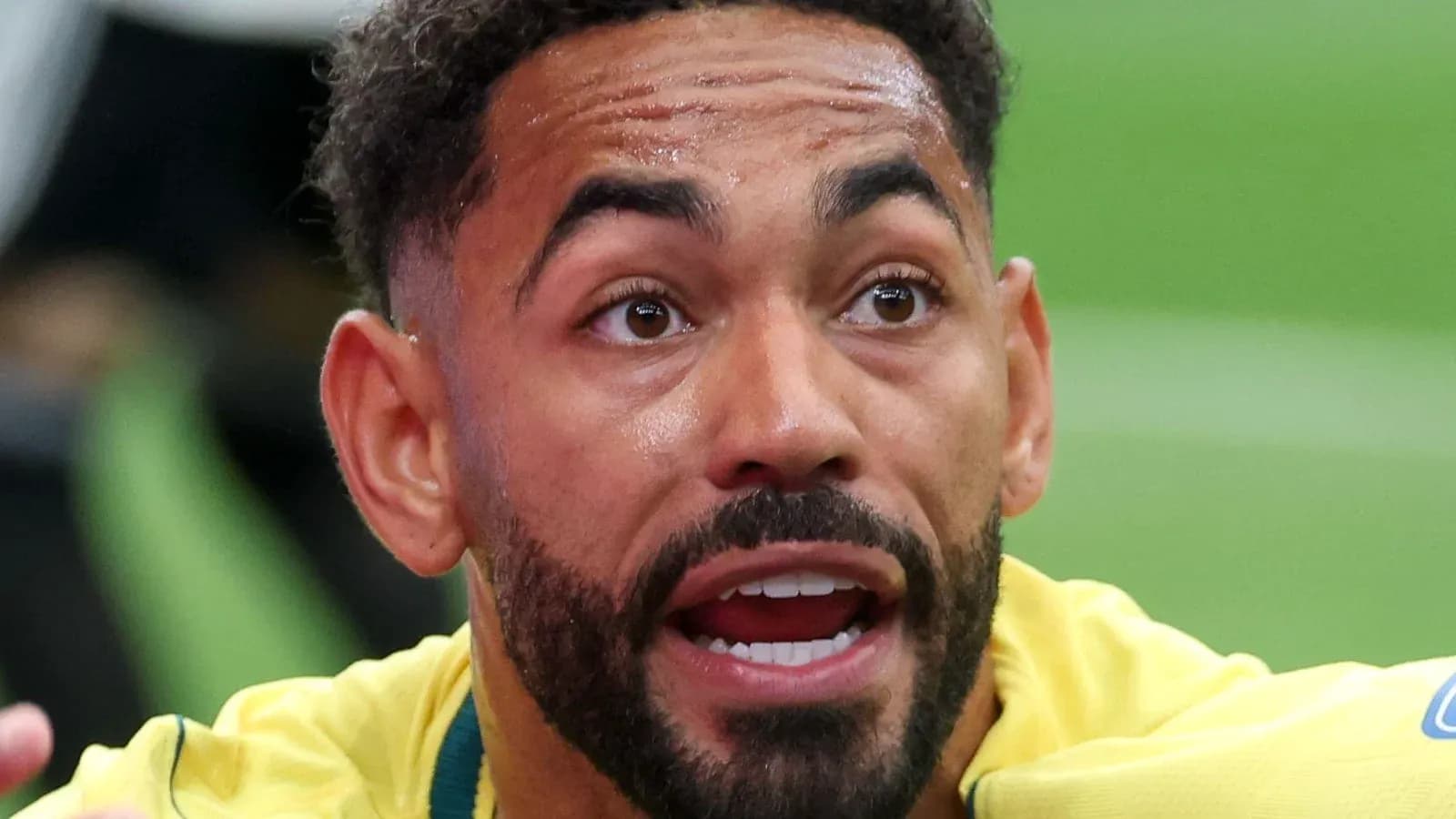
From that same Brazil–Japan match came the bigger narrative push. Jeremy Cross, also writing for the Mirror, homed in on Matheus Cunha with the headline:
“Matheus Cunha’s classy World Cup act can’t hide uncomfortable Brazil truth for Man Utd star.”
The “classy act” was Cunha consoling Japan’s Ao Tanaka after the final whistle, briefly putting an arm around a devastated opponent before joining the Brazil celebrations. A small, human moment. A flash of empathy on a pitch that usually swallows those gestures whole.
For Cross, it feeds into what he calls a “general feeling” and an “awkward narrative” around Cunha: that he “lacks the grit to go with the guile needed to become a great footballer, instead of a good one.”
This is where the logic collapses.
Cunha has been in the middle of enough on-pitch and off-pitch battles to bury the idea he’s soft. He was once banned for removing an Ipswich security guard’s glasses during what could only be described as a fracas. You don’t have to condone that to recognise it doesn’t scream “lacks grit”.
Yet a few seconds of sportsmanship now get bundled into a wider claim that he’s too nice, too gentle, not ruthless enough for the very top. A professional consoling another professional after a brutal defeat becomes a character flaw.
The final blow in the piece is almost comically inevitable: “And when Neymar decides to call time on his international career and pass the baton to someone else, the chances are he will hand it to Vinicius Jr – not Cunha.”
Of course he will. Vinicius Jr is one of the best players in the world, a Champions League-winning, game-breaking winger already carrying Real Madrid. The idea that this baton pass says anything about Cunha’s kindness is absurd. Brazil’s hierarchy is about talent, impact and status, not who hugged whom after a last-16 tie.
Being a good teammate and a decent human doesn’t disqualify you from leading a nation. It just doesn’t guarantee you’ll be better than Vinicius Jr.
Nagelsmann, a “snap” and a headline that needed drama
Germany’s exit on penalties to Paraguay brought another loaded framing. MailOnline led with:
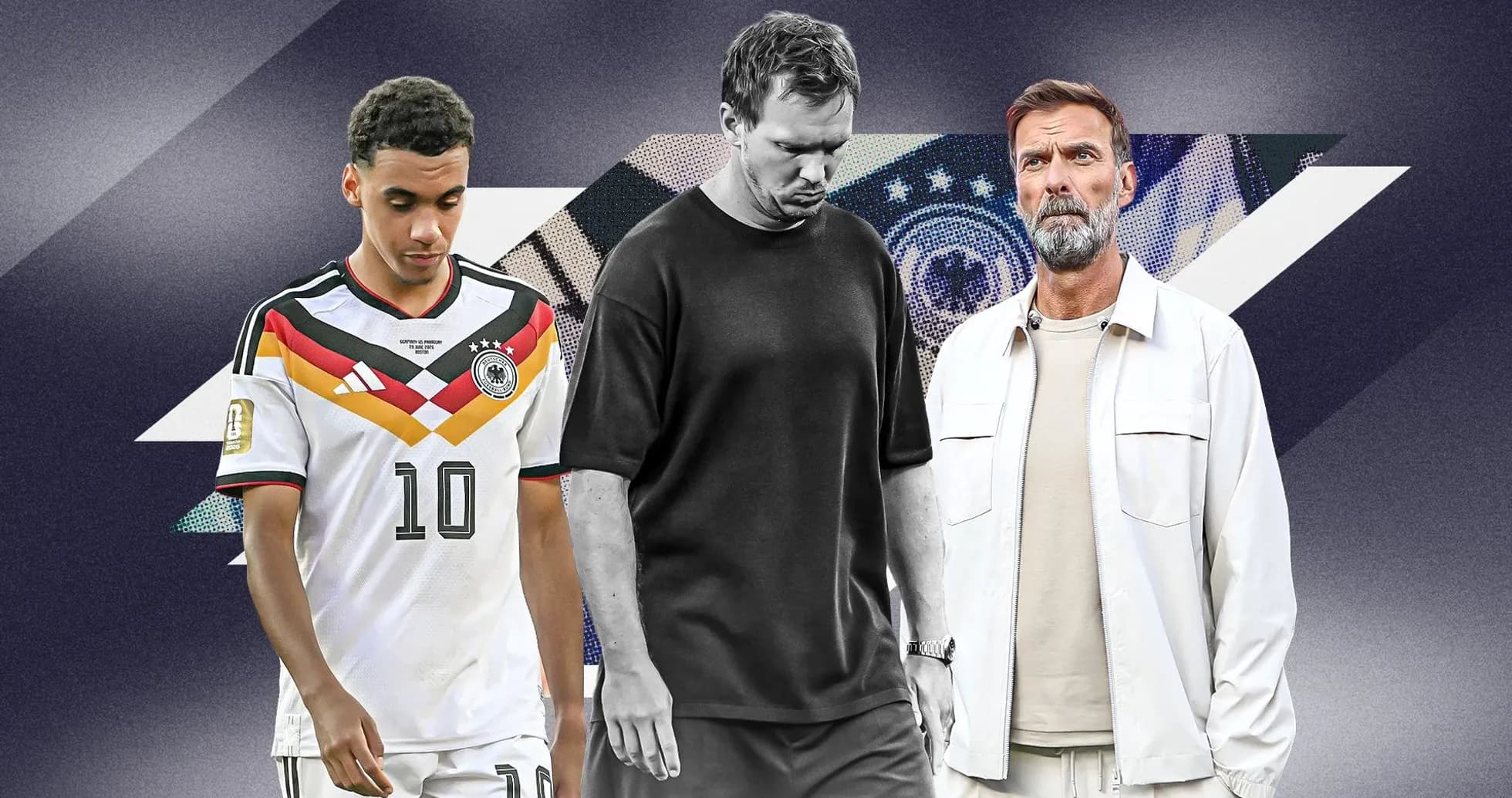
“Germany manager Julian Nagelsmann snaps at female reporter’s questioning after being knocked out of the World Cup by Paraguay – as Jurgen Klopp eyes up his job.”
Two things jump out immediately. First, the choice to describe Lili Engels as a “female reporter” in the headline, only to call her simply a “reporter” in the copy. Second, the word “snaps”.
The clip shows a slightly tense exchange. A manager under immense pressure, trying to defend his decisions after a high-profile failure. Voices don’t rise, tempers don’t flare. It’s awkward, not explosive.
Yet “snaps at female reporter” changes the tone entirely. It invites the reader to imagine something harsher, more aggressive, more loaded than what actually happened. It also leans into a gender dynamic that the rest of the article doesn’t sustain. If she’s just a “reporter” in the body of the piece, why is “female” so vital in the headline?
Because it sharpens the drama. Because it makes a mild disagreement sound like a flashpoint.
And tucked onto the end comes the Klopp angle – “eyes up his job” – just to throw petrol on a fire that barely exists.
Fixing narratives, not matches
Away from the individual character sketches, the Mirror also reported: “FIFA take decision over investigating Algeria vs Austria clash following match fixing claims.”
The details of that decision matter, of course, but the pattern around it is telling. Claims, suspicion, insinuation – all of it feeds a news cycle that thrives on the idea of hidden motives and darker truths.
Yet some of the most distorted stories in this window haven’t involved backroom deals or bent officials. They’ve been about how we talk about players and managers.
Kane’s ego is framed as noble. Bellingham’s edge is painted as problematic. Cunha’s compassion becomes a weakness. Nagelsmann’s testy interview turns into a “snap” at a “female reporter”.
The sport itself hasn’t changed. The ball still moves the same way. What shifts, week by week, is the language wrapped around it.
And if being “too nice” is now a tactical sin, you have to wonder: what exactly do we want from the next generation of stars – better footballers, or better villains?