.svg&w=384&q=75 "Pitchgist logo")
Ma Ning’s World Cup Journey: A Reflection on Persistence
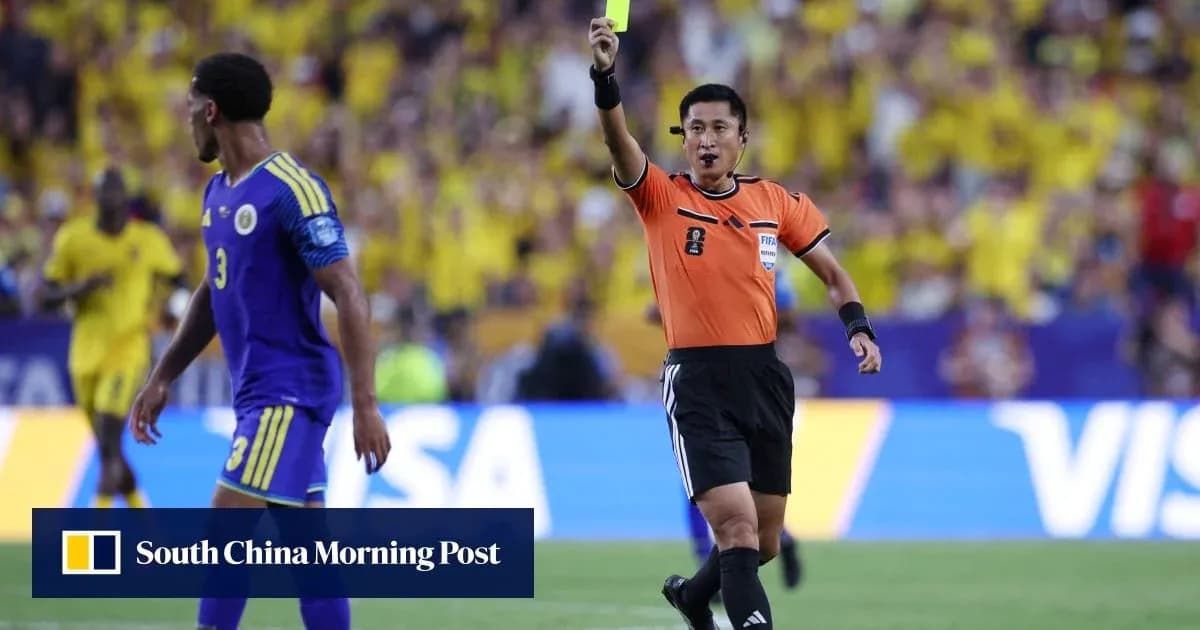
China’s last whistle at this World Cup has already been blown. It did not come from a player or a coach, but from referee Ma Ning as he walked away from the tournament and straight into the hearts of fans back home.
Fifa’s final list of officials for the semi-finals and beyond did not include Ma or his assistant referee Zhou Fei, with the governing body confirming the names on Sunday. Their omission, coming just days after video assistant referee Fu Ming also left the tournament, quietly closed the chapter on Chinese involvement at this World Cup.
No controversy. No drama. Just a line drawn under a long assignment on the game’s biggest stage.
For Ma, 47, the moment called for reflection rather than regret. Back in China, he posted a farewell video on social media, speaking not as a faceless official, but as a man who had spent two decades chasing a place in a world most referees only dream of.
“From the campus to the World Cup stage, from youthful ignorance to composure and calm, I have spent 20 years proving the meaning of persistence,” he said. At an age when many in the game are winding down, he pushed back against the idea that time had passed him by. “At 47, many people say it is too late, but I always believe that as long as there is faith, we can turn the impossible into the possible.”
This was not a victory speech. It was something more raw: a career laid out in a few sentences, framed by the grind of domestic fixtures, the scrutiny of international assignments, and the knowledge that every decision under the floodlights is one slow-motion replay away from uproar.
Ma made sure to turn the spotlight away from himself. He reserved special thanks for his family, the unseen support system behind every long-haul flight, every training camp, every match in hostile atmospheres. Their backing, he said, kept him “resolute and fearless” as he pushed toward his dreams.
Then he addressed the people who have judged him the harshest and, in his eyes, helped him the most: the fans.
They once mocked him as the “card master”, a referee quick to reach into his pocket. Over time, as his standards improved and his profile rose, that nickname softened into a kind of backhanded respect. “From teasing me as the ‘card master’ to recognising my officiating standard, it is your rationality and tolerance that have shown me the most lovely side of Chinese football,” he told them.
The line cut through. Chinese football has often been accused of cynicism and impatience, yet here was one of its most visible officials praising supporters not just for watching, but for learning to understand the game from a referee’s vantage point. “You are not only watching the games, but also truly understanding the value of refereeing,” he said.
For China, this World Cup ends without a team on the pitch and now without officials on the touchline or in the VAR room. The flag has come down earlier than Ma and his colleagues would have liked.
But as he steps away from the tournament, his words leave a different kind of question hanging in the air: if a referee can spend 20 years turning “impossible” into “possible”, what stops the rest of Chinese football from doing the same?