.svg&w=384&q=75 "Pitchgist logo")
Liverpool Faces Defensive Crisis After Konaté's Exit
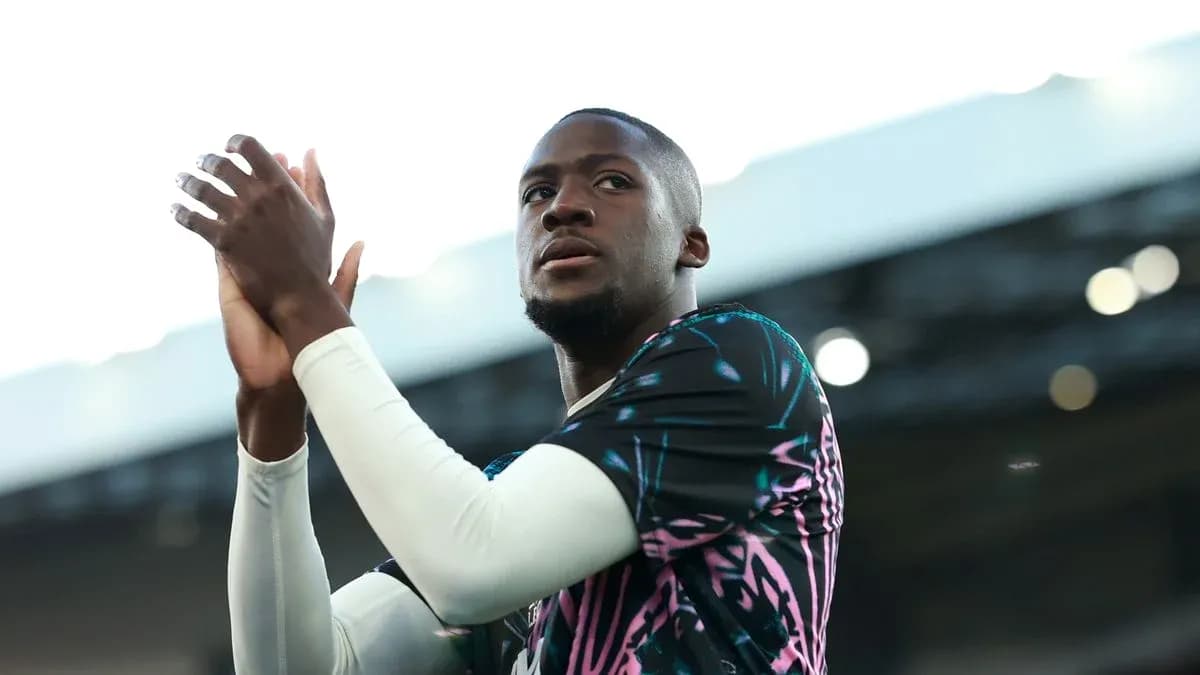
Ibrahima Konaté is heading for the exit. No last-minute breakthrough, no compromise on terms. When his current deal runs out, the Frenchman will walk away from Anfield for nothing.
For Liverpool, it’s a familiar and increasingly painful theme.
Konaté will follow Andy Robertson and Mohamed Salah out of the door this summer, all departing as free agents. Add in Trent Alexander-Arnold’s move to Real Madrid last year and the numbers are jarring: four of the club’s most influential players of the past decade, a combined fee of just £10 million.
For a club that once set the standard in trading, that is a brutal return.
Now comes the hard part. Top-class centre-backs are scarce, expensive and heavily protected by their clubs. Yet Liverpool must find someone to step into the role Konaté has filled since 2021, partnering Virgil van Dijk at the heart of the defence.
Richard Hughes, Arne Slot and the recruitment team have options, but none of them are straightforward.
Jan Paul van Hecke – Familiar Face, Familiar Partner
Jan Paul van Hecke ticks a lot of Liverpool’s boxes. Brighton’s Dutch defender has already been linked with a move to Anfield in reports from Voetbal International, and the logic is obvious.
He plays in a back three. He plays in a back four. Roberto De Zerbi has asked him to defend high, build from deep and live with risk. He’s comfortable in all of it.
Van Hecke is a composed, ball-playing centre-back who looks at home in a possession-heavy side. He has chipped in with three goals and three assists in the Premier League this season, numbers that underline his threat when he steps out or attacks set pieces.
Under pressure, he holds his ground. Literally. One of Konaté’s underrated strengths is his knack for drawing fouls and relieving the press. Van Hecke mirrors that trait almost exactly: 1.21 fouls won per 90 minutes in the league this season, compared with Konaté’s 1.19. That kind of detail matters when you invite teams onto you and then try to play through them.
Without the ball, he is proactive. Van Hecke sits in the 72nd percentile of Premier League centre-backs for interceptions per 90 (1.32), a sign of a defender who steps in rather than simply dropping off.
He is 6ft 3in but not as dominant aerially as Konaté. With Van Dijk alongside him and imposing youngster Jeremy Jacquet arriving for pre-season, Liverpool could still build a physically imposing back line, but Van Hecke would be more about anticipation and composure than sheer power.
His international story adds another layer. Despite competition from Matthijs de Ligt and Stefan de Vrij, Van Hecke has 10 caps and has been called up to the Netherlands’ World Cup squad, where he is expected to feature alongside Van Dijk in North America. That existing partnership is a huge advantage. Slot would be buying not just a defender, but a ready-made understanding.
Timing complicates things. World Cup involvement means Liverpool either move quickly before the tournament or wait until late in the window, when his price and profile may have shifted again.
Contractually, there is an opening. Van Hecke will enter the final year of his deal at Brighton this summer, which should make negotiations more realistic. It also means Liverpool are not alone. Tottenham have been linked as De Zerbi reshapes his squad, and Chelsea are watching as well. Brighton are expected to ask for around £50 million.
Liverpool know how that game works. The question is whether they want to play it for this profile of defender.
Joachim Andersen – The Grown-Up in the Room
If Van Hecke represents the future, Joachim Andersen offers something more immediate: experience, presence and a proven Premier League body of work.
Once an unlikely Fantasy Premier League cult hero at Crystal Palace, Andersen has quietly become one of the division’s most reliable centre-backs. Now at Fulham, he brings a different profile to Van Hecke but one that could plug several of the gaps Konaté leaves behind.
Andersen is dominant in the air and lives for the physical battles that define Premier League penalty areas. He ranks highly for interceptions and clearances, yet he is still comfortable on the ball, even if he does not drive play forward as aggressively as Van Hecke.
He is just a centimetre shorter than the Brighton man, but his real edge is experience. Six years in the Premier League. Forty-nine caps for Denmark. He sits in the top 10% of Premier League centre-backs for touches and aerial duels won, a sign of both involvement and authority.
Crucially, his profile allows him to cover Van Dijk as well as Konaté. Liverpool’s captain has played more minutes than any other 34-year-old this season. He needs rest. Andersen could give it to him without the back line collapsing in his absence.
Financially, this is the pragmatic route. Fulham paid £30 million for Andersen two years ago. He would almost certainly be the cheapest name on Liverpool’s shortlist. At 29, he offers a solid, reliable presence without blocking the pathway for Jacquet or Giovanni Leoni.
Internally, Liverpool know they have defenders whose underlying data resembles Konaté’s. Jacquet is one of them. That opens up a different strategy: sign a stop-gap, trust the development of the younger options, and avoid another massive outlay in a market that is already inflated.
If that is the route they choose, few players fit the “bridge” role better than Andersen.
Jarell Quansah – The One That Got Away?
This is the wildcard. And the awkward one.
Jarell Quansah returning to Liverpool just a year after being sold to Bayer Leverkusen for £35 million would be a remarkable twist, but the centre-back market is thin in the age and profile bracket Liverpool favour. The logic is uncomfortable, but not hard to see.
The decision to let Quansah leave looks worse with every step of the Konaté saga. A Liverpool academy product, he had already shown maturity and promise in his breakthrough season. Then came a bruising start under Slot. Hooked at half-time in the Dutchman’s first game in charge, his confidence clearly suffered.
Leverkusen changed everything.
Under Xabi Alonso, Quansah has re-emerged as one of Europe’s standout young defenders. He has earned a call-up to England’s World Cup squad this summer, a marker of how quickly his reputation has recovered.
Liverpool fans do not need reminding of what he can do. They saw him partner Van Dijk during Jürgen Klopp’s final season, and he has only grown since then. In the Bundesliga, he was dribbled past just twice all season. On the ball, he posted a 90.3% pass completion rate and averaged 0.55 successful dribbles per 90. Those are the numbers of a defender who not only survives pressure but uses it.
The problem is the price. Liverpool inserted a multi-tiered buy-back clause when they sold Quansah and even pre-agreed contract terms. They can bring him back this summer for £69.4 million.
Or they can wait.
Reports in BILD suggest any return is more likely next year, when that clause drops to £52 million. Another season in Germany would not harm his development, and from Leverkusen’s perspective, there is no urgency to cash in.
For Liverpool, the optics are already rough. Letting arguably the best pure defensive prospect to come through their academy since Jamie Carragher leave, only to consider paying almost double to bring him back, is a hard one to explain. The question now is whether they swallow that pride for the sake of the long-term spine of the team.
Alessandro Bastoni – The Big Swing
Then there is the dream scenario. The headline name. Alessandro Bastoni.
On paper, Bastoni is not the obvious Konaté replacement. He is more naturally a long-term successor to Van Dijk. Left-footed, elegant, capable of operating at centre-back or left-back, he would help cover the loss of Robertson and the uncertainty around Kostas Tsimikas, while Milos Kerkez finds his feet.
His status changes everything. You do not sign Bastoni to rotate. You sign him to start. That would likely mean Van Dijk shifting over to the right-hand side of the pairing, a significant adjustment for a player who has built his dominance from the left.
The attraction is obvious. Bastoni is outstanding both with and without the ball. In Serie A, he ranks in the top 10% of centre-backs for assists, successful passes and accurate long balls, and in the top 5% for big chances created, overall touches and xG conceded while on the pitch. He dictates games from the back in a way few defenders can.
At one point this year, a departure felt more plausible than ever. Abuse after his red card against Bosnia and Herzegovina, which contributed to Italy’s collapse and World Cup qualification failure, cast a shadow over his international standing and fuelled speculation about a move.
That talk has cooled. Despite reported interest from Barcelona, Inter president Giuseppe Marotta told DAZN, via Goal, that Bastoni “has absolutely not expressed his desire to leave”. Once again, he looks set to stay at San Siro.
Still, situations shift quickly in elite football. If there is even a sliver of opportunity to prise him away from the club he joined nine years ago, Liverpool have to be in that conversation. Deals like that reshape a back line for half a decade.
Konaté’s departure leaves more than a hole in Liverpool’s defence. It exposes a club at a crossroads, trying to rebuild on the fly while watching key assets walk away for free. The names on the shortlist range from pragmatic to ambitious, from stop-gap to foundational.
Now the question is simple, and unforgiving: do Liverpool patch, or do they dare?