.svg&w=384&q=75 "Pitchgist logo")
Lionel Messi's World Cup Journey: Media Storm and Controversy
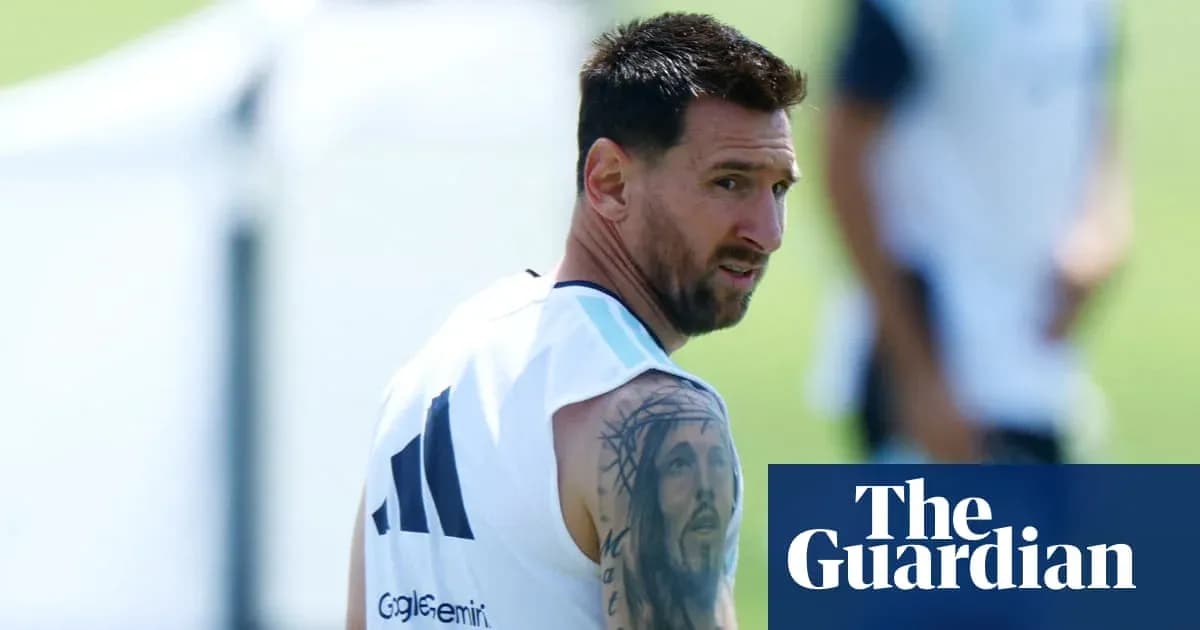
Lionel Messi is chasing history at a sixth World Cup. Back home, a media storm of Argentina’s own making has already claimed jobs.
False report, real consequences
The drama began on Luzu TV, one of Argentina’s most influential streaming channels, when presenter Florencia Peña told viewers that Jorge Messi, Lionel’s father, had died. She went further, suggesting the news meant Messi would not play again at this World Cup.
None of it was true.
Hours later, the Messi family released a statement confirming that Jorge Messi was in hospital with an undisclosed medical issue, but was “progressing favourably”. The contrast between reality and what had gone to air was stark – and devastating for Luzu.
Peña resigned from the channel and publicly apologised, placing the blame on false information relayed to her live through her earpiece and presented as verified by the production team.
“I apologise to the Messi family for the awful moment I imagine they are going through,” she wrote on social media. “I am deeply ashamed to have been the vehicle for this pain. I must clarify that this false information was provided to me during the live broadcast as verified by the production team of the show, and I trusted it.
“Even so, I take responsibility for being part of the mistake, and that’s why I decided to step aside and end my participation in Luzu. I apologise again from the heart; I was wrong.”
Her exit did not close the matter.
Luzu under fire
Luzu, founded in 2020 and now a powerhouse in Argentina’s digital media landscape, scrambled to contain the damage. The channel issued its own statement, also apologising to the Messi family and announcing that “those responsible” had been dismissed.
“We deeply regret the incident that occurred on air during the programme,” the statement read. “For our channel, broadcasting sensitive information without proper prior verification is unacceptable. Consequently, Luzu TV management has decided to part ways with all those responsible, and Florencia Peña has decided to step aside. We reaffirm our commitment to responsible, respectful, and rigorous communication.”
The backlash was immediate and financial. According to reports in Argentina, as many as 10 brands cut their sponsorship ties with the channel almost at once. For a streaming outlet built on audience trust and commercial partnerships, the cost of one unverified “scoop” became brutally clear.
Messi family draws a line
If Luzu’s language was contrite, the Messi family’s was cutting.
“In light of the versions, rumours and speculation that have circulated in recent hours, the family wishes to express their profound discomfort at the lack of sensitivity, respect and scruples with which some individuals have treated a strictly private and family matter,” their statement said.
They stressed that only “closest family members” hold accurate information about Jorge Messi’s condition and warned that any report not coming directly from the family or their authorised channels “should not be considered valid or truthful”.
The message was unmistakable: stop guessing, stop speculating.
“In moments like this, we ask for responsibility, prudence and humanity,” the family added. “A person’s health and the peace of mind of those around them should not be the subject of speculation or irresponsible media interest.”
As Messi carries Argentina’s hopes on the pitch, his relatives are forced to defend basic privacy off it.
On the pitch, Messi erupts; off it, Algeria protest
While the controversy raged, Messi the footballer did what Messi so often does: bend the World Cup to his will.
In Kansas City, the 37-year-old opened his sixth World Cup with a hat-trick in a 3-0 win over Algeria, underlining again why Argentina arrived as reigning champions and tournament favourites. He dictated the game, found space where none seemed to exist, and punished every Algerian lapse.
Yet even that performance could not escape dispute.
Algeria have sent a formal letter to FIFA’s refereeing commission, complaining about what they see as poor officiating in the defeat, with particular focus on a first-half flashpoint involving their captain, Aïssa Mandi. During a tussle, Messi stepped on Mandi’s calf. Algerian fans roared for a red card. No punishment followed.
The referee in charge was Poland’s Szymon Marciniak, the same official who oversaw the 2022 World Cup final in Qatar, when Argentina beat France on penalties. His decision to let Messi stay on the pitch in Kansas City looms large in Algeria’s grievance, not least because the forward went on to complete his hat-trick.
From their perspective, the game turned on that non-call. From Argentina’s, it was just another night when their captain decided the outcome.
A World Cup under a harsh spotlight
Argentina move on to face Austria in Group J on Monday in Arlington, Texas, with their captain already in full flow and their title defence firmly on track.
Around Messi, though, the noise only grows louder. A brutal reminder from Buenos Aires about what happens when the race to be first tramples the duty to be right. A furious complaint from Algeria about how the sport’s biggest star is refereed on the game’s biggest stage.
Messi keeps scoring. The world keeps watching. And the margin for error – for referees, for broadcasters, for anyone who touches his orbit – looks smaller by the day.