.svg&w=384&q=75 "Pitchgist logo")
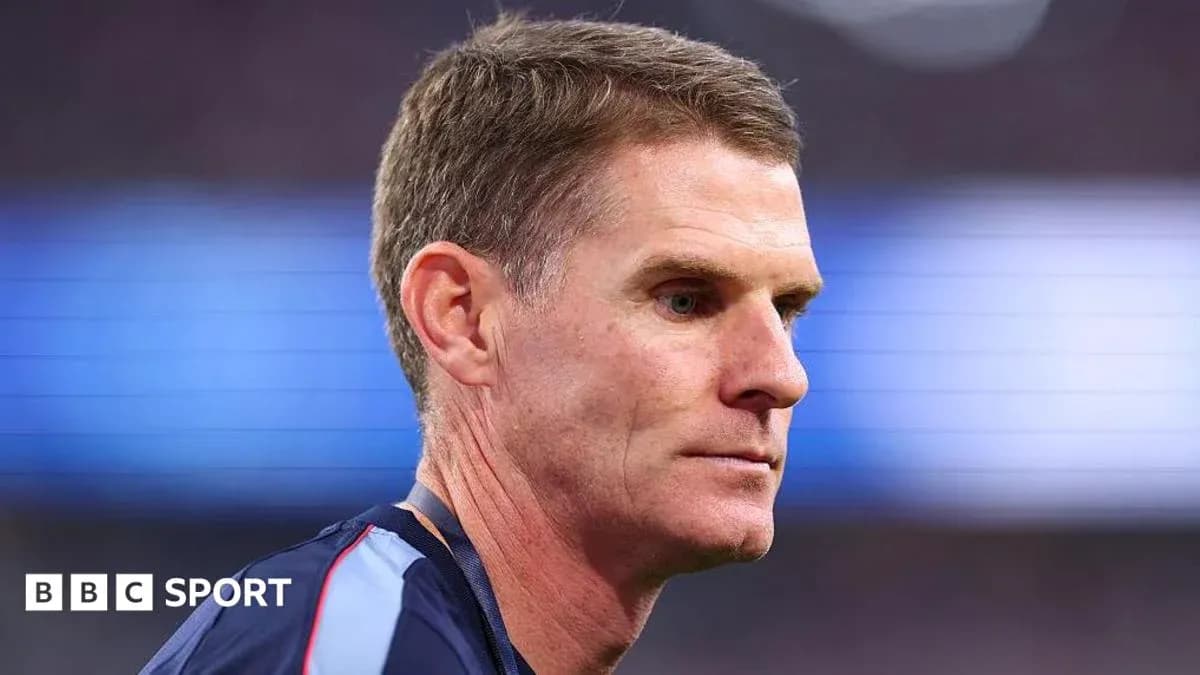
Anthony Barry's Honest Half-Time Interviews at World Cup
Anthony Barry will continue fronting England’s televised half-time interviews at the World Cup, despite his stark on-air critique of the team’s display against Croatia.
The assistant coach did not sugar-coat what he had seen in Dallas. With the score locked at 2-2 after a chaotic opening 45 minutes, Barry described England’s first half as “complicated and confusing”, highlighting nervous energy, muddled decision-making and “fearful patterns” in possession. Thomas Tuchel’s side eventually powered to a 4-2 win, but the honesty of the interval assessment raised eyebrows in some quarters.
Inside the England camp, though, there is no sense of unease. Quite the opposite.
Honest voice in a tight window
The new half-time interview slots have become a prominent feature of World Cup broadcasts. Broadcasters can ask for access, but the interviews are officially “a request rather than mandatory”, and nations have taken different approaches: some send the head coach, others a substitute, others no one of real influence.
England have made a clear call. With the 15-minute break already a frantic blur of analysis, adjustments and recovery, Tuchel and his players are being protected from extra demands. The view is simple: the head coach’s time is too valuable to be spent on live television while tactical corrections are still being drawn on the whiteboard.
Barry has stepped into that space, and Tuchel is understood to welcome both the arrangement and the tone. The assistant’s blunt verdict in Dallas has not caused any internal friction; if anything, his willingness to say publicly what the staff are saying privately has been seen as a strength.
Asked for his assessment at the interval against Croatia, Barry laid out the problems with unusual clarity for a live broadcast.
“Overall, a complicated and confusing first half from us really,” he said, pointing to the “nervous energy” that accompanied England’s World Cup opener. He accepted that some jitters were inevitable on such a stage, but did not hide from the consequences. England, he argued, repeatedly chose the wrong option: “We played long when we should play short and played short when we should play long… Not playing through the gaps, so not allowing us to accelerate our game the way we wanted to.”
The penalty that put England ahead should have settled them. It did not. “You’d think the penalty would free us up and allow us to play more like us,” Barry said, “but again we fall back into some fearful patterns.”
Set-pieces, as so often, came to the rescue. England’s second goal arrived from a dead ball, a familiar weapon. Barry admitted the staff hoped that would finally loosen the team’s shoulders. Instead, Croatia struck late in the half and dragged the game back to 2-2, leaving the coaching team with plenty to address in the dressing room.
The response after the break, and the eventual 4-2 victory, has helped cool any external chatter about Barry’s candour. Inside the camp, his role as the public voice in that tight window will continue.
Rashford fitness under watch
Away from the cameras, England’s medical staff are monitoring Marcus Rashford ahead of Tuesday’s meeting with Ghana.
The forward came off the bench in Dallas and added the fourth goal, capping England’s second-half surge. After the game, though, he reported muscle discomfort and some soreness.
Early signs are relatively positive. There is optimism that the issue will not rule him out of the Ghana fixture, but his workload will be managed carefully as the staff weigh risk against reward in a tournament that rarely forgives misjudged gambles on fitness.
For now, Barry will keep talking at half-time, Rashford will keep being assessed, and England will keep walking that fine World Cup line between transparency in public and ruthlessness in private.