.svg&w=384&q=75 "Pitchgist logo")
Lamine Yamal Leads Spain to World Cup Final
Lamine Yamal didn’t wait for the plane to take off before aiming at the next target.
“Nuevayol vamos por ti,” he posted — “New York, we’re coming for you” — as the echoes of Spain’s 2–0 win over France were still bouncing around AT&T Stadium in Arlington. Photos from the semifinal flashed across his Instagram feed. The message was blunt: the job is not done.
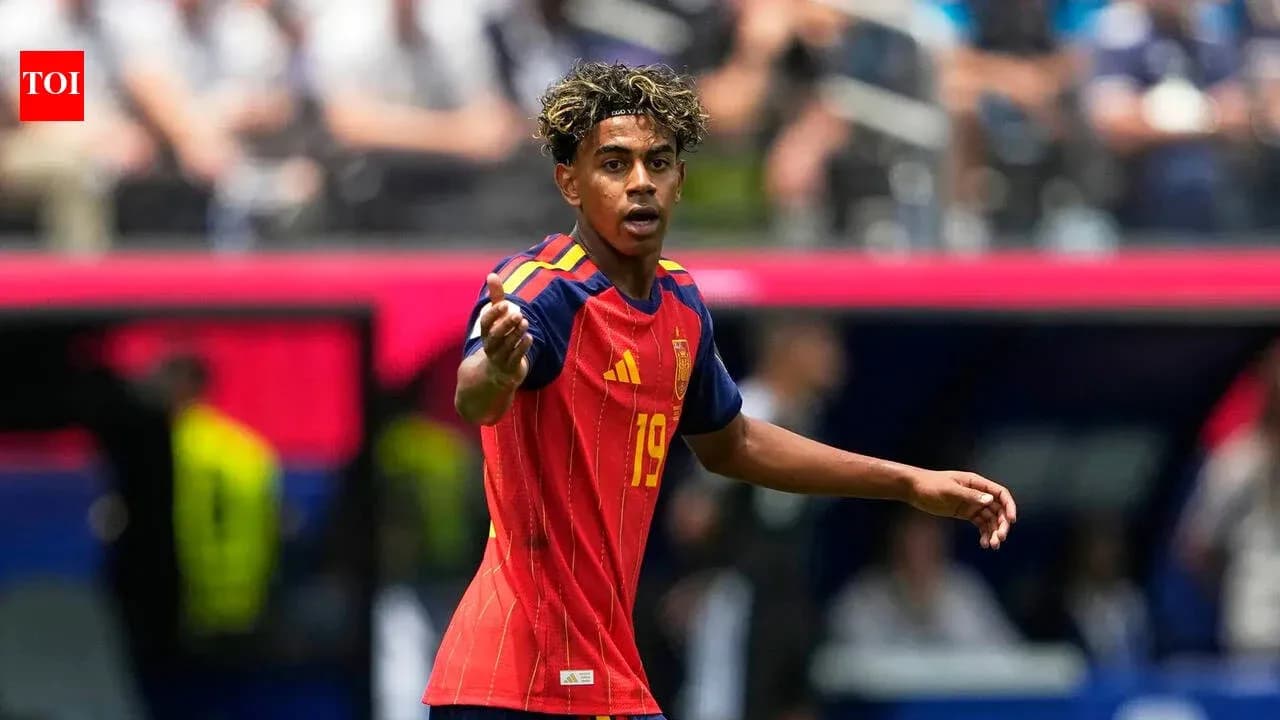
On Sunday, La Roja will walk out at the New York-New Jersey Stadium for the World Cup final, hunting a second star against either defending champions Argentina or England. Yamal, 19 years old and already the team’s compass, has dragged them there.
A teenager who owns the stage
This was supposed to be France’s night to muscle their way back to a final. Instead, it became another chapter in the rapid rise of a teenager who looks utterly unfazed by history.
Spain started not one but two teenagers in a World Cup semifinal — Yamal and Pau Cubarsí — something no side had ever done before at this stage. It did not feel like a gamble. It felt like a statement.
Yamal provided the turning point after just 22 minutes. Spotting a loose touch, he pounced on Lucas Digne, nicked the ball, and drove into the box. Digne clipped him. Penalty. No fuss, no theatrics, just the kind of sharp, decisive play that tilts tournaments.
Mikel Oyarzabal took responsibility from the spot. One breath, one run-up, one calm finish. Spain 1–0 up, and suddenly the game belonged to Luis de la Fuente’s side.
From there, Spain’s control tightened like a vise. They kept the ball, dictated the rhythm, and forced France to chase shadows. Kylian Mbappé and Aurélien Tchouaméni tried to drag their team back into it, but every surge met a red wall. Spain didn’t just defend; they smothered.
The pressure told again after the interval. Pedro Porro stepped forward from the back, exchanged passes with Dani Olmo, and then drilled a composed finish into the bottom corner. Clinical. Cold. 2–0, and France were staring at the exit.
Yamal thought he had his own goal to crown the night, only for a marginal offside to scratch it off. It barely mattered. His fingerprints were already all over the match.
Spain closed it out with the assurance of a team that has learned how to suffer without losing its shape. This was their sixth clean sheet in seven games at the tournament. That is not a quirk; that is a profile.
From dancing in Texas to destiny in New York
Inside the dressing room, the mood was very different. The official Spain account pushed out a video from the locker room: music blaring, players dancing, voices hoarse from shouting. Years of frustration released in a few wild minutes.
“Shouts rang out, dances took place, celebrations happened…” the team captioned it, inviting fans into the chaos of a squad that knows it has climbed back to the summit of the sport’s biggest stage.
Beneath the noise, something else was clear. This Spain is no longer just the dazzling, occasionally naïve side that lit up the early rounds with attacking waves. Against one of the tournament’s heavyweights, they married that flair with hard-edged discipline.
Oyarzabal, again, stood as the symbol of that reliability. His goal was his 18th in his last 20 appearances for Spain, and it carried him into a select group: only the sixth player ever to reach 30 international goals for the nation. In a team full of fresh faces and rising stars, he provides the numbers of a seasoned finisher.
The broader picture is impossible to ignore. Spain have not stood in a World Cup final since 2010, when Andrés Iniesta’s extra-time strike against the Netherlands sealed their first title in South Africa. That night felt like the peak of an era. This one feels like the start of another.
Now the stage shifts to New York-New Jersey. One game. One trophy. One more chance for a teenager who has already challenged the world with a single post to turn a bold promise into the defining moment of a new generation.