.svg&w=384&q=75 "Pitchgist logo")
Kylian Mbappé: The Star Struggling with Team Dynamics
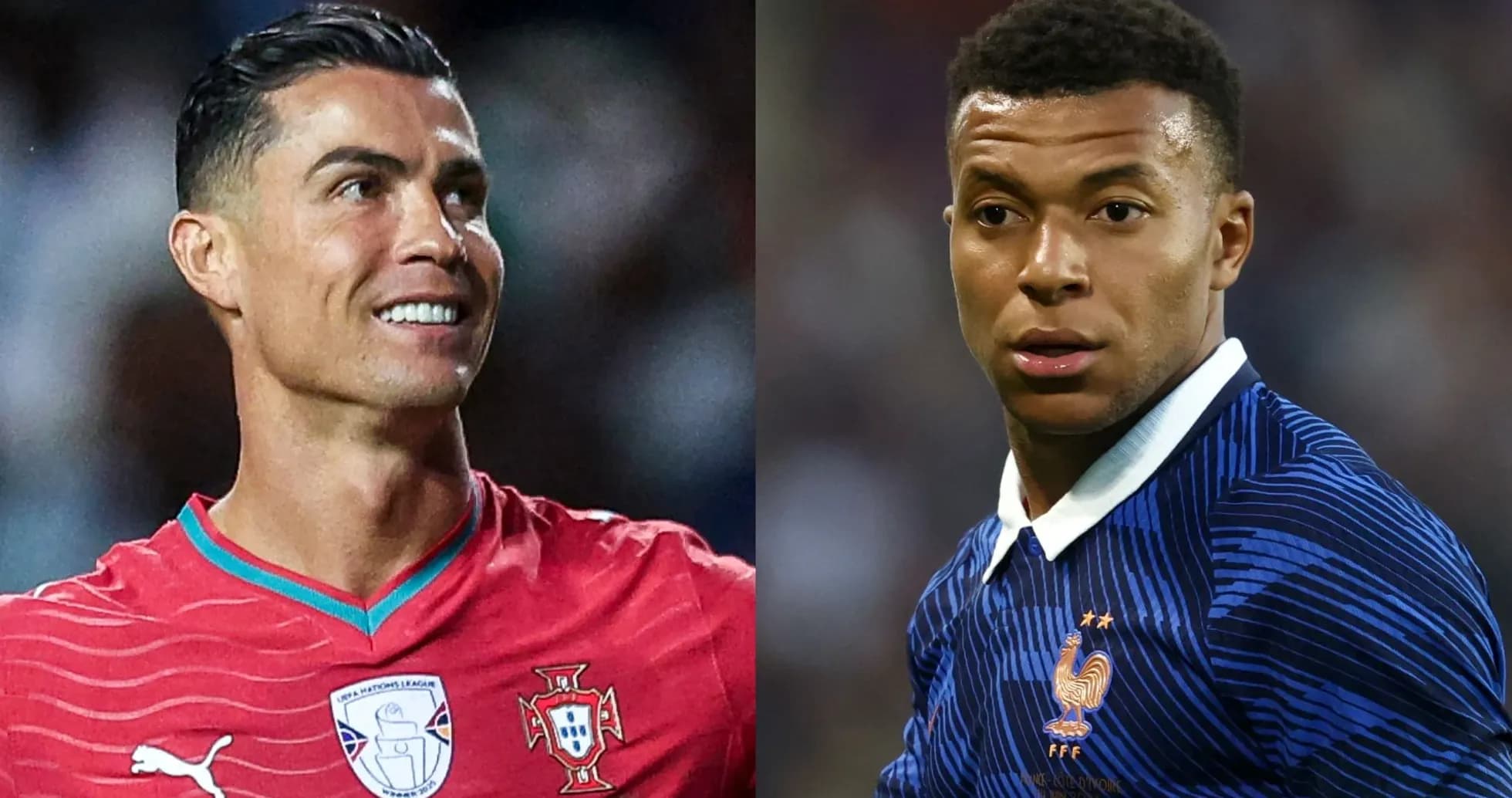
Kylian Mbappé has spent his entire football life being told he is the main event. The headline act. The one the cameras find first and leave last.
At 27, with 86 goals in 103 games for Real Madrid and 56 for France, he is living up to that billing. His numbers sit comfortably in the same postcode as Lionel Messi and Cristiano Ronaldo at a similar age. The stage suits him. The spotlight too.
But does the superstar built to dominate truly want to belong to the collective?
“Created to be the main man”
Frank Leboeuf has watched this story unfold from both distance and experience. A World Cup winner with France, a former Chelsea defender, and now a forthright voice on the modern game, he believes Mbappé has been shaped by a football culture that crowns individuals first and teams second.
"He's been created to be the main man," Leboeuf told GOAL, speaking in association with World Cup Betting. From the age of eight, he says, the world told Mbappé he would be one of the best. The young prodigy listened, worked, and delivered. The prophecy, in many ways, came true.
Yet Leboeuf argues that a different truth has emerged in recent years – not just for Mbappé, but for the sport itself. Football, at its highest level, keeps reminding everyone that the real star is the team.
He points to the Champions League winners who defined this era. Liverpool under Jürgen Klopp. The recent Paris Saint-Germain side that finally climbed the European mountain. Sides built on structure, sacrifice, and a shared workload, not just one man’s brilliance.
Real Madrid and the power of the collective
Leboeuf lingers on Real Madrid’s recent Champions League runs. He doesn’t dress it up. There were nights, he insists, when Madrid played poorly and had no business reaching a final.
"When Real Madrid played awfully and they shouldn't have gone to the final against Liverpool," he recalls. Chelsea, PSG, Manchester City – on paper, Madrid should have been out. Yet they survived, and then advanced, on the back of something less tangible than tactics or talent: a relentless collective spirit.
That, Leboeuf says, is where Mbappé is still lacking.
He talks about it almost like a missing software update. “Kylian doesn't have that in his computer,” he says. And if that instinct for the collective isn’t wired in early, it is brutally difficult to install later – especially in a football world that demands instant superstardom.
Leboeuf calls it “a dictator of emergency”: a culture that prizes immediacy, visibility, and individual branding. The Ballon d’Or, once a nice decoration, now dominates discourse. In his playing days, he says, you won it and five minutes later everyone moved on. Today, it defines careers.
Mbappé, in Leboeuf’s eyes, is as much a product of that environment as he is a driver of it.
Why the superstar trios don’t always work
The Frenchman doesn’t spare the modern super-teams. Neymar, Messi, Mbappé together at PSG. Now Vinícius Júnior and Mbappé at Real Madrid. On paper, unstoppable. On the pitch, not always convincing.
For Leboeuf, the reason is simple: the chemistry of the collective is missing. The names are enormous, but the fit is awkward.
He contrasts that with Klopp’s Liverpool. Who was the star there? Mohamed Salah? Yes. But also Virgil van Dijk. Also Alisson. Also Andy Robertson and Trent Alexander-Arnold. Full-backs crossing for each other to score. A team where the spotlight moved constantly, where the system made the players shine, not the other way around.
“That was insane,” he says. That, to him, is what football is supposed to be.
So when he watches Mbappé slaloming past four defenders, he doesn’t swoon. “It doesn't impress me because he doesn't see the game,” Leboeuf admits. The players he loves are the ones who already know what they will do with the ball before it arrives.
Rodri. Kevin De Bruyne. The pass before the pass. The one-touch release that shows a picture of the pitch in their head long before anyone else has drawn it.
Even Diego Maradona, a god to many, never quite captured Leboeuf’s heart in the same way. The dribbling genius didn’t move him like the player who could see everything, anticipate everything. “Anticipation is the special skill for me,” he says.
A frustrated figure – and a Premier League question
Mbappé’s numbers at Real Madrid remain extraordinary, but his body language in recent months has told a more complicated story. Frustration has crept in. Arms spread wide. Glances to the bench. Whispers about whether he might seek another challenge have followed, as they always do when a global star looks even slightly unsettled.
Could that next chapter be in the Premier League?
Leboeuf thinks the English game has changed enough to suit him. The league he knew – more physical, more direct, less forgiving – might not have been ideal for Mbappé. Today’s version, with its space in transition and emphasis on speed, looks made for him.
“With the pace that he has and the possibility that you can find in England when you play in the Premier League, yes I think Kylian Mbappé can play in any league in the world,” Leboeuf says. The idea of him trading goals with Erling Haaland in a season-long shootout for the Golden Boot? “That would be insane.”
Reality bites hard, though. The price tag and wages involved make any move almost impossible right now. Leboeuf doesn’t see a club in England ready – or able – to pay what it would take.
Arsenal, Haaland – and the system problem
Even the clubs that might need a player like Mbappé don’t necessarily play a game that would suit him.
Arsenal, for example, clearly require a centre-forward. Yet Mikel Arteta’s system often uses the No.9 as a reference point rather than a constant finisher. The ball circles the box. The striker waits. And waits.
Leboeuf imagines Mbappé in a Viktor Gyökeres-type role, living off crosses and service that may never arrive, and sees trouble. “Mbappé would be very upset,” he says.
He then turns to Haaland at Manchester City. The Norwegian has accepted a brutal trade-off in Pep Guardiola’s system: long stretches of anonymity, sometimes just one or two touches per half, in exchange for devastating impact in key moments.
Leboeuf is not convinced Mbappé would tolerate that kind of isolation. He sees a player who would drop deeper, hunt the ball, gravitate towards a No.10 role to stay involved. That, in turn, risks tearing at the tactical fabric of any side trying to build a clear structure around him.
So the question lingers, sharper than any transfer rumour: can a footballer sculpted from childhood to be the centre of everything truly submit to the demands of the collective game?
In an era obsessed with stars, Leboeuf’s answer cuts against the grain. The teams keep winning. The individuals keep trending. Mbappé stands somewhere between the two, still chasing the balance that might define the rest of his career.