.svg&w=384&q=75 "Pitchgist logo")
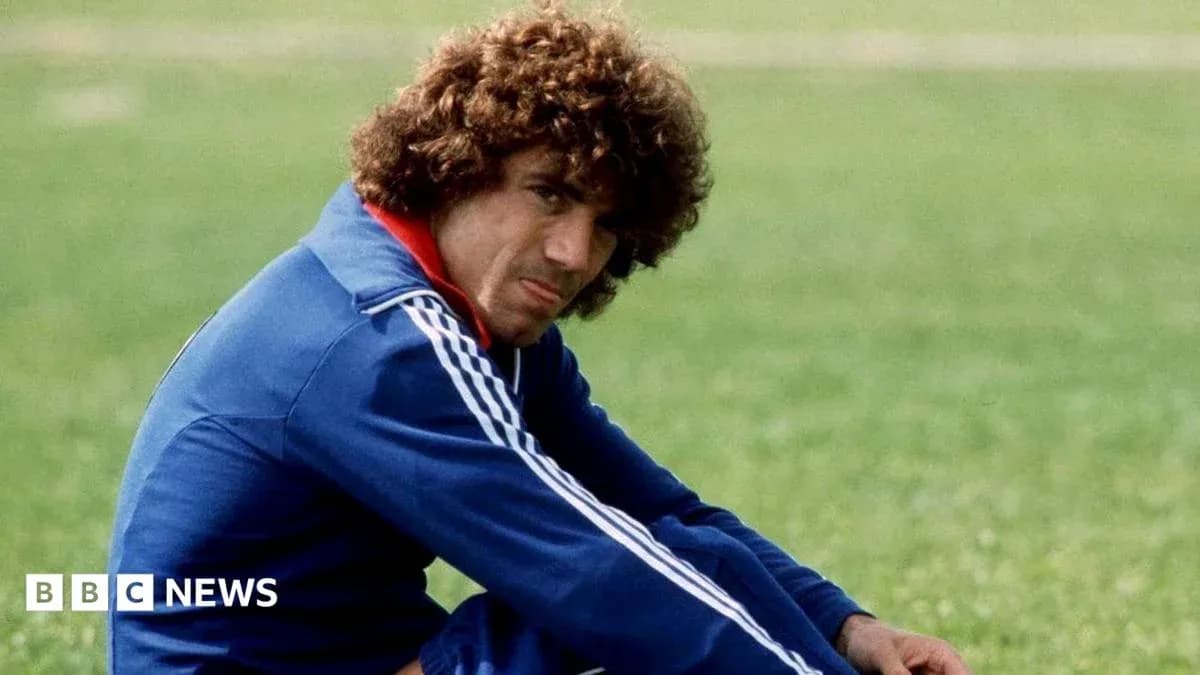
Kevin Keegan: A Bridge Between Liverpool and Hamburg
Kevin Keegan spent a career stitching himself into football history. In death, he is being remembered as something more than a great player. In Liverpool and Hamburg, he is being mourned as a bond between two cities who saw the very best of him.
Keegan, who died on Monday aged 75, left Liverpool FC in 1977 as a European champion and Ballon d'Or winner. He arrived in Hamburg as a superstar, a record signing, and a statement of intent. He left as a cult figure on both sides of the North Sea.
Liverpool City Region Mayor Steve Rotheram revealed that Keegan had been due to return to Hamburg this year, joining him at the city’s annual Harbour festival. The trip never happened. Cancer stopped him travelling before it stopped him altogether.
In a letter to the mayor of Hamburg, seen by the Local Democracy Reporting Service, Rotheram tried to capture what Keegan meant to both places. He called him “a bridge between two great cities” – and in Liverpool, that phrase lands with weight.
For one half of the city, Keegan was the hero in red: the livewire forward who helped drag Liverpool into the European elite. For the other half, as Rotheram put it, he was “a well-respected irritant on derby day” – the opponent you feared because you knew exactly what he could do.
On Merseyside, his honours list still glows. One of the most decorated English players of all time, Keegan won the Ballon d'Or twice and lifted seven major trophies with Liverpool. His final game for the club delivered the one they craved most: the first European Cup in Liverpool’s history. He walked off that night in Rome a champion of Europe and, soon after, a departing star.
That was the moment the bridge began to form. Keegan swapped Anfield for Hamburg SV in a then-record transfer, a move that felt seismic at the time. An English icon, in his prime, choosing to test himself in the Bundesliga. It was more than a change of club; it was a statement about where the game was heading and how far his own ambition stretched.
Rotheram’s letter leans into that shared ownership of his legacy. Keegan’s success, he wrote, “belonged equally to Liverpool and Hamburg,” cities where he was both “admired and loved.” In Germany, he became the face of a rising club; in England, he remained the yardstick for intensity and commitment.
He was not just a Liverpool FC legend, Rotheram said, but “one of the most beloved figures our city has ever known.” That is not a line handed out lightly in a place that has seen more than its share of greats.
Keegan’s story, though, was never just about medals or individual awards. It was about connection. About the way one player could carry the pride of a city with him, then pick up another on the way and refuse to let either go.
“To me,” Rotheram wrote, “he embodied better than anyone else that famous maxim: football is the people’s game.”
For Liverpool and Hamburg, that game now feels a little poorer. The bridge he built between them, though, is not going anywhere.