.svg&w=384&q=75 "Pitchgist logo")
Jermain Defoe's Short-Lived Management at Woking Ends
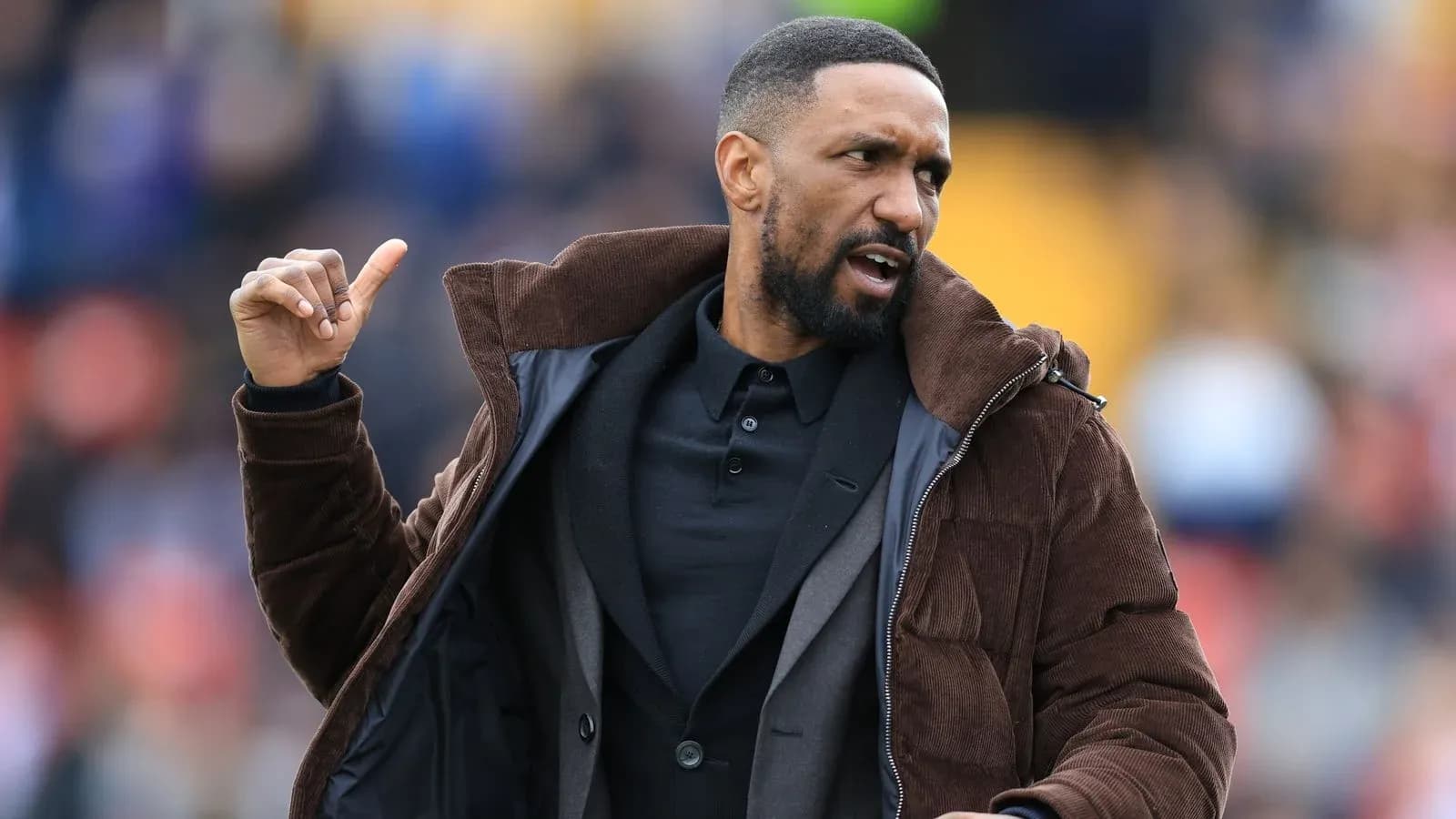
Jermain Defoe’s first job in management has ended after just four months – and the fallout at Woking is already turning bitter.
The former Tottenham and England striker left the National League club on Thursday by mutual consent, having taken charge in March and overseen just six competitive games, winning two and losing one. He called the role “eye-opening” and said “circumstances” had made it “impossible” for him to continue.
Woking, though, have now pushed back. Hard.
Brown: “People do not just fail to turn up”
On Saturday morning, Woking’s director of football Jody Brown issued a strikingly forthright statement that laid bare the club’s side of the split and raised serious questions over how Defoe’s short reign unravelled.
“The recommendation to appoint Jermain as manager was mine, and I take full responsibility for it,” Brown said, explaining that after several meetings he believed Defoe was the right man to lead “an exciting new era”.
Then came the sting.
“As we have seen many times before, success as a player does not always translate into management and leadership,” he added, making it clear that concerns had been building during pre-season.
Brown revealed that, in recent weeks, feedback had been coming in from “players, staff and other departments” about “growing concerns”. To get a grip on the situation, he asked Defoe and assistant Paul Bracewell for a brief report on squad depth, recruitment targets and operational issues – information the club felt it needed to “accelerate preparations for the season”.
That report, Brown said, was requested more than once. It never arrived.
So a meeting was arranged. Directors, manager, assistant manager, head of operations – the key figures who needed to be around the table as the new season loomed.
According to Brown, Defoe and Bracewell did not attend. Not the meeting. Not that day’s training session either.
“Throughout his tenure, Jermain had never communicated any serious concerns directly to me, so I am not going to speculate on his reasons,” Brown said, before delivering his most pointed line.
“Every football club faces challenges. Players want more game time, improved contracts or transfers. The media team might want better equipment, the medical department more interns, the strength and conditioning staff larger gym space, and the car park attendants may want more coffee. But people do not just fail to turn up.”
For a club that had only just stepped into the glare by appointing a Premier League and England goalscoring great, it was a remarkable airing of internal frustration.
Defoe: “Impossible for me to continue”
Defoe, 43, had broken his silence first. In an Instagram post, he confirmed his exit and painted a very different emotional picture of his time at Woking.
“Following recent discussions, I can confirm that I have mutually agreed to leave my position as manager of Woking FC,” he wrote.
“Unfortunately, circumstances have ultimately made it impossible for me to continue in the position.
“I am extremely proud of the work undertaken during my time at the club and genuinely felt that we were building something special.”
He thanked Todd Johnson for the opportunity, reserved particular praise for the players and spoke of genuine disappointment that the “journey has ended so soon”.
“The group is a fantastic one, and I wish the squad every success for the season ahead,” he said, adding that the experience would “undoubtedly make me stronger for the next challenge in my career”.
Sky Sports News has contacted Defoe for further comment.
From EFL dreams to a sudden split
Defoe’s appointment in March was a headline-grabber for a National League side. Cameras followed. Expectations spiked.
Sky Sports were present for his first two games in charge – a wild six-goal draw with Eastleigh and a 0-0 stalemate with Braintree Town – as he spoke openly about his ambition to do “something special” with Woking and even chase promotion to the EFL.
“People talk about it being impossible. That means nothing. I truly believe that we can do something special,” he said after that Braintree draw. “When you become a manager and a coach, you want that sort of challenge. You want to get up in the morning and have a goal to strive to.”
That conviction has evaporated in a matter of weeks. His record – two wins in six – barely had time to settle into any meaningful pattern. The project he insisted could defy the odds has gone up in smoke before a full season under his control even began.
Inside the club, Brown insists Woking were “fully committed” to backing him, stressing that recruitment, staffing and football decisions were “heavily influenced” by Defoe.
Outside, the impression is of a bold experiment that never got close to full speed.
What next for Woking – and for Defoe?
For Woking, the task now is brutal and immediate: steady a dressing room that has just lost its high-profile figurehead, repair any internal fractures exposed by Brown’s comments and get a season plan back on track without the man they had built it around.
For Defoe, the questions cut a different way. His playing legacy is secure. His managerial reputation is just beginning to form – and his first line on that CV is a four-month stint that ended in public disagreement over meetings, reports and communication.
He called Woking an “eye-opening” experience. The next club that hands him a dugout may want to know exactly what he saw.