.svg&w=384&q=75 "Pitchgist logo")
Iran's World Cup Preparation Amid War and Visa Challenges
Iran’s national team slipped quietly into Turkey on Monday, but nothing about this World Cup build‑up is routine.
They will spend several weeks at a training camp there before flying to a tournament co-hosted by the US, a country that, alongside Israel, began bombing Iran on February 28 in strikes that helped ignite a wider war across the Middle East. A World Cup preparation camp is usually about fitness, tactics and fine-tuning. This one is also about geopolitics, air corridors and visa stamps.
Inside the camp, officials are trying to project calm.
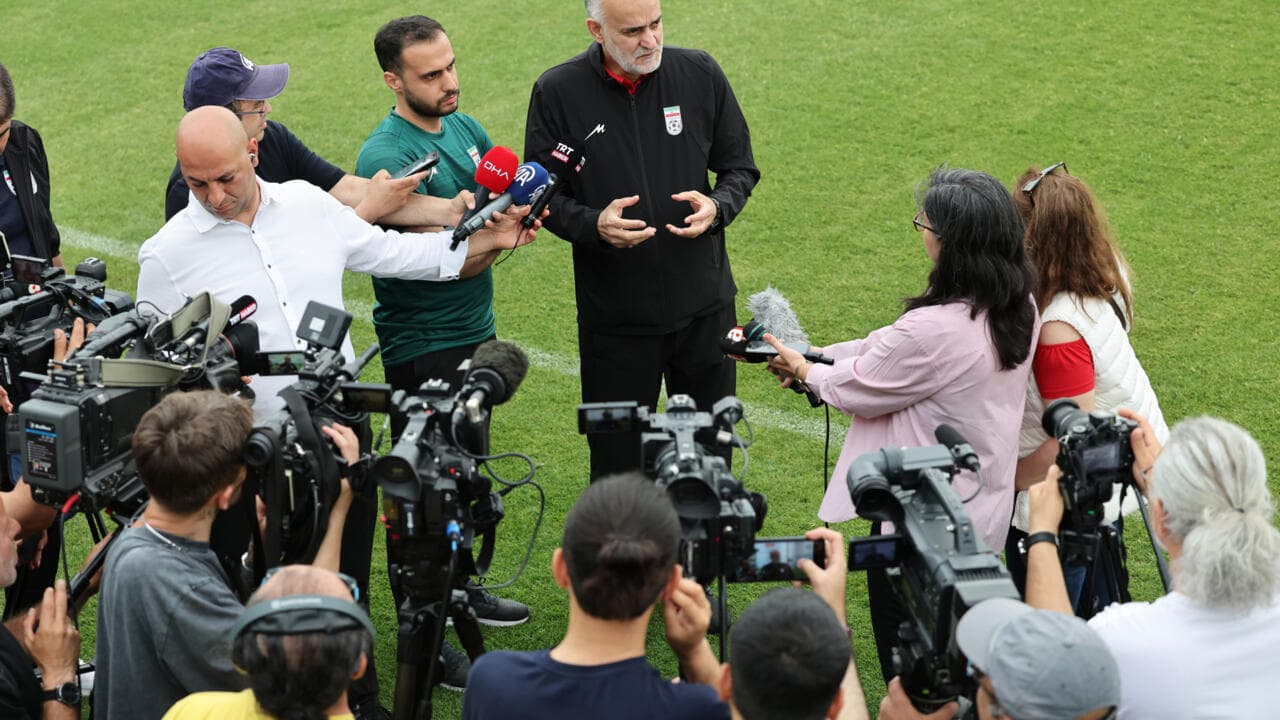
“Everything will proceed properly according to the protocols and what FIFA has stipulated,” said national team director and federation vice-president Mehdi Mohammad Nabi, as he laid out the framework around Iran’s participation.
He pointed to the machinery that normally hums in the background at every World Cup. “Inside the United States, they also have committees in place, including a security committee that cooperates with FIFA and is responsible for security matters,” he said. Iran, he insisted, are not walking into the unknown.
“In past years we've experienced all of this and we're fully informed about how these security committees operate at every World Cup we've participated in. In this regard, we're very confident and we have a clear plan.”
The reality is more complicated. Iranian officials have already acknowledged that players and staff still do not have US visas. The team intends to submit applications at the Canadian embassy in Turkey, a diplomatic workaround that underlines how fraught the logistics have become.
And there are no guarantees.
“We're not certain yet that all the players and staff will receive US visas,” Mohammad Nabi admitted. That single line hangs over the entire project: a team that has qualified on the pitch may yet be forced to wait on consular decisions far from any stadium.
He leaned on FIFA’s rulebook as a shield. “One of the rules that applies to the host country is that they must provide guarantees, according to FIFA's statutes and the regulations of the competition. One of their commitments is the visas: they have to grant the necessary visa facilities to all the teams that have qualified for the World Cup.
“And FIFA has made arrangements so that the host country will provide the necessary cooperation to teams like Iran in this area.”
So the preparations continue, with faith in regulations and behind-the-scenes negotiations, while the war that began in late February rages in the background.
Group G Campaign
On the football side, the path is clear. Iran will open their Group G campaign against New Zealand in Los Angeles on June 15. Belgium await next, also in Los Angeles, before a move north to face Egypt in Seattle. The squad will be based in Tucson, Arizona, for the duration of the tournament, a desert base for a team used to heat and long distances.
If the visas arrive on time, Iran will land in the US as another World Cup contender, judged on shape, selection and form. If they do not, this campaign will be remembered less for results and more for a stark question: in a time of war, can sport’s biggest stage still keep its promise of open doors for all who qualify?