.svg&w=384&q=75 "Pitchgist logo")
Iran vs New Zealand: A World Cup Match Amid Political Tensions
The World Cup has seen political tension before. It has never seen anything quite like this.
In Los Angeles, Iran’s opening game against New Zealand at SoFi Stadium sits on a fault line where football, geopolitics and dissent all collide. The host nation is at war with one of the participants. Iranian protesters, many of them exiles, are promising to turn a group-stage match into a reckoning with the regime they fled.
Inside Iran’s camp, the strain is obvious.
Taremi’s warning: ‘It undermines the joy’
Mehdi Taremi, captain and figurehead of this Iran side, did not bother to hide his frustration on the eve of the game. His words cut through the usual World Cup pleasantries.
“I have felt the tension from the first moment we arrived at this World Cup,” he said. “This kind of tension, it undermines that joy and it undermines the message of Fifa and our people, which is that football brings about peace. I feel like this World Cup could have provided a better atmosphere than it has.”
Iran’s preparation has been shredded by the conflict with the United States. Their base was shifted to Mexico. Visa complications have dogged members of the delegation. Travelling supporters have seen tickets stripped away. The sense of being an unwanted guest in a hostile house hangs over everything they do.
Taremi, usually a composed presence, sounded like a man who knows his team are walking into a stadium that may not feel like neutral ground, or even home.
‘We’re going to make it hell’
Outside that bubble, a very different Iran is organising.
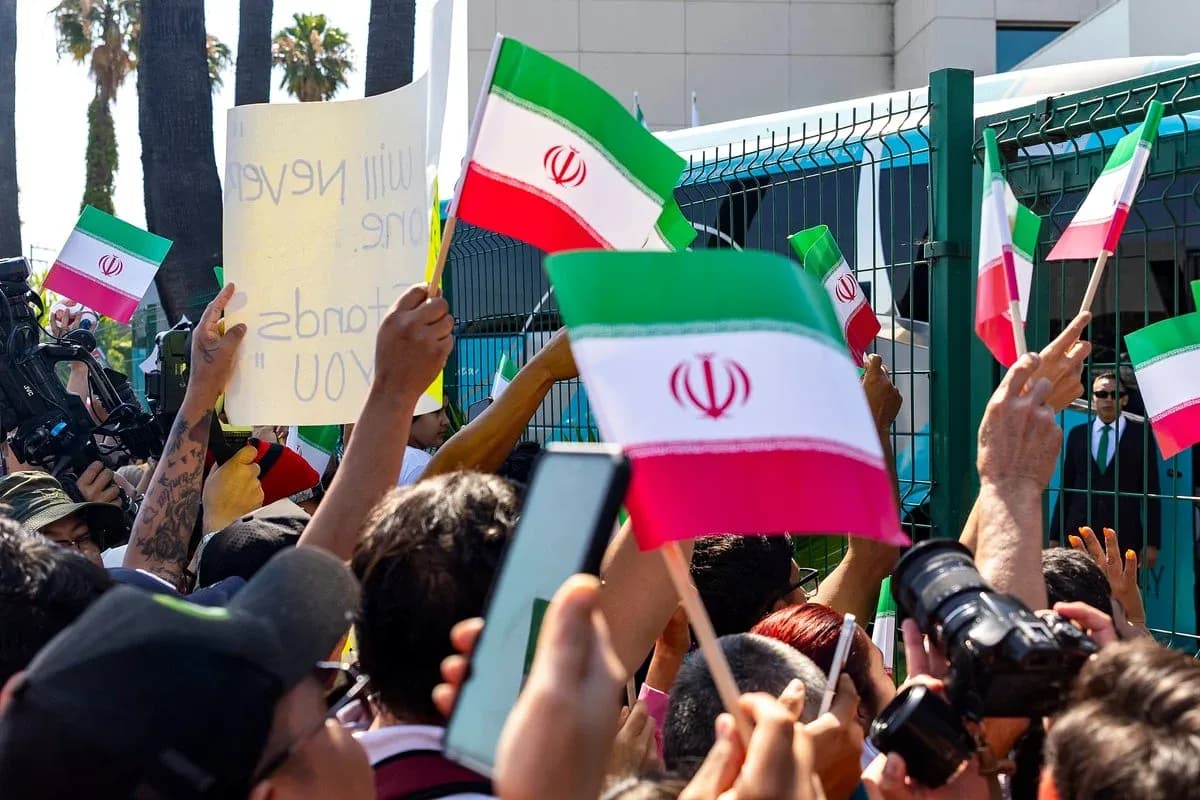
Protesters have vowed to turn the match into a public indictment of the regime. Buses are being arranged from San Diego, Orange County and across Los Angeles. The plan is simple and incendiary: boo the anthem, turn backs to the pitch, and raise the pre-revolutionary flag that Fifa has banned from stadiums.
“We’re going to make it hell,” one activist told the Daily Mail. She described an orchestrated effort to flood SoFi with dissent, to ensure the global broadcast cannot look away.
“We’re going to boo the anthem that is going to play. We're going to turn our backs during the anthem so we will have our flags showing.
“I know Fifa banned it [the flag] but we will make a way to get it in. So we're going to see this flag, not the terrorist regime’s flag.”
For those protesters, this is not a game. It is a rare, global stage on which they can confront a government they say silences them at home.
A coach under orders
Caught between those two worlds stands Amir Ghalenoei.
Iran’s head coach has been given a set of instructions that no manager should ever carry into a World Cup match: if pre-revolutionary flags are brandished or if negative chanting against the regime is heard, he has been told by the government to stop the match.
The possibility is extraordinary. A coach, not a referee, asked to intervene in play because of what is happening in the stands.
Ghalenoei, though, tried to project a narrow focus when he faced the media.
“We don’t pay attention to any of the hype and anything that goes on around us,” he said. “We are here to represent the respectful people of Iran, be it the Iranians inside Iran or the Iranian diaspora.
“We are not political people... football is separate from politics.”
The words are familiar. The reality around him is anything but. At SoFi, politics will not sit politely outside the stadium gates. It will be on the concourses, in the seats, in the sound of the anthem.
A World Cup on the brink of a stoppage
The stakes stretch beyond one match.
This is the first time in the World Cup’s 96-year history that a competing nation is at war with a host. That hard fact colours everything around Iran’s campaign. Kieran Jackson has already explored how surreal and perilous this journey has become, but tonight in Los Angeles those themes move from theory to practice.
Protests are expected both inside and outside the ground. Fifa’s prohibition of the pre-revolutionary flag will be stress-tested in real time. Security staff will be on edge. Match officials will know that, at any moment, the coach of one team may be under pressure to pull his players off the pitch.
The World Cup sells itself as a festival of unity. This fixture threatens to expose how fragile that slogan can be when a nation’s internal struggle spills onto football’s grandest stage.
New Zealand, quietly preparing for their own opening game, are almost a footnote in the build-up. They will walk into a cauldron that has nothing to do with them and everything to do with the country in the opposite dugout.
The whistle will blow, the ball will roll, and yet the real question will linger over the stands, not the pitch: does this game finish 90 minutes like any other, or does Iran’s World Cup become the first to be halted by the sound of its own people?