.svg&w=384&q=75 "Pitchgist logo")
Inquest into Nobby Stiles’ Death Highlights Football’s Dementia Crisis
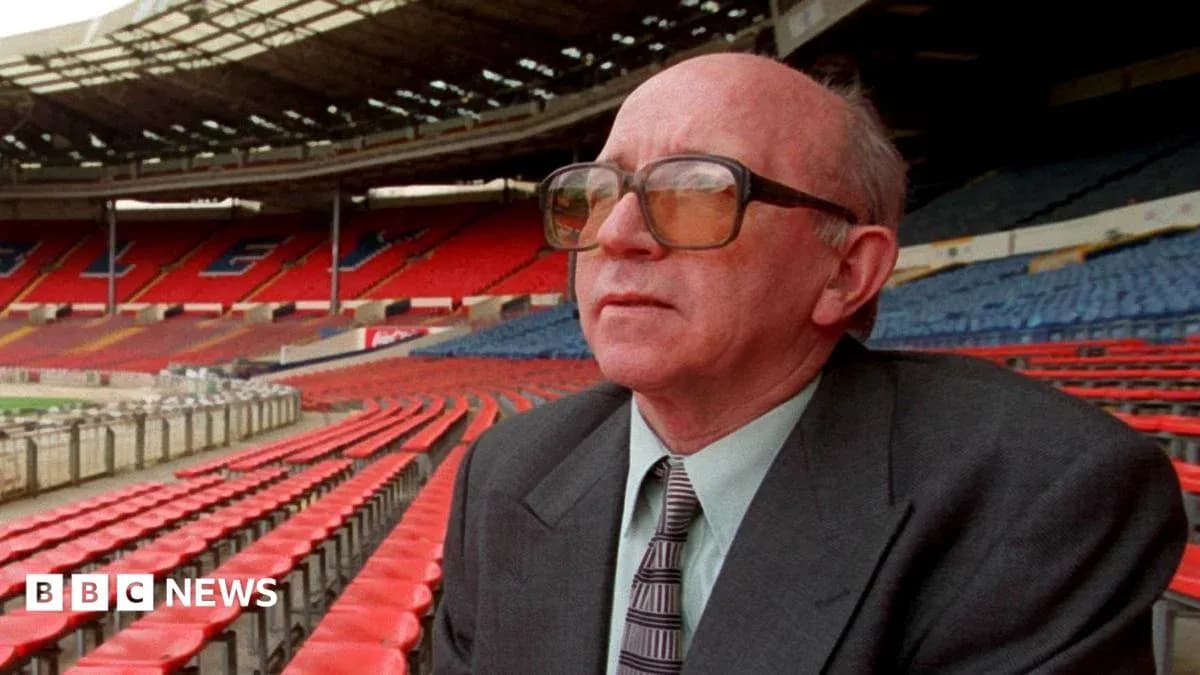
Nobby Stiles, the toothless midfield terrier who danced with the World Cup in 1966, died with a traumatic brain injury and chronic traumatic encephalopathy (CTE), a coroner has confirmed, ordering a full inquest into his death.
The ruling pulls one of English football’s most cherished figures back into the centre of a battle that now stretches far beyond nostalgia and medals. It goes to the heart of what the game knew, when it knew it, and what it did about the risks facing those who headed heavy balls for a living.
Stiles, a Manchester-born defensive midfielder capped 28 times by England and a veteran of nearly 400 games for Manchester United, died in 2020 aged 78. His family have long argued that football, and the repeated heading that defined his position and era, played a decisive role in his decline.
On Tuesday, Chris Morris, area coroner for Greater Manchester South, told Stockport coroner’s court that an inquest should have been opened at the time of Stiles’ death but was not.
“For reasons not entirely clear to me,” he said, Stiles’ death had never been referred to the coroner’s office. The investigation only began after his family came forward with new information.
Once they did, the picture changed.
Stiles’ brain was examined by neuropathology expert Dr Daniel du Plessis. After reviewing the tissue and the former midfielder’s medical records, Dr du Plessis concluded that Stiles died from Alzheimer’s disease. But that was only part of the story.
He also found high-stage CTE, a condition strongly associated with repetitive head trauma, as a contributory factor. The report listed “stage three limbic predominant age related TDP-43” and small vessel cerebrovascular disease as additional contributors.
That reference to traumatic injury was decisive.
“On the basis of that cause of death, particularly the inclusion of a traumatic injury included in the cause of death, I’m satisfied an inquest is required into the sad death of Mr Stiles,” Morris told the court.
A full inquest will now be held on Wednesday at the same court, with the eyes of a growing number of affected families fixed on the outcome.
For Stiles’ son John, the findings echo what he has been saying for years. He has previously stated bluntly that football “killed” his father. As head of the Football Families for Justice (FFJ) group, he has become one of the most vocal campaigners demanding the game’s authorities support ex-players left to grapple with dementia and other neurodegenerative conditions.
The human cost has been stark. Stiles was forced to sell his World Cup winner’s medal and other memorabilia to pay for his dementia care. His story is not an isolated tragedy but part of a wider legal and moral reckoning.
He is among dozens of former players and families suing the Football Association, the Football Association of Wales and the English Football League. The claim is that those governing bodies were “negligent and in breach of their duty of care” by failing to protect players from the long-term dangers of repeated heading and concussive blows.
Lawyers for the former players argue that football’s leaders knew, or should have known, for decades that heading a ball in training and matches carried serious risks to brain health. They say the science, and the warnings, were there.
The governing bodies dispute that charge. In March, lawyers for The Football Association told the High Court that it has “not been established by science” that heading a ball or “occasional” concussion leads to permanent brain damage.
That clash between lived experience and legal argument is playing out against a grim roll call of names.
In January, an inquest into the death of Gordon McQueen, the former Scotland, Manchester United and Leeds United defender, found that heading the ball was “likely” to have contributed to a brain injury that played a part in his death at 70. McQueen, like Stiles, had been diagnosed with CTE.
His daughter, TV presenter Hayley McQueen, has spoken of watching the 1966 generation fall away, remarking that England’s World Cup-winning team has now been “pretty much wiped out” by neurodegenerative disease.
The numbers behind those stories are just as stark. A study co-funded by The FA and the Professional Footballers’ Association in 2019 found that former professional footballers were three-and-a-half times more likely to die of neurodegenerative disease than people of the same age in the general population.
The sport has begun to react, if slowly. The FA is in the process of phasing out all heading in youth football up to under-11 level by 2026, a significant cultural shift for a country built on centre-halves and clearing your lines.
Yet for the families of men like Nobby Stiles, that change comes too late. Their fight is no longer about rule tweaks for tomorrow’s players, but about accountability for yesterday’s heroes and recognition of what the game cost them.
The inquest in Stockport will not settle every argument about heading, CTE and football’s future. It will, though, place a World Cup winner’s death under the harsh light of legal scrutiny and medical evidence.
For a sport built on memory, the question now is whether it is finally ready to confront the damage done in the name of glory.