.svg&w=384&q=75 "Pitchgist logo")

Frenkie de Jong's World Cup: A Night of Criticism and Tactical Missteps
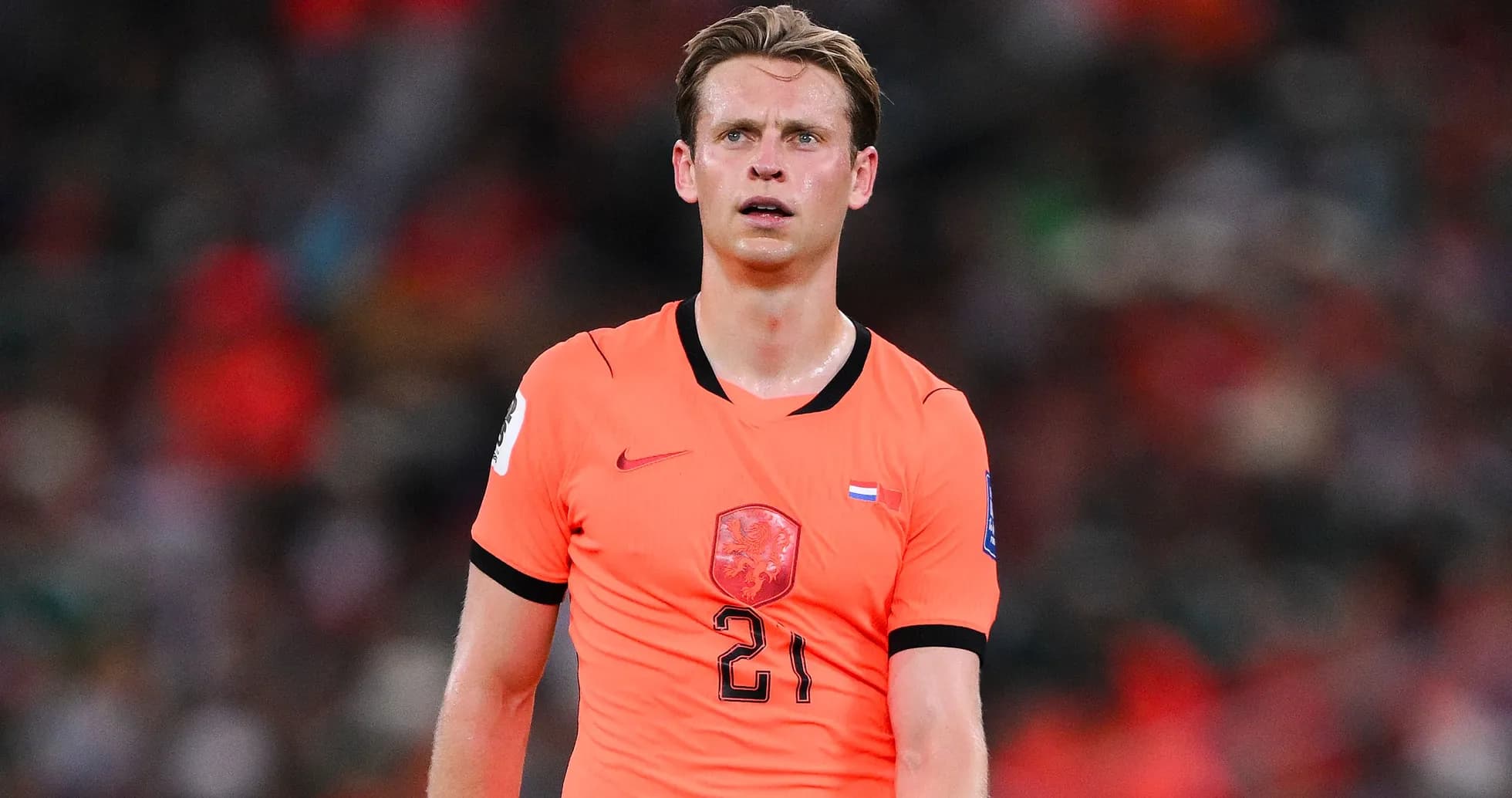
Frenkie de Jong’s World Cup ended not with a flourish, but with a grim walk to the touchline and a seat on the bench as the drama unfolded without him.
The Netherlands fell to Morocco on penalties, and their captain for the night, the man so often trusted to give structure and calm to chaotic games, became one of the central figures in the post-mortem.
A Long Night, A Brutal Verdict
Frenkie de Jong started and stayed on for almost 110 minutes, running, offering, recycling, trying to find a foothold in a midfield that never truly belonged to the Dutch. When Ronald Koeman finally replaced him, the Oranje were still alive. By the time the shootout ended, they were out, and the knives were out with them.
The fiercest cut came from Rafael van der Vaart. On NOS, in comments carried by Mundo Deportivo, the former Dutch international didn’t bother softening the blow:
“Frenkie de Jong played the worst match I have ever seen from him.”
No nuance. No caveats. For a player who had recently bristled at doubts over his influence and understanding of the game, it was a stinging, very public rebuke.
De Jong has long argued that many people judge him without grasping what he actually does on the pitch. On this night, his critics felt they had all the evidence they needed.
System Failure
Van der Vaart, though, did not stop at the player. He turned the spotlight on Koeman’s entire plan.
“It was really disappointing, but that is also because of the system. I consider midfield to be Morocco’s strongest point, and even so we decided to play against them with only two midfielders.”
That is the heart of the tactical complaint. Morocco’s midfield is the engine of their team, their most complete and confident unit. Yet the Netherlands went into that battle undermanned, asking two men to hold a zone that three, sometimes four, Moroccans swarmed with authority.
Van der Vaart’s disbelief was clear:
“I am very disappointed with Holland. We got through the group stage quite well.
“Things were starting to work, so what goes through your mind for you to suddenly have to do things completely differently against Morocco? I do not understand anything at all.”
The criticism wasn’t just about a bad performance. It was about a choice: to walk away from a functioning structure at the very moment the tournament stopped forgiving mistakes.
Frenkie Exposed, Not Replaced
De Jong did not escape individual scrutiny. Dutch pundit Jan Mulder took aim at his risk profile on the ball, summing up his evening with a single, cutting line:
“He was too cautious, I only saw sideways passes.”
In a game crying out for verticality, for someone to break lines and drag Morocco out of their comfort zone, De Jong’s usual gifts never surfaced with their normal clarity. The man who so often carries the ball past the first line of pressure, who shrugs off markers and turns defence into attack, looked penned in and short of ideas.
But context matters. De Jong thrives when he has options around him, when the structure gives him angles, outlets, and layers. Against Morocco, the Netherlands played with too few bodies in the very area where he needed support. The gaps were too big. The distances too long. The rhythm never settled.
The result? A midfielder known for control and progression spent large stretches chasing shadows and playing safe.
One Bad Night, Not a New Truth
For Barcelona, this game will not change a thing. Inside the club, there is no confusion about what Frenkie de Jong offers: press resistance, ball-carrying, the courage to receive under pressure, and the ability to stitch together defence and attack in a single movement.
One knockout match, however high the stakes, does not rewrite his profile as a player.
Through the group stage, De Jong had been one of the Netherlands’ standouts, dictating tempo and guiding them through awkward spells. Against Morocco, he ran into a perfect storm: an overloaded midfield, a system that left him exposed, and an opponent that sensed weakness and attacked it relentlessly.
He will carry the criticism. That is part of being a leader for club and country. But the judgement on his World Cup cannot rest on 110 bruising minutes against Morocco alone.
For Koeman and the Netherlands, the questions go deeper. For De Jong, the answer will come the only way it ever truly does for a player of his stature: with the ball at his feet, in the next big game that refuses to bend to reputation.