.svg&w=384&q=75 "Pitchgist logo")
England's Tactical Dominance in 2-1 Comeback Against Congo DR
England’s 2-1 comeback win over Congo DR at Mercedes-Benz Stadium was shaped by a clear territorial dominance and a series of targeted tactical adjustments rather than sheer chaos. England, under Thomas Tuchel, imposed a 4-2-3-1 structure that gradually suffocated Congo DR’s 4-3-3, turning an early deficit into control of both space and tempo.
Out of possession, England’s double pivot of Declan Rice and Elliot Anderson was crucial. Rice held a conservative position in front of Ezri Konsa and Marc Guéhi, screening central lanes into Yoane Wissa and Brian Cipenga. Anderson operated slightly higher and more to the right, helping Djed Spence deal with Congo DR’s right-sided rotations between Nathanaël Mbuku and overlapping Aaron Wan-Bissaka. Early on, however, Congo DR exploited the transitional moments before England’s rest defence was set; the 7th-minute goal from Brian Cipenga, assisted by Chancel Mbemba, came from Congo DR’s ability to play quickly into their front line before England’s full-backs and pivots had recovered their positions.
With the ball, England’s 60% possession and 517 passes (468 accurate, 91%) reflect a controlled, patient approach. The back four spread wide, with Rice dropping between Konsa and Guéhi at times to form a three-man first line and allow both full-backs to advance. Nico O’Reilly on the left and Spence on the right pushed high, pinning Congo DR’s wide forwards and forcing the visitors’ midfield three to shuttle laterally. This stretched structure opened interior pockets for Jude Bellingham, who operated as the central “10”, and for Marcus Rashford drifting inside from the left.
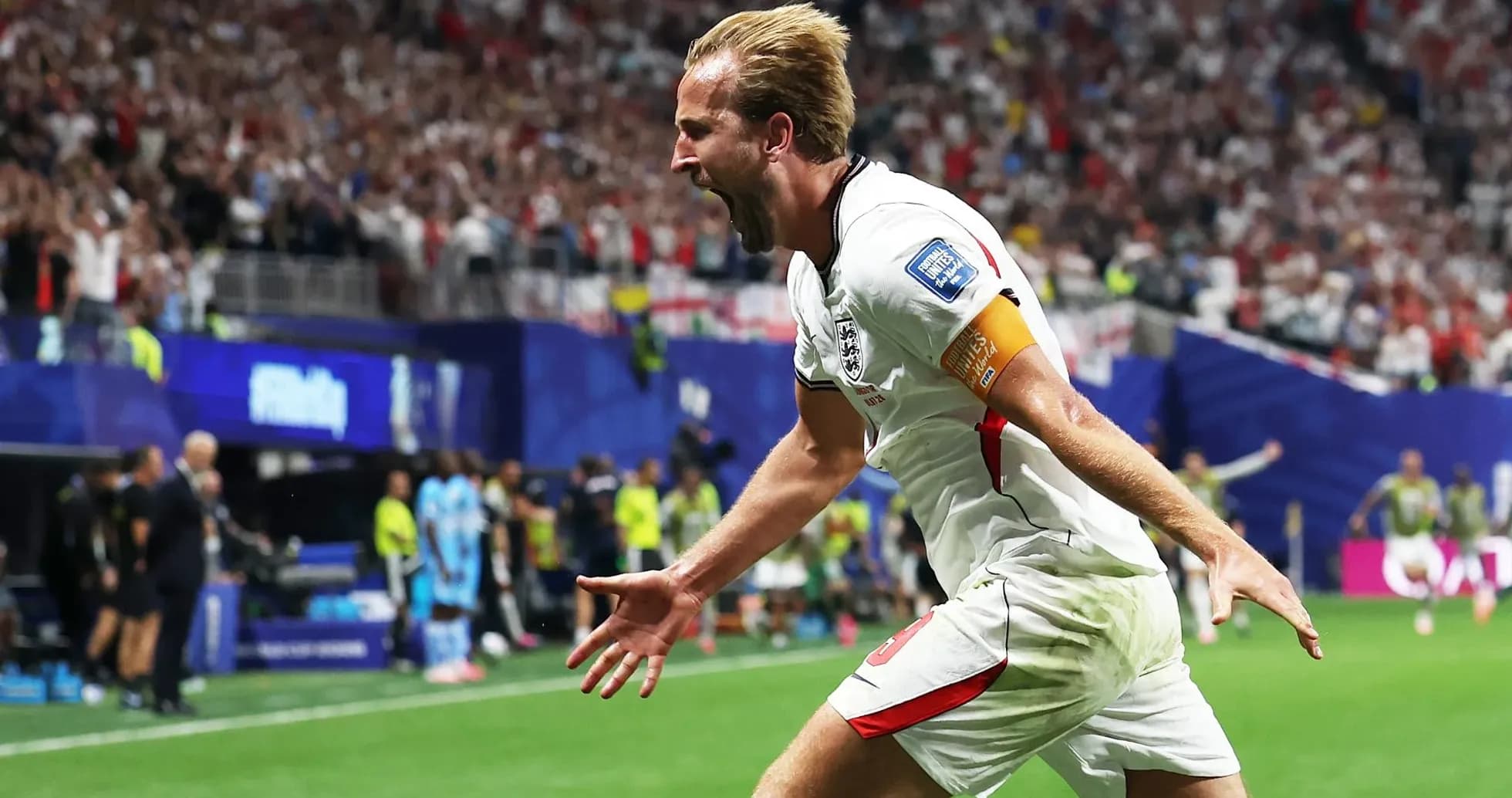
England’s shot profile underlines the territorial advantage: 16 total shots, 13 from inside the box, and 7 on target. The high volume in the area came from repeated combinations down the flanks and cut-backs rather than hopeful long-range efforts. Noni Madueke and Rashford started as narrow wingers, often inverting to allow overlaps, which pulled Congo DR’s full-backs into difficult 2v1 situations. Harry Kane’s role was as much a connector as a finisher; he frequently dropped off the front line to link with Bellingham and draw out one of the centre-backs, creating channels for third-man runs.
Congo DR, by contrast, were set up for a compact mid-block and direct transitions. Their 4-3-3 narrowed significantly without the ball, with Noah Sadiki and Samuel Moutoussamy tucking in close to Ngal’ayel Mukau to clog the central corridor. The aim was to funnel England wide and then spring quickly through Wissa and Cipenga once possession was regained. Offensively, they managed only 7 shots (2 on target), and just 2 inside the box, which shows how rarely they were able to sustain attacks in England’s defensive third. When they did break, it was usually through early vertical passes into the channels rather than through structured possession.
The substitutions around the hour mark were a decisive tactical hinge. At 60', Bukayo Saka (IN) came on for Noni Madueke (OUT), and Anthony Gordon (IN) replaced Marcus Rashford (OUT). These changes sharpened England’s wide threat and altered the pressing triggers. Saka held the width more consistently on the right, stretching Arthur Masuaku and preventing Congo DR’s left-back from stepping into midfield. Gordon, from the left, attacked the half-space more aggressively than Rashford had, repeatedly running off the shoulder of Axel Tuanzebe and Mbemba. This duo directly influenced the turnaround: Gordon later provided both assists for Kane.
At 71', Eberechi Eze (IN) came on for Djed Spence (OUT), a clear attacking shift. England effectively morphed into a 3-2-4-1 in possession, with O’Reilly tucking in as a third centre-back in the first phase, Rice and Anderson as a double pivot, and Eze joining Bellingham between the lines. This overloaded Congo DR’s midfield three and made it increasingly difficult for them to track all the central runners. The cumulative pressure is reflected in England’s xG of 2.04, closely matching their two goals and underlining that the comeback was chance-driven rather than opportunistic.
Congo DR’s response changes at 64' and 76' were aimed at refreshing their transition threat and shoring up midfield. Meschak Elia (IN) came on for Nathanaël Mbuku (OUT) at 64', adding pace on the flank, while Théo Bongonda (IN) replaced Brian Cipenga (OUT) and Edo Kayembe (IN) came in for Ngal’ayel Mukau (OUT) at 76'. The double switch at 76' signalled a tilt towards more control and fresh legs centrally, but by then England’s territorial dominance was entrenched. Congo DR’s 365 passes (299 accurate, 82%) and 40% possession show they struggled to build sustained phases; their structure remained largely reactive, with the front three often isolated from the midfield.
The late-game substitutions further underlined the tactical narratives. For Congo DR, Fiston Mayele (IN) for Samuel Moutoussamy (OUT) and Joris Kayembe (IN) for Arthur Masuaku (OUT) at 89' suggested a last attempt to add directness and energy on the left while maintaining some defensive cover. For England, John Stones (IN) replacing Declan Rice (OUT) at 90' was a conservative, game-management move, reinforcing the back line and protecting the 2-1 lead by adding another natural centre-back to deal with any late aerial or direct balls.
In goal, Jordan Pickford (England) was largely protected by the structure in front of him, facing only 2 shots on target and making 1 save. England’s ability to keep Congo DR’s shot volume and quality low was a product of both their counter-press—immediately hunting the ball after turnovers—and their rest defence, with Konsa and Guéhi consistently well-positioned to intercept direct passes. Lionel Mpasi Nzau (Congo DR), by contrast, was far busier; Congo DR’s 5 goalkeeper saves point to sustained English pressure, particularly in the final half-hour when the game tilted decisively towards Mpasi Nzau’s penalty area.
Discipline and game flow also intersected tactically. Jude Bellingham’s yellow card for “Foul” at 19' came from an aggressive counter-pressing action, emblematic of England’s desire to lock Congo DR in. Noah Sadiki’s booking for “Foul” at 27' reflected the strain on Congo DR’s midfield as they tried to disrupt England’s rhythm between the lines. These moments highlighted how both teams were prepared to use tactical fouls to manage transitions, but England’s superior structure and passing security meant they spent more time dictating where those duels occurred.
Overall, the statistical balance—higher possession, more shots, greater xG, and superior passing accuracy—aligns cleanly with the tactical story. England’s 4-2-3-1 evolved intelligently over 90 minutes, using substitutions and positional rotations to overload key zones, while Congo DR’s 4-3-3, though dangerous early in transition, gradually ceded control and was unable to adapt sufficiently once pinned deep.