.svg&w=384&q=75 "Pitchgist logo")
Ecuador's World Cup Journey: Caicedo and Paez Lead the Charge
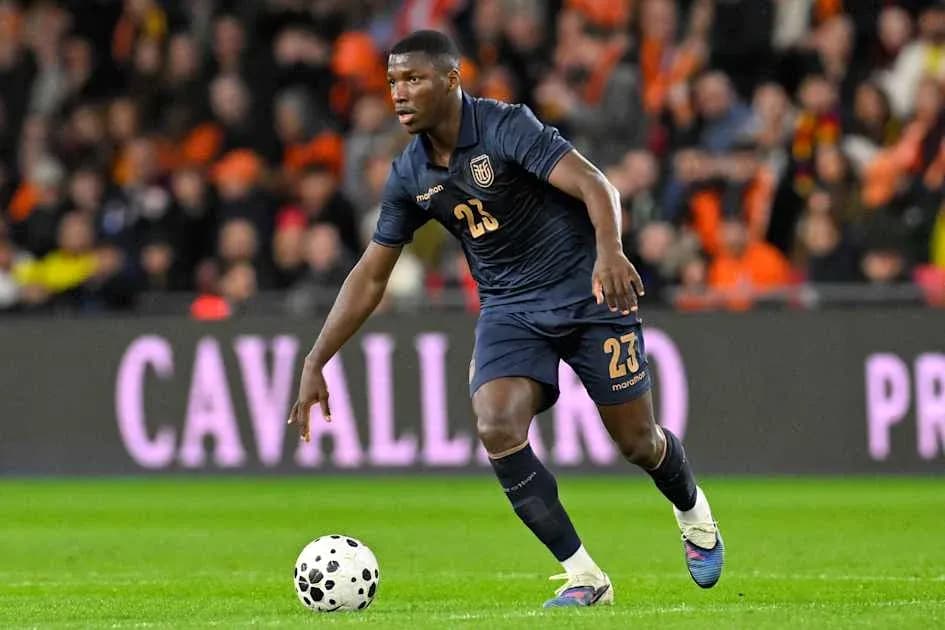
Moises Caicedo will arrive at this World Cup not as the fresh-faced prodigy he once was, but as the heartbeat of an Ecuador side that has quietly become one of the most disciplined outfits in South America.
At 22, the Chelsea midfielder already carries 60 caps and has worn the armband during key moments of an impressive qualifying run. He is no longer just the future of Ecuador’s midfield. He is its reference point.
Caicedo leads, Paez follows
Alongside him, and drawing almost as much intrigue, is Kendry Paez. On loan at River Plate from Chelsea, the 19-year-old has already collected 24 caps, 12 of them in qualifying. That is not the profile of a youngster being eased in. That is a teenager trusted in the fire of a World Cup campaign.
The contrast is striking. Caicedo, hardened by Premier League battles and responsibility at international level. Paez, still growing into his frame, but already a central figure in the national setup. Ecuador’s midfield, once built around rugged destroyers and counter-attacking runners, now leans on two technically sharp, press-resistant talents who can dictate the tempo as well as break it.
A qualifying campaign built on steel
Ecuador did not just qualify. They imposed themselves.
Second place in South American qualifying, with only two defeats across 18 matches. Just five goals conceded – the fewest of any team in the group. In a region where defending is often tested by chaos and individual brilliance, Ecuador stayed compact, organised and ruthless in the details.
This is not a side that overwhelms opponents with waves of possession or flamboyance. It strangles games, limits space, and waits for its moments. The numbers from qualifying tell the story: hard to break down, hard to rattle, and rarely out of control.
Group E: a demanding route
Their reward is a place in Group E, where the margins will again be thin.
Ecuador open against Ivory Coast in Philadelphia on Sunday 14 June, a meeting that promises physical duels all over the pitch. Then comes Curacao in Kansas City on 20 June, a fixture that, on paper, Ecuador will be expected to manage, but one that could define whether they travel to New Jersey under pressure or in control. The final group game, against Germany on 25 June, will likely be the ultimate examination of their defensive credentials and their composure on the ball.
For a team that thrives on structure and discipline, these three games offer three different types of test: power, patience, and pedigree.
The squad: balance and bite
The final list underlines the identity that carried Ecuador through qualifying.
In goal, Hernan Galindez (Huracan), Moises Ramirez (Kifisia) and Gonzalo Valle (LDU Quito) provide stability rather than stardom, but stability is exactly what this team demands from its last line.
The defence is built on top-level experience and athleticism. Piero Hincapie (Arsenal), Willian Pacho (Paris St-Germain) and Pervis Estupinan (AC Milan) bring European sharpness and versatility, while Felix Torres (Internacional), Joel Ordonez (Club Brugge), Jackson Porozo (Tijuana) and Angelo Preciado (Atletico Mineiro) add depth, height and aggression. This is a back line designed to win duels and squeeze space, not just survive.
Midfield is where the personality of the side truly emerges. Caicedo anchors it. Around him, Alan Franco (Atletico Mineiro), Paez, Pedro Vite (UNAM), Jordy Alcivar (Independiente del Valle), Denil Castillo (Midtjylland) and Yaimar Medina (Genk) offer running power, technical balance and options between the lines. There is a clear blend: ball-winners, passers, and young legs ready to press and transition at speed.
It is a group that can sit deep and counter, or step up and compress the pitch. The common thread is intensity.
A team ready for the next step
Ecuador arrive with numbers that command respect and a core that has already proved itself in one of the toughest qualifying paths in world football. Caicedo sets the tone, Paez brings the spark, and behind them stands a squad drilled in the art of control.
The question now is simple: can this disciplined, quietly confident side turn qualifying authority into a deep run on the biggest stage?