.svg&w=384&q=75 "Pitchgist logo")
Ángel Di María Defends Lionel Messi and Scaloni's Leadership
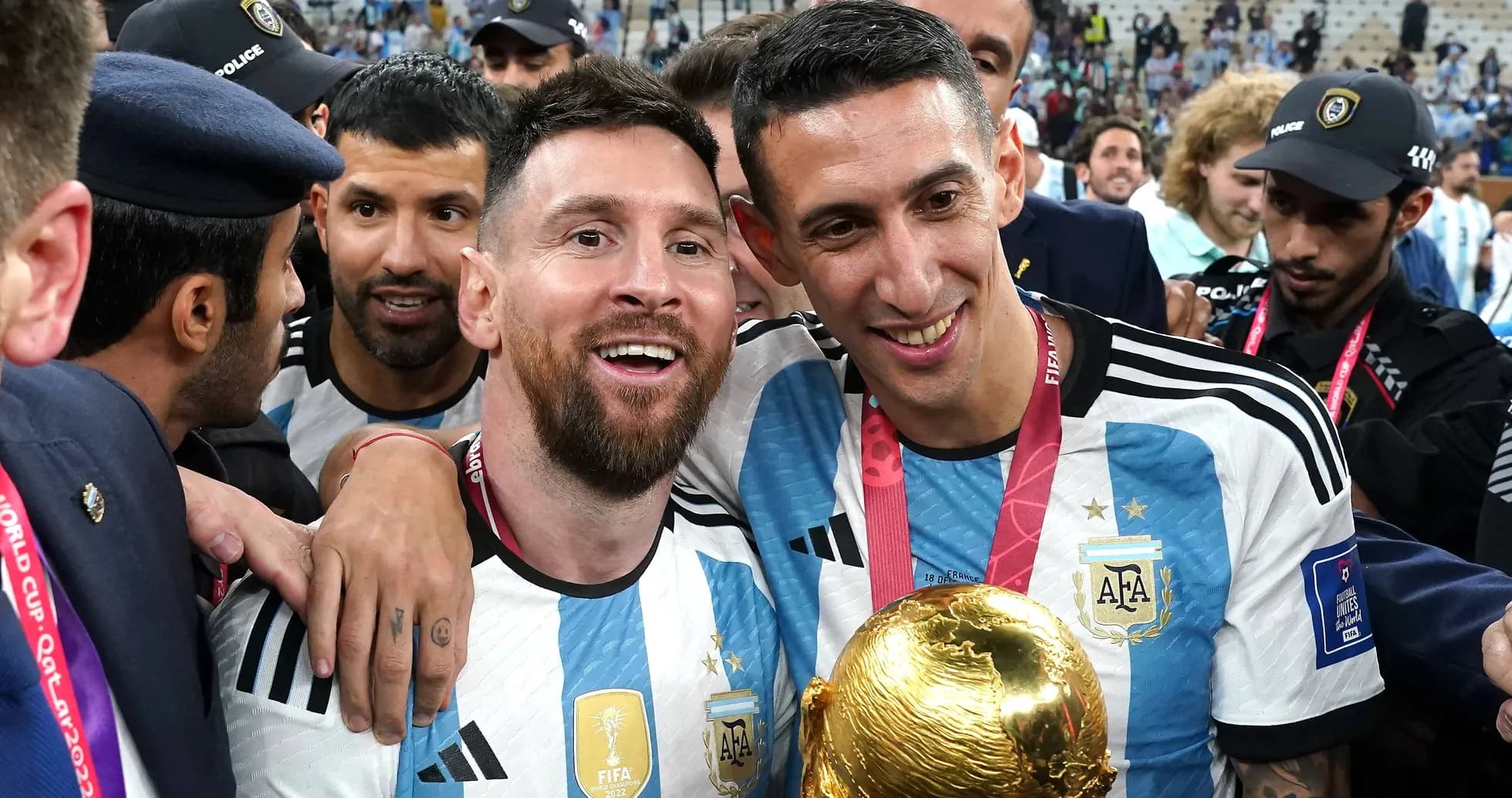
Ángel Di María has seen enough of Lionel Messi to know one thing: time still bends to his old friend.
Fresh from Rosario Central’s 2-1 defeat to Belgrano, the veteran winger stepped away from club frustration and spoke with absolute clarity about the man who has defined Argentina’s modern era.
“Leo has to keep going as long as he wants,” Di María said, drawing a firm line under any talk of decline. “I think he can continue for many more years. At 39, he's shown that he's one of the best and that he can continue to be one of the best in history. He has no ceiling, there's nothing more for him.”
In the wake of Argentina’s emotional run at the 2026 World Cup, those words carry weight. Leandro Paredes has already revealed that Messi viewed the final as his farewell to the international game, a potential full stop to a career that has reshaped the sport. Di María, though, refuses to treat it as anything but Messi’s decision — and Messi’s alone.
The message is simple: if Messi walks away, it will be on his terms, not because the game has moved past him.
Backing Scaloni, guarding a golden era
Di María’s defence of his captain flowed naturally into a plea for continuity on the touchline. For him, Lionel Scaloni is not just a coach; he is the architect of an era Argentina can scarcely afford to disrupt.
“Scaloni is the leader of the national team, I hope he stays for everyone's sake,” Di María insisted. “He's developing a good generation of young players who are coming through now, and every little bit helps. I hope he stays; it's his decision. Scaloni, better than anyone, knows what he wants, but obviously, as an Argentine, I'd like him to continue.”
Four major trophies tell the story of Scaloni’s reign: the World Cup, two Copa Americas, and the Finalissima. Under him, Argentina did more than win; they rebuilt an identity, stitched together generations, and handed the shirt to a new wave without loosening Messi’s grip on the armband.
Di María knows how fragile that balance can be. Lose Scaloni now, and the transition from Messi’s twilight to the future becomes a far more dangerous path.
A generation already immortal
Away from the tactical and the political, Di María allowed himself to speak as a teammate, as a man who has lived every high and low of this cycle.
“They deserve more than just applause for everything they've achieved and have continued to achieve,” he said of the current squad. “Beating England was the culmination of all that. For me, the World Cup ended there, and we gave the country its greatest joy, and that's the most beautiful thing for everyone.”
It was a revealing line. For Di María, that win over England stood as the emotional peak, the moment that crystallised years of toil, heartbreak and redemption. The final, painful as it was, could not erase that. This team, he believes, has already carved its place among the greats.
Suffering, pride and what comes next
Di María did not pretend the World Cup was easy to watch from his vantage point. He spoke like a fan who knew every risk, every scar.
“I suffered through every match, but in the end they drew on their inner strength and that's what led to victories. Finals are finals; sometimes you win, sometimes you don't. This time it wasn't our turn, but I think the lads did the national team proud.”
There is no spin there. Just the blunt reality of elite football: sometimes the story doesn’t end with a trophy, even when the performances deserve one.
Yet through all of it — the farewell hints from Messi, the uncertainty around Scaloni, the sting of a lost final — Di María’s stance never wavered. Messi, he insists, still belongs at the top. Scaloni, he argues, must be the man to guide what comes after.
Argentina stand at a crossroads, but in the eyes of one of their great servants, the path forward is clear: keep the captain, keep the coach, and let this generation decide for itself when its story is truly over.