.svg&w=384&q=75 "Pitchgist logo")
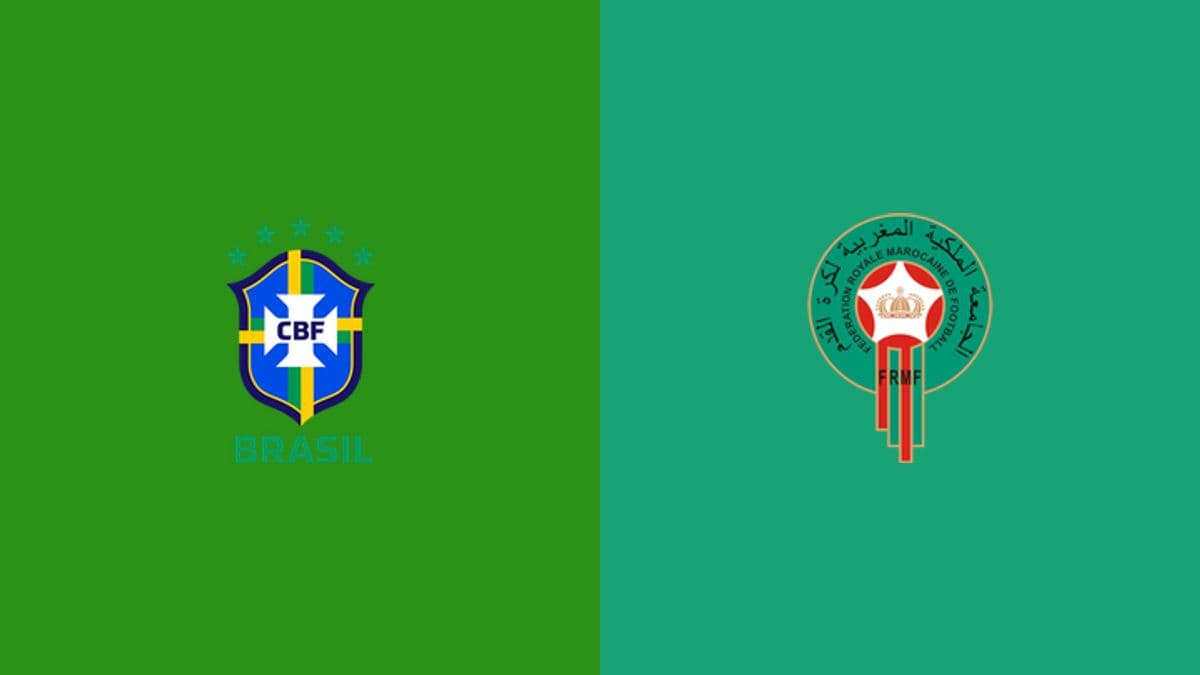
Brazil vs Morocco: World Cup 2026 Opener Preview
The clock will tick to 22:00 GMT on 13 June 2026, the lights will bite into the New Jersey night, and the World Cup will finally feel real. Brazil against Morocco at the New York New Jersey Stadium is not just an opening fixture in Group C. It is a stress test for two footballing projects carrying very different kinds of expectation.
On one side, Brazil, dragged through a turbulent qualifying campaign and now entrusted to the calm, steel-edged authority of Carlo Ancelotti. On the other, Morocco, Africa’s standard-bearers, arriving with the swagger of a team that has already stared down giants and lived to tell the tale.
The stakes are brutal. With Scotland and a hyperactive Haiti lurking in the group, a slip on matchday one could send either of these sides into a spiral.
Brazil’s uneasy road to redemption
Brazil do not usually stumble into World Cups. They stride. This time, they lurched.
The CONMEBOL qualifiers exposed every flaw. Early rounds brought uncharacteristic chaos, culminating in a bruising 4-1 defeat to Argentina that rattled the country and shredded patience with the previous regime. The Seleção, usually perched at the top of South America’s ladder, suddenly found themselves looking down nervously rather than up.
That is when the federation pushed the panic button and called Carlo Ancelotti.
The Italian arrived with Brazil sitting in fourth on 21 points, their aura dented, their structure frayed. His task was not romantic; it was remedial. He had to turn a collection of superstars into a functioning machine, to impose a framework without suffocating the improvisation that defines Brazilian football.
The recovery was not spectacular, but it was decisive. Brazil steadied, picked off the results they needed in the final windows of 2025 and clung to a fifth-place finish. It was enough. Automatic qualification secured, the unthinkable – a World Cup without Brazil – stayed in the realm of nightmare rather than reality.
Now the narrative flips. Qualification was damage control. The World Cup is the chance at redemption, under foreign leadership, in a stadium built for grand statements.
Morocco’s ruthless march
Where Brazil wobbled, Morocco stormed.
Fresh from their era-defining fourth-place finish at Qatar 2022, the Atlas Lions treated CAF qualification like a coronation tour. Under Walid Regragui, they ripped through Group E with eight wins from eight, a perfect record that spoke as loudly as any pre-tournament hype. Their balance was striking: a disciplined defensive shell, sharpened by width and speed, turned routine qualifiers into processions.
Then came the twist. In March 2026, Regragui stepped aside, choosing not to cling on but to clear the runway for evolution. It could have been destabilising. Instead, it opened the door to Mohamed Ouahbi.
Fresh from guiding Morocco’s U-20s to a global title in 2025, Ouahbi inherited not a rebuilding job but a roaring engine. The squad was settled, the confidence sky-high, the fear of big names gone. His brief was not to reinvent Morocco, but to unshackle them.
They arrive in North America as Africa’s most formidable outfit by the numbers and by reputation, having booked their ticket early and without drama. This is no Cinderella story now. It is a programme expecting to contend.
Ancelotti’s Brazil: vertical, ruthless, under scrutiny
Carlo Ancelotti walks into this tournament with more medals than most federations. Yet this is new ground: his first major international tournament, and as Brazil’s first high-profile foreign manager in decades.
He has built a 4-2-3-1 that can morph into a vertical, counter-attacking blade. The principles are clear. Win the ball, look forward. Avoid sterile sideways passing. Attack the space before the opponent can reset.
That approach puts huge responsibility on the double pivot, who must protect a back line often left exposed by adventurous full-backs. Marquinhos, Champions League finalist and captain, anchors the defence alongside Arsenal’s Gabriel Magalhães, a pairing chosen to handle both aerial duels and quick transitions.
Higher up the pitch, the conversation inevitably swings to Neymar Jr. His name still dominates Brazilian football, but his situation is delicate. Returning to the World Cup after two and a half years away from the national team, his preparation has been clouded by a minor muscle edema picked up at Santos. Ancelotti has kept him within the group, managing his recovery individually and refusing to gamble recklessly on matchday one if the later stages beckon.
That shifts the spotlight squarely onto Vinicius Junior and Raphinha.
Vinicius, the Real Madrid superstar, arrives as a Ballon d’Or contender and the face of this new Brazil. Raphinha, in sparkling form for Barcelona, has drawn effusive praise from Ancelotti, who sees him as arguably the best in the world at attacking deep space. The Italian plans to use him in an advanced, flexible midfield role, closer to the defensive line, where his runs can puncture the gaps behind Morocco’s structure.
The message is blunt: this Brazil will not wait. They will go for the throat when space appears.
Ouahbi’s Morocco: same steel, sharper edge
Mohamed Ouahbi steps into the senior role with only three months of runway before the tournament, yet he does not look like a caretaker. He looks like a disruptor with a plan.
His reputation was forged with the U-20s: fearless tactical tweaks, an insistence on front-foot football, and a boldness in trusting youth. Now he brings that edge to a senior side that already knows how to suffer and survive on the biggest stage.
Morocco’s identity from 2022 remains intact: compact, organised, and emotionally unbreakable in a low block when required. Ouahbi has not thrown that away. He has layered on a more vertical, possession-based style, demanding energy and aggression from a three-man midfield that hunts second balls and springs rapid combinations down the flanks.
The 2-1 warm-up win over Kosovo settled any lingering nerves. No major injuries, no late drama. The XI is experienced, synchronised, built on familiar pillars.
Achraf Hakimi is still the structural keystone. The Paris Saint-Germain right-back remains the conduit between defence and attack, tasked with locking down his flank and then driving Morocco forward with those surging runs that bend entire games around him.
Around him, Ouahbi has quietly refreshed the squad. Teenage proteges from his U-20 triumph, Othmane Maamma and Yassir Zabiri, have been promoted, expected to inject energy off the bench rather than carry the load from the start. The message to the veterans is clear: your places are safe for now, but the next wave is already here.
The squads: depth, stars and contrasting builds
Brazil’s 26-man list reads like a Champions League roll call.
In goal, Alisson and Ederson give Ancelotti an embarrassment of riches, with Weverton as the experienced third option. The defence blends familiarity and muscle: Alex Sandro, Bremer, Danilo, Douglas Santos, Gabriel Magalhães, Roger Ibañez, Léo Pereira, Marquinhos and Wesley form a unit built to both defend deep and push high.
Midfield carries the weight of control and destruction. Bruno Guimarães, Casemiro, Danilo Santos, Fabinho and Lucas Paquetá offer a mix of bite, passing range and creativity between the lines.
The attack is explosive: Endrick, Gabriel Martinelli, Igor Thiago, Luiz Henrique, Matheus Cunha, Neymar Junior, Raphinha, Rayan and Vinicius Junior. Goals, dribbling, chaos – all there, if the structure behind them holds.
Morocco’s 26 is less star-studded but just as coherent.
Yassine Bounou, Munir El Kajoui and Ahmed Reda Tagnaouti guard the posts. At the back, Noussair Mazraoui, Anass Salah-Eddine, Youssef Belammari, Achraf Hakimi, Zakaria El Ouahdi, Nayef Aguerd, Chadi Riad, Redouane Halhal and Issa Diop give Ouahbi options for both back-four and more flexible shapes.
Midfield is stacked with industry and guile: Samir El Mourabet, Ayyoub Bouaddi, Neil El Aynaoui, Sofyan Amrabat, Azzedine Ounahi, Bilal El Khannouss and Ismael Saibari. They will be asked to both screen and spring, closing lanes to Brazil’s creators before flipping the pitch.
Up front, Abde Ezzalzouli, Chemsdine Talbi, Soufiane Rahimi, Ayoub El Kaabi, Brahim Díaz, Gessime Yassine and Ayoube Amaimouni offer width, movement and finishing. It is a group designed to punish any lapse in Brazilian concentration.
Where this game will be won
The tactical board almost writes itself.
Vinicius Junior vs Achraf Hakimi
Down one flank, a duel fit for any final. Vinicius arrives intent on proving his Ballon d’Or credentials on the international stage, a winger who thrives on isolation, speed and direct confrontation. Hakimi is one of the few full-backs in world football with the pace, power and positional sense to live with him over 90 minutes.
If Hakimi can hold his ground without being pinned too deep, Morocco’s entire system breathes. If Vinicius starts winning those one-on-ones, Group C tilts.
Raphinha vs Morocco’s midfield shield
Raphinha’s role under Ancelotti will not be that of a traditional touchline winger. He will drift into advanced central pockets, close to the defensive line, looking to turn and run into vertical channels.
That drags the responsibility onto Sofyan Amrabat and the rest of Morocco’s central block. Amrabat must track Raphinha’s movement, deny him clean touches on the half-turn, and cut the supply to Brazil’s overlapping runners. One mistimed step, one late rotation, and Brazil’s attack can knife through the heart of the pitch.
Gabriel Magalhães vs the Moroccan No. 9
Inside the box, Gabriel Magalhães faces a punishing assignment. Morocco’s style leans heavily on crosses and set-pieces, and their centre-forward – a relentless, aerially dominant target man – will look to rough up the Arsenal defender, drag him into duels and open space for late runners.
Gabriel’s positioning and physical strength must hold. If he loses control of his territory, dead balls and wide deliveries could become Morocco’s clearest route to an upset.
A pressure cooker in New Jersey
The context is unforgiving. Brazil, forever measured against their own mythology, must show that Ancelotti’s vertical, space-hunting blueprint can handle the intensity of tournament football. Morocco, no longer the surprise package of 2022, must prove that their evolution under Ouahbi has added layers without stripping away the resilience that made them special.
Under the glare of a global audience and the noise of a packed New York New Jersey Stadium, this opener will not feel like a gentle introduction. It will feel like a knockout game in disguise.
For Brazil, it is the first step in a bid to reclaim supremacy. For Morocco, it is the chance to announce that their run in Qatar was not a one-off miracle but the start of a new era.
One misstep, and the rest of Group C starts to look like a minefield. One statement performance, and the tournament’s balance of power might shift before the first week is done.