.svg&w=384&q=75 "Pitchgist logo")
The Unique Friendship of Jude Bellingham and Erling Haaland
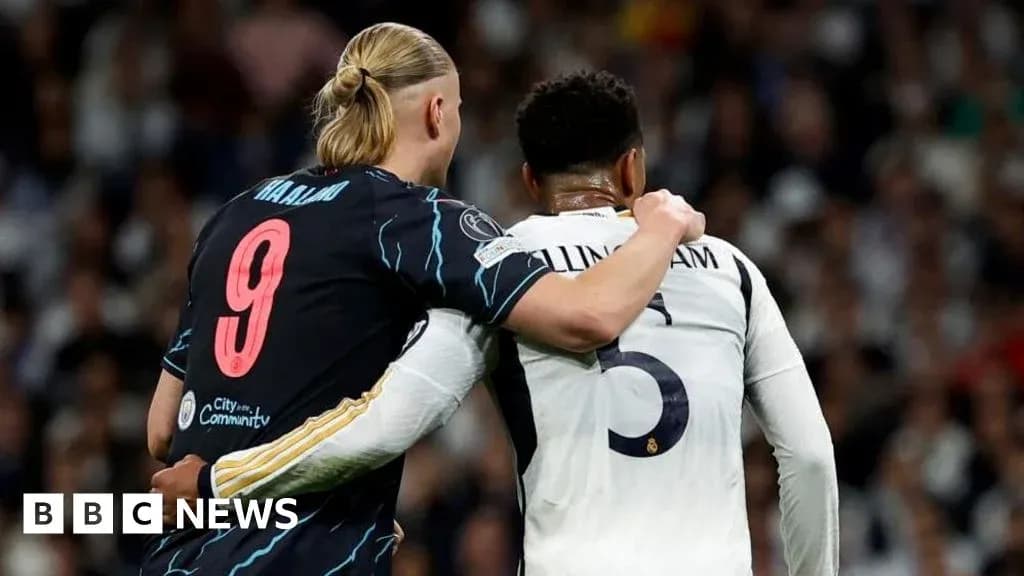
In an era where every gesture is clipped, shared, and litigated online, the friendship between Jude Bellingham and Erling Haaland has become an unlikely soft spot in football’s hard-edged ecosystem.
It started in earnest at Borussia Dortmund. Two young stars, one English, one Norwegian, both destined for the very top, finding room in the pressure cooker of elite football to joke, tease and lean into a chemistry that cameras simply couldn’t ignore. Dortmund even leaned into it themselves, releasing a Valentine’s Day video of the pair trading cheesy pick-up lines. Haaland, deadpan as ever, delivered one that quickly did the rounds: “I'd like to take you to the movies but they don't let you bring in your own snacks.”
Clips like that never really die on the internet. They just wait for the right moment to resurface. This tournament has given them exactly that. Old footage of the pair laughing, nudging, playing up to the lens has flooded timelines, cutting through the usual storm of tactical hot takes and tribal outrage.
PR expert Mark Borkowski sees a clear shift. Speaking to the BBC, he contrasted this generation with the combustible stars of the 90s and 00s, when brands and footballers often clashed over behaviour and image. Today’s elite, he argued, are a different breed, shaped by social media, sharper to the demands of modern celebrity and more aware of how they present themselves.
Haaland, he noted, comes from a “pretty wholesome family,” and both players’ time in European club football has broadened their horizons, exposing them to different cultures and shaping who they are off the pitch as much as on it.
That mix has helped turn their relationship into something bigger than just a former team-mate bond. Some fans have even reached into pop culture to describe it, invoking the gay ice hockey romance novel Heated Rivalry and jokingly branding the Haaland–Bellingham dynamic “Cleated Rivalry” – a tongue‑in‑cheek nod to the perceived charm and “will-they-won’t-they” tension of two men who, in reality, are both widely reported to be in relationships with women.
Beneath the memes lies something more serious. As one observer told the BBC, these clips offer “a bit of an antidote” to the relentless toxicity that often defines football online. Social platforms tend to flatten players into caricatures: heroes or villains, assets or “machines,” reduced to price tags and goal tallies. The Bellingham–Haaland moments do the opposite. They re‑humanise two of the most ruthless competitors in the sport, showing them as funny, affectionate and at ease with each other.
There is power in that. Two young male athletes, both at the very top, showing a warm, open friendship without feeling the need to manufacture hostility for the cameras. They can still want to tear each other apart on the pitch. They can still chase records, trophies, Ballons d’Or. But they don’t have to pretend that respect and affection are weaknesses.
They also work, simply, as characters. Bellingham comes across as polished, articulate, emotionally open. Haaland plays the eccentric foil: dry, unpredictable, effortlessly meme‑able. Together, they unlock sides of each other that fans rarely see when the whistle blows and the elite-athlete mask drops into place.
Around that, their private lives remain largely guarded, at least from their own mouths. Bellingham is widely reported to be in a relationship with US model Ashlyn Castro, though he has not spoken publicly about it. The glimpses he has allowed have tended to be about family rather than romance.
He has been clear about the influence of his parents. Speaking to the England Football website, he reflected on how his father’s playing background pulled him into the sport in the first place. Without that, he admitted, football might never have taken hold. His mother, he said, shaped the way he carries himself – teaching him about life beyond the game, but also lessons he now brings onto the pitch: staying calm, staying cool, setting an example, leading. He describes her as a “very good leader,” and it shows in the way he talks, the way he fronts up pressure, the way he has embraced responsibility so young.
Haaland, for his part, has occasionally let slip domestic details of his own. “I cook dinner…” he said in one interview, before joking that his partner might be embarrassed by his revelation that she likes video games. It’s a small line, but in the context of a hyper‑managed industry, it adds another thread to the tapestry: two superstars, still grounded in the ordinary rhythms of home life.
Put it all together and you get a picture that jars with the old stereotype of the aloof, unreachable football idol. These are global icons, yes, but also young men who laugh at bad jokes, who lean on their parents, who cook, who game, who hug their friends and don’t feel the need to turn every interaction into a performance of macho distance.
The goals and trophies will always dominate the headlines. Yet as Bellingham and Haaland stride deeper into their primes, it may be this visible, unguarded friendship – this refusal to play the part of cold, corporate assets – that quietly reshapes what football’s next generation thinks it can be.