.svg&w=384&q=75 "Pitchgist logo")
Australia's Stunning World Cup Rise: From Underdogs to Contenders
Mike Grella wanted a lay-up. He might have created a monster.
Days after the former US international dismissed Australia as having “no shot of doing anything at the World Cup”, the Socceroos have turned his words into jet fuel, smashed Turkiye 2-0 in Vancouver, and suddenly look like the team nobody wants to underestimate — least of all the United States.
From punchline to problem
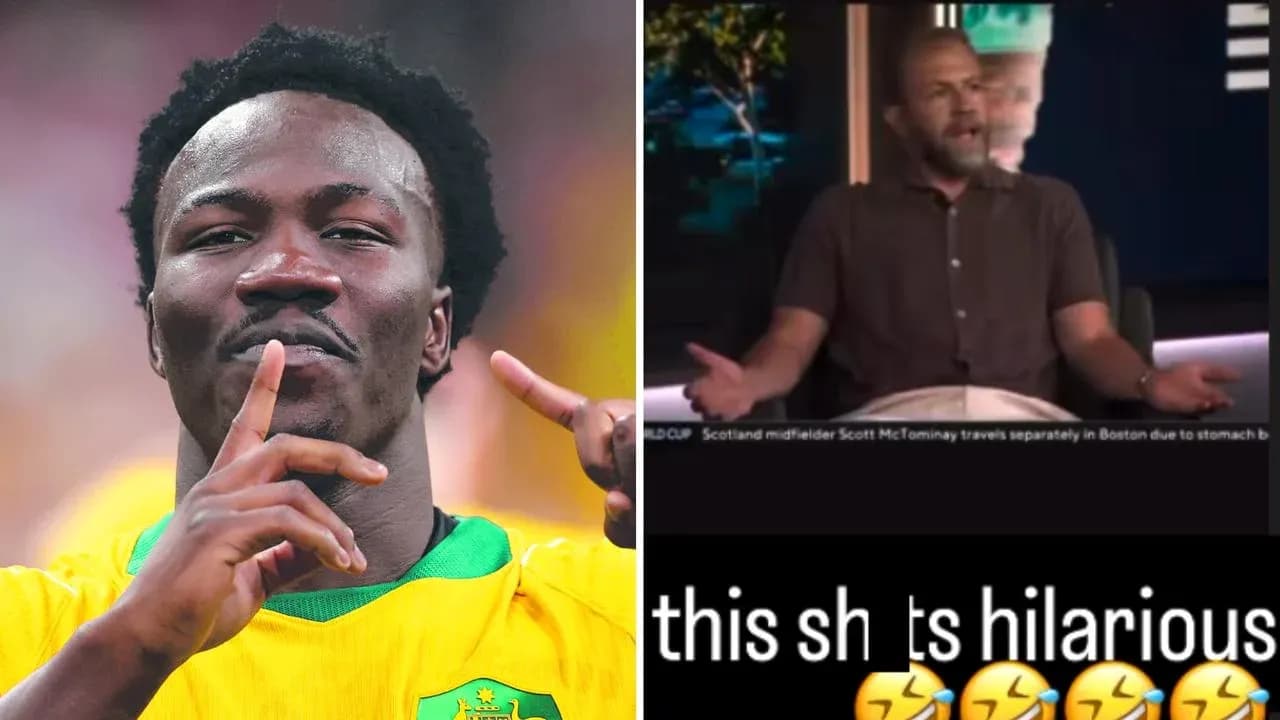
Grella’s pre-tournament spray on CBS Sports Golazo was blunt, and it travelled fast.
“I’m not kidding though when I say this, what are they drinking over there because they have no shot of doing anything at the World Cup,” he said, calling Australia “the weakest team in the group” and insisting “there’s no shot Australia can compete with the US.”
It was the kind of clip built for social media. Former AFL player Dan Gorringe gleefully re-shared it, adding a colourful “we’re gona f*** you up”, and Grella doubled down with “Yo this sh*t’s hilarious” and “see you Friday”, punctuated by crying laughing emojis.
Then the football started. And the joke shifted.
Australia, written off as a “lay up”, produced one of the most composed World Cup performances in their history, outfoxing Turkiye with a mix of raw pace, tactical discipline and what one observer simply called “true Australian grit”.
A new star, an old story
The win had several heroes, but one name raced around the world: Nestory Irankunda.
The Watford winger, already well known in England after a breakout Championship season, introduced himself to the World Cup with a goal that crackled with speed and audacity. His strike, combined with Connor Metcalfe’s second-half rocket and a flawless debut from goalkeeper Patrick Beach, stunned Turkiye and lit up Vancouver.
For many outside Australia, Irankunda’s story hit just as hard as his football.
BBC journalist Chris McKenna framed it as the latest chapter in an “incredible journey” for a former refugee who, only a year ago, was learning from Harry Kane at Bayern Munich. The Sun splashed the Socceroos and Irankunda across its website with the headline: “Watford star born in refugee camp scores historic World Cup goal.”
FourFourTwo went for the romantic comparison, asking: “The new Michael Owen?” as they drew parallels with Owen’s famous 1998 World Cup goal against Argentina. Hyperbole, perhaps, but it captured the mood: this was a breakout moment the wider game could feel.
Popovic’s plan, Beach’s moment
Behind the highlights reel sat Tony Popovic’s blueprint.
Australia did not dominate the ball. They did not flood the shot count. They did something more awkward, more annoying, more effective: they controlled the game on their terms.
Simon Hughes, senior football writer at The Athletic and in the stadium in Vancouver, called the Socceroos “street wise” and praised their willingness to lean into “some of the darker arts in the game.” Time taken over restarts, tactical fouls, clever positioning — all the subtle, cynical details that separate tournament teams from naive ones.
“They really understood what their limitations were and they got the maximum out of what they could do,” Hughes said on CBS Sports Golazo. “I always felt like Australia had control of what was going on. Occasionally they needed the goalkeeper to step in and do his thing, but that’s what goalkeepers are there for. People forget this.”
That goalkeeper, Beach, walked into the World Cup largely anonymous to his own country. Ninety minutes and one stunning debut later, he walked off as a national hero.
Hughes wrote that readers should “never underestimate true Australian grit.” The evidence in Vancouver backed him up.
Ange watches on, and approves
In the UK and Ireland, the reaction came with a distinctly Australian accent.
Ange Postecoglou, the former Socceroos and Tottenham manager, sat on ITV’s panel and could barely hide his delight at Irankunda’s explosive performance.
“It doesn’t matter what level of football you play at, in the park or World Cup, that is fantastic speed,” he said. “A massive moment. Sometimes in World Cups, you just need a good couple of weeks and your whole world can change. Let’s hope that is the start for him.”
It might be the start for more than just Irankunda. Popovic’s side, dismissed as cannon fodder a week ago, now have a genuine foothold in the tournament.
The Athletic’s projections give Australia an 85 per cent chance of escaping the group. That number will not comfort a US squad now facing a team they were publicly told would be a breeze.
American nerves and a loud receipt
Grella’s comments have not aged well, and his colleagues know it.
“Grella’s going to be hired as their motivational speaker at this point,” former US midfielder Benny Feilhaber joked on CBS Sports Golazo. “He willed them to three points yesterday.”
Former US defender Jimmy Conrad cut to the heart of it: “Everybody keeps discounting Australia and that seems to be not the right thing to do. So, thanks Grella. We appreciate that.”
The tone in the US has shifted from dismissive to wary. The detailed tactical breakdowns of Australia’s win are largely coming from non-American voices, but the message is the same: this is not a soft touch.
Hughes, speaking again on CBS, pointed to the emotional force behind the performance as much as the tactical detail.
“I really felt in Vancouver yesterday that they really had the fans behind them. That’s a massive thing in World Cup football,” he said. “Australia really, really believed they could effect this game and make an imprint on this tournament. I think they’re going to be quite difficult to stop. The US, if they underestimate them, might have a few problems.”
That last line will ring in American ears all week.
The world’s second team?
Scroll through social media and a pattern appears: a lot of neutral fans now have a second team, and it wears green and gold.
Some of the humour has been at Australia’s expense. Comparisons to Arsenal’s title-winning defensive steel. Jokes about “Haram Ball” — a tongue-in-cheek label for ultra-defensive, “anti-football” tactics. None of it has dulled the admiration.
People loved the contrast: a backline of giants throwing bodies in front of everything, and an attack that explodes into space with terrifying speed.
Comedian and football obsessive Trevor Noah nailed it on the Men in Blazers podcast.
“Australia has giants at the back. You don’t just swing the ball in and hope for the best against Australia,” he said. “If there’s one thing the Socceroos know how to do, it’s compact their defence, make sure that nothing gets in. You score by keeping it on the floor against these boys and they didn’t pick that up.
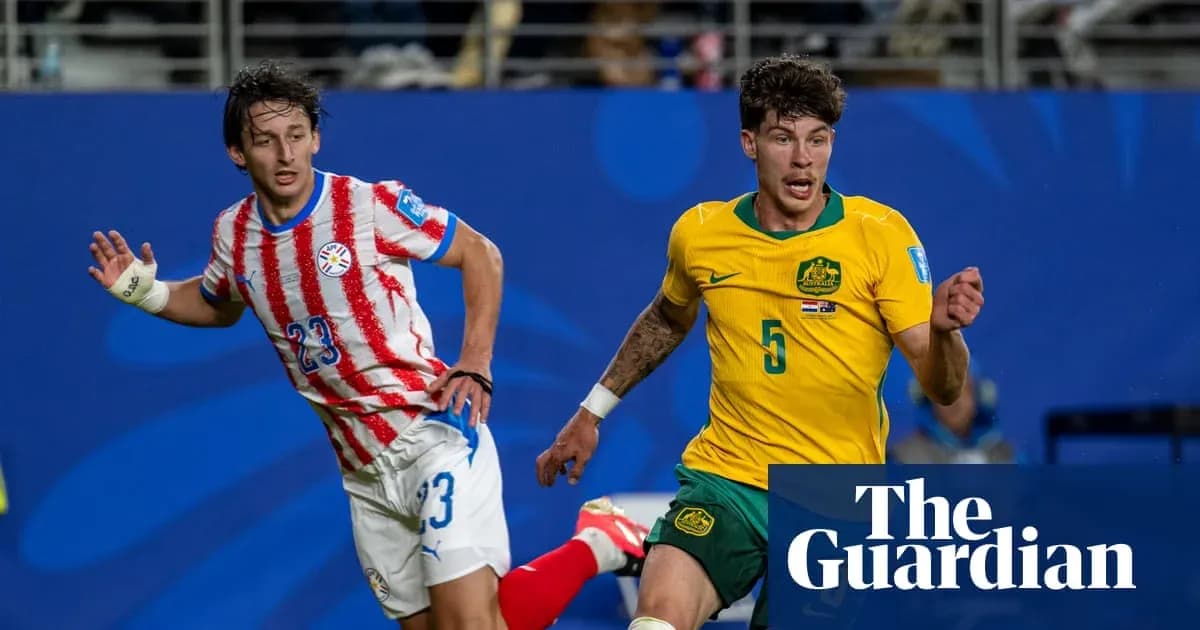
“And their new attack up top is completely different to what we’ve seen in years before from like the Cahill and Harry Kewell days. This was fast. It was like a lightning quick counter-attack and can I tell you, that boy Jordan Bos, number five. Yo, yo, I want to see which team he’s playing for next... that man is silky on the ball!”
Bos, Irankunda, Metcalfe, Beach — this is a new-look Australia, and the world has noticed.
A team that looks like its country
Off the pitch, the Socceroos have struck a different kind of chord.
A pre-tournament video, now recirculating after the Turkiye win, shows players talking about their backgrounds and the idea that this team is the best reflection of modern Australia. One line lingers: “our diversity is our strength.”
It is not just a slogan. It is visible in the squad, audible in their stories, and now written into a World Cup win that has pulled in support from far beyond their own shores.
Australia arrived as an afterthought. They face the US in Seattle at 5am AEST on Saturday with one foot edging towards the knockout rounds and a growing band of believers behind them.
Grella said they had “no shot of doing anything.” The only question now is how much more damage this supposedly weakest team in the group is about to do.