.svg&w=384&q=75 "Pitchgist logo")
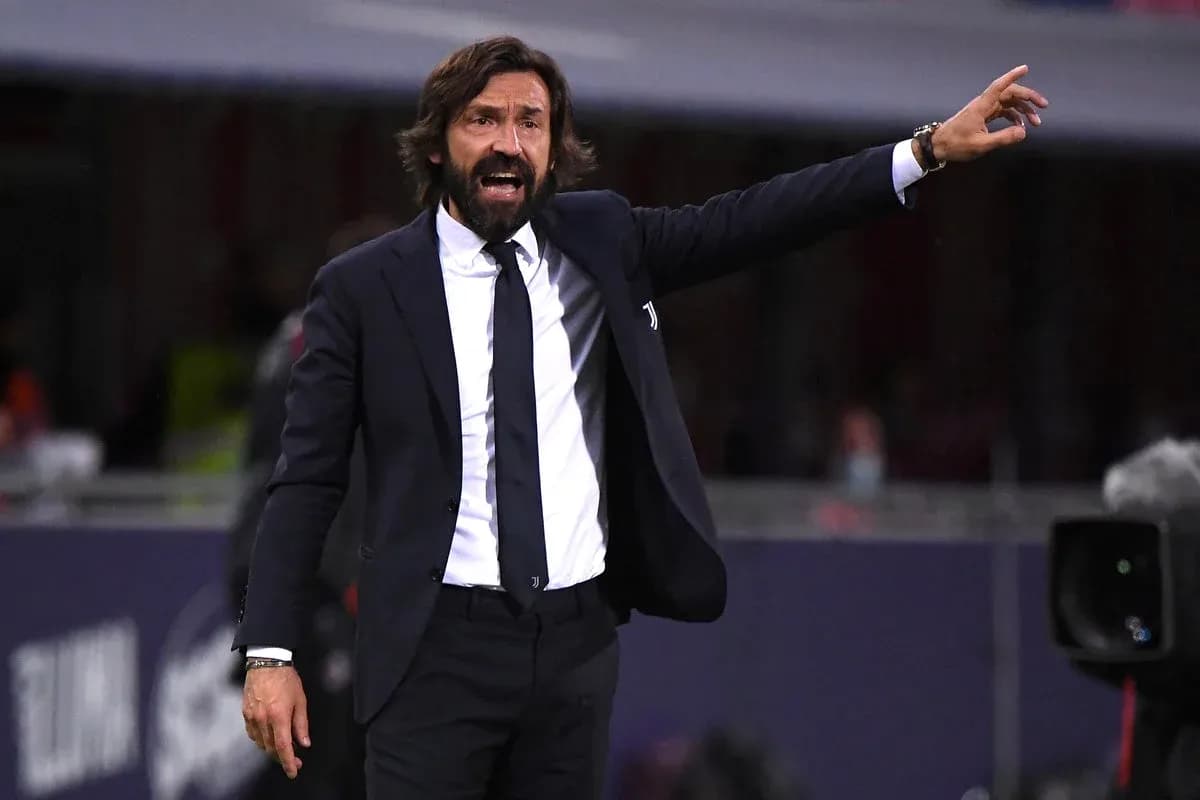
Andrea Pirlo Set to Lead Italy as National Team Coach
Italy is turning back to one of its most elegant footballing minds. Andrea Pirlo, the conductor of the 2006 World Cup-winning side, is set to become the new head coach of the national team, according to local reports.
La Repubblica reports that Pirlo will sign a four-year contract, a deal designed to carry him through to the 2030 World Cup. It is a bold, emotive appointment at a time when Italian football is wrestling with one of the deepest crises in its modern history.
This is not just about a coach. It is about identity.
A Maestro Returns
Pirlo’s playing career is etched into Italian football folklore. Inter Milan, AC Milan, Juventus. League titles, European nights, that World Cup in Berlin. A regista who seemed to slow time on the pitch now steps into a role where time is running out on a broken system.
Since hanging up his boots, Pirlo has taken a different path to many of his former teammates. He coached Juventus, then Sampdoria, and had a spell in Turkey with Fatih Karagumruk. He is currently in charge of Dubai United, a quieter stage than the one he is about to inherit.
Now, the federation is ready to hand him the keys to a national team that has lost its way.
A Giant in Trouble
Italy, four-time world champions, have failed to qualify for three consecutive World Cups. For a country where football is a national obsession, that is more than a sporting failure. It is an institutional one.
The youth development and talent pathway system has frayed badly. The conveyor belt that once produced defenders with granite in their veins and playmakers with velvet in their touch has slowed to a worrying crawl. The appointment of a new coach is being framed as the first step in a much larger reconstruction project.
Pirlo will not just be asked to pick teams and tweak formations. He will be expected to help reshape a culture.
After Gattuso and Guardiola, the Pirlo Turn
The job became vacant when Gennaro Gattuso resigned in April, walking away after Italy’s latest World Cup qualification collapse. Another member of that ferocious 2006 generation gone, leaving behind a team without direction.
The federation then reached high. Italian football federation president Giovanni Malago confirmed this week that talks had taken place with Pep Guardiola. The former Manchester City manager, fresh from ending his era in England, was courted as the man to reboot the Azzurri.
He said no.
Sky Italy reported that Guardiola rejected the role for “personal reasons that go beyond football”. He had already spoken publicly, before leaving City, about not taking another job “for a while”, citing a lack of “energy” – a fatigue that echoed Jurgen Klopp’s words when he stepped away from Liverpool.
So, with Guardiola out of reach, Italy turned back to one of their own. Not the snarling intensity of Gattuso. The cool, cerebral Pirlo.
A New Era, Different Paths
While Italy waited and negotiated, Germany moved decisively. Klopp, 59, was unveiled on Friday in Frankfurt as the new head coach of the German national team, his first job since leaving Liverpool two years ago. He has signed a four-year contract that will carry him through Euro 2028 and the 2030 World Cup.
“The national team brings us Germans together like almost nothing else can. That's what makes this task so special for me,” Klopp said at his presentation, adding that he feels “recharged”.
Two giants of European football. Two very different solutions.
Germany get Klopp, the charismatic serial motivator. Italy, if the reports are confirmed, will hand the reins to Pirlo, the quiet strategist whose footballing brain has never been in doubt, even if his coaching career is still in its formative chapters.
The Weight of 2030
A four-year deal to 2030 tells its own story. The Italian federation is not looking for a short-term firefighter. It wants a project, a reset, a figurehead who can bridge the gap between the past that still haunts them and a future that currently feels distant.
Pirlo will walk into a job loaded with expectation and scarred by recent failure. He will inherit a broken qualifying record, an ageing reputation, and a youth system that no longer guarantees world-class talent.
But he will also walk into a dressing room and a nation that still remembers what he was with a ball at his feet.
The question now is simple and ruthless: can the maestro who once dictated games from midfield now orchestrate a full-scale national revival from the dugout?