.svg&w=384&q=75 "Pitchgist logo")
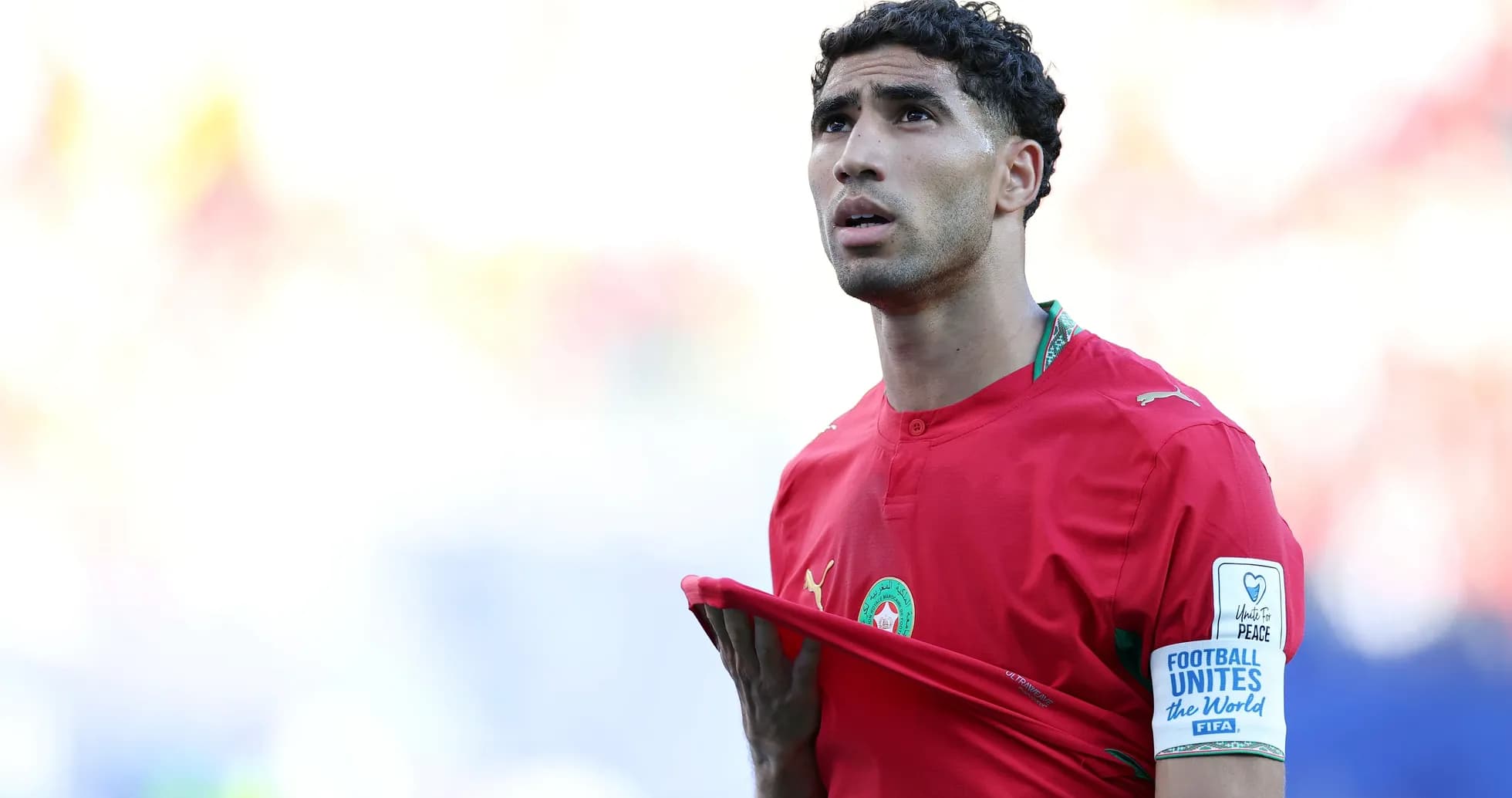
Achraf Hakimi to Face Trial for Rape Amid World Cup Spotlight
The legal clouds that have hung over Achraf Hakimi for more than a year have now broken into a full storm.
French judicial authorities in Hauts-de-Seine have ruled that the Paris Saint-Germain defender will face a full criminal trial over an alleged rape at his home in Boulogne-Billancourt, stemming from an incident reported in February 2023. After an extensive three-year judicial inquiry, prosecutors formally requested a trial, and the appeals court has now confirmed the final referral.
For the 27-year-old, the decision lands at the most scrutinised moment of his career, with Hakimi currently captaining Morocco at the 2026 World Cup and preparing for a pivotal second group game against Scotland on Friday night.
Court clears path to full criminal trial
The investigating chamber concluded that the case file contained sufficient evidence to send Hakimi directly to trial, rejecting any notion of dismissal at this stage. It is a firm legal step: not a verdict, but a clear statement that the courts believe the matter must be tested in front of a criminal court.
The civil party’s legal team greeted the ruling as a significant marker in how elite sport confronts sexual violence.
Rachel-Flore Pardo, lawyer for the complainant, said the chamber had found “sufficient evidence against Achraf Hakimi for having committed rape,” calling the decision “perfectly consistent with the evidence in the case and in line with the opinions of the public prosecutor, the investigating judge, and the advocate general at the Court of Appeal.”
For her client, Pardo said, the ruling brings “relief and hope” — hope that the trial can “help other women and further erode the fortress of denial and impunity surrounding sexual violence, even within the world of men’s football.”
The language is pointed. This is no longer just a private legal battle; it has become a test case for how football handles allegations at the very top of the game.
Hakimi breaks silence and hits back
Hakimi, who had largely kept his counsel in public until now, responded with a forceful message on social media once the decision became known.
“The court looked me in the eye and said: ‘If you weren’t famous, there would never have been a case,’” he wrote. “I chose to remain silent for years. I thought that remaining dignified, being patient, and trusting in the justice system would allow the right decisions to be made.”
His legal team has adopted an even more combative tone, insisting the investigation has ignored what they describe as powerful evidence in his favour.
“The multitude of exculpatory elements revealed by the investigation and the judicial inquiry would, in any other case, have led to a dismissal,” his lawyer said, arguing that the decision to proceed runs counter to the file. “Mr. Achraf Hakimi is now eagerly awaiting his trial so that he can finally speak publicly about the false accusation against him.”
Two sharply opposed narratives now stand on either side of the courtroom door: one of vindication and systemic change, the other of wrongful accusation and a star determined to clear his name.
World Cup spotlight, courtroom shadow
All of this unfolds while Hakimi wears the captain’s armband for Morocco on the game’s grandest stage. The defender is expected to lead his country into a crucial second group-stage clash with Scotland on Friday evening, a match that could shape their entire World Cup campaign.
Every touch, every run down the flank, now comes framed by the knowledge that a criminal trial awaits him in France. For a player used to the noise of packed stadiums, the off-field scrutiny may prove louder still.
Paris Saint-Germain, for their part, are watching closely. The club, already accustomed to managing high-profile legal and public-relations storms, will head into pre-season with the prospect of a definitive trial date being set in the coming months. Sporting plans, commercial considerations and dressing-room dynamics all sit in the shadow of a case that has moved firmly into its most serious phase.
The next time Hakimi steps into a high-pressure arena, it may not be a stadium, but a courtroom.