.svg&w=384&q=75 "Pitchgist logo")
World Cup Tension: England's Exit and Messi's Final Showdown
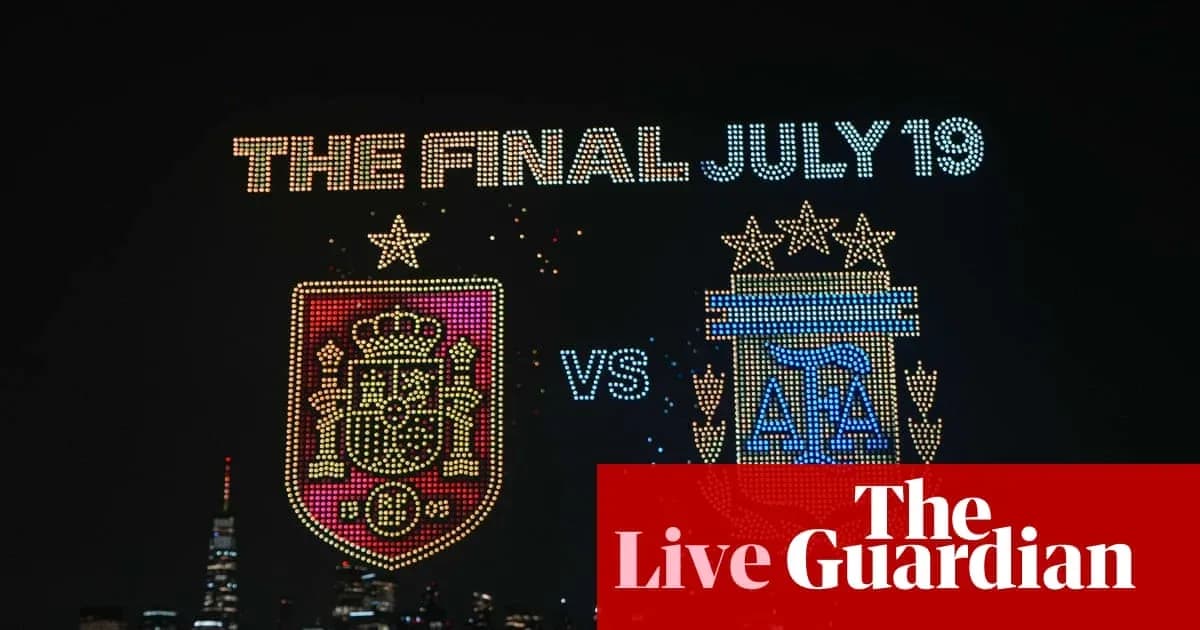
The World Cup is down to its last two matches and the tournament has entered that strange, restless lull. England are still picking over the bones of their exit, the third-place game hangs in the air like an obligation, and a final featuring Lionel Messi and Lamine Yamal looms over everything.
Around it all, the sport keeps moving. It always does.
Messi, Mbappé and the Golden Boot Question
Kylian Mbappé and Lionel Messi are level on goals in the Golden Boot race, but the Argentina captain sits top thanks to one extra assist. It has sparked a familiar debate: should goals in the final carry more weight than those in the third-place game?
Purists will argue a goal is a goal. Others point out the difference in pressure, in jeopardy, in legacy. A strike in a dead-eyed, half-empty consolation fixture hardly feels the same as one in a final that can tilt a nation’s history.
Either way, the race is set up perfectly. Mbappé chasing, Messi dictating. One more defining act each? Or will someone else steal the night?
Rodri’s World Cup Renaissance
Few players have embodied this World Cup’s intensity quite like Rodri. Once there were doubts he would ever be the same after his ACL injury. He had to learn to trust his body again, to move and compete without the ghost of the knee in his head.
Now he looks liberated. Confident. Dominant.
He has thrived on this stage, dictating tempo, closing space, playing with the authority of a midfielder who understands the rhythm of knockout football. There is a nagging suspicion this may have been his last major tournament as a Manchester City player, but that is a conversation for the coming weeks. For now, his World Cup has been a reminder of just how complete a modern midfielder can be.
From Casino Tables to Foosball King
Football’s orbit pulls in stories from everywhere. One of them begins in Lebanon, winds through war, and ends up in a Manchester casino.
As a teenager, foosball gave way to girlfriends, wine, cigarettes and a job on the gaming floor. Marriage to a British woman followed, then a move to Manchester in 1986 as conflict raged back home. A son, a daughter, and a foosball table in the kitchen kept the game alive as a quiet hobby.
By 2004, running the city’s Hard Rock Casino, that hobby moved centre stage. A table was installed for customers with a simple challenge: “Beat the manager.” Thirty tried each week. The manager always won. Some people chase the game; others quietly master it in a corner of a casino, one spinning rod at a time.
Infantino’s Grip Tightens
Away from the pitch, power is consolidating. Gianni Infantino has secured formal backing from more than 200 of Fifa’s 211 member associations for a fourth term as president, despite the unrest stirred by the controversy around Folarin Balogun’s reprieve from suspension.
Only a small cluster of associations have yet to send letters of support, with a handful of European FAs among the holdouts. Germany is the most prominent to withhold official backing so far. On current numbers, though, Infantino is heading for a landslide at the Fifa congress in March.
Football has survived Sepp Blatter, Jack Warner, Chuck Blazer. It will have to survive this era too.
England: Tuchel Stays, Questions Remain
Back in England’s camp, the autopsy continues. Thomas Tuchel is staying on despite the semi-final exit and a set of substitutions that baffled players and supporters alike.
Tuchel had been praised all tournament for game-changing adjustments from the bench. The flipside is brutal: if the substitutes keep rescuing games, what does that say about the starting XIs? In an era of five changes, managers can design “finishers” to tilt matches late, but England’s reliance on them bordered on structural flaw.
The players, unsurprisingly, were bemused by the approach that saw them fall short. The numbers tell their own story of a campaign that lurched rather than flowed. As one observer put it, England were fortunate to reach the last four and were the weakest of the semi-finalists by some distance.
Now comes the third-place game. What should Tuchel do? Chase a hollow medal or treat it as a live-fire trial? There is a strong case for giving both goalkeepers a half, unleashing Ollie Watkins and Ivan Toney, and handing Kobbie Mainoo the minutes his promise deserves. The match may feel pointless, but the decisions inside it are anything but.
Politics in the Stands and on the Pitch
Sunday’s final will not just belong to the players. Spanish prime minister Pedro Sánchez will be in attendance as Spain face reigning champions Argentina. He will share the stadium with Donald Trump, whose White House has framed the occasion as a showcase of the United States’ ability to host the world’s biggest events.
The politics do not stop at the VIP tribunes. In England, Keir Starmer has backed calls for Fifa to investigate Argentina players who displayed a banner asserting the country’s claim to the Falkland Islands after their semi-final victory over England. The fallout from that image will not vanish with the final whistle.
Romero, La Albiceleste’s Enforcer
Amid the noise, Argentina’s spine has hardened around Cristian Romero. In club football he can be rash, combustible. In the white and blue of La Albiceleste, he becomes something else: one of 11 relentless workers, a defender who leaves no yard uncovered and no challenge half-hearted.
Alongside Lisandro Martínez, Romero is the hardman of the back line, often the last obstacle before an attacker reaches Emiliano Martínez. With Messi and the goalkeeper grabbing the headlines, Romero has quietly stitched together a case as one of Argentina’s most consistent performers on the road to yet another World Cup final.
Mourinho, Madrid and Alexander-Arnold’s Second Chance
While the World Cup consumes attention, club football is already rearming. At Real Madrid, José Mourinho is back for a second spell, and one of his most intriguing projects is a 27-year-old right-back with a point to prove.
Trent Alexander-Arnold, who left Liverpool for Madrid last year, endured an injury-hit first season in Spain and drifted in and out of the starting XI. Dani Carvajal’s departure in May has now cracked the door wide open.
Alexander-Arnold has spoken of the intensity of Mourinho’s methods and the high demands placed on the squad. He has admired the Portuguese coach from afar, faced him a few times, and now calls it “a pleasure” to work under him. For a player long defined by his attacking gifts, this is a chance to build a different reputation: the undisputed first-choice right-back at a club that measures careers in trophies.
He says he is finally fit, finally able to lay a proper foundation for the season ahead. Mourinho will expect that foundation to bear silver.
Media, Smoke and the End of the Night Shift
Across the Atlantic, Fox’s World Cup coverage is preparing its own farewell. Sideline voices, studio fixtures, fan correspondents and even the network’s resident chef have turned this tournament into a kind of travelling circus. Now the cast is disbanding. The corndogs and choreographed emotion will be packed away until the next global show.
For supporters, the comedown is more personal. Days and nights bent around kick-off times. Alarms set for absurd hours. Biological clocks quietly rewired to match distant time zones. In a few days, the rush stops. Some will turn to the Brazilian league, to Argentina, to MLS, anything to keep the hum of late-night football alive.
Somewhere, a blogger who has spent a week breathing wildfire smoke is finally sitting in a garden, laptop open, clear air in their lungs, still writing about all of this. The World Cup ends; the habit doesn’t.
History Echoes and New Stories Begin
Old match reports from 1966 still hum with life: Argentina attacking from the first whistle at Villa Park, visions of clashes with West Germany, an irrepressible centre-forward named Artime. The language changes, the stakes don’t.
On a small island in Malta, NSÍ Runavík have just knocked out Hamrun Spartans with a 94th-minute penalty so contentious the police had to intervene and the referee reached for a red card. On another continent, Pitbull blares as club football edges back into view.
And in New Jersey, Messi and Spain prepare to walk into a final that will shape narratives for a generation. One very good team against an excellent one, depending on who you ask. Mbappé chasing history, Romero patrolling, Alexander-Arnold resetting under Mourinho, Infantino tightening his grip, Tuchel wondering how to turn noise into progress.
The World Cup is almost over. The arguments it leaves behind are only just getting started.