.svg&w=384&q=75 "Pitchgist logo")
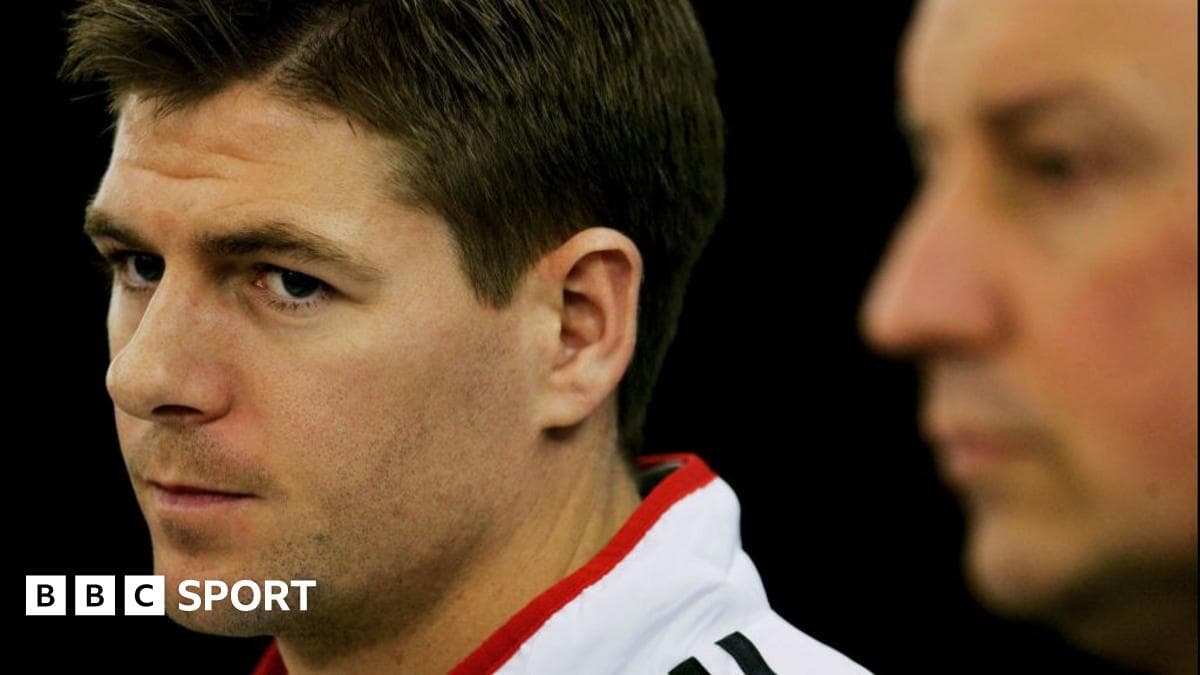
Steven Gerrard's Istanbul Miracle and Mental Chaos
Steven Gerrard calls it the best night of his life. Istanbul, 2005. The miracle. The comeback. The cup.
Yet within weeks of lifting the Champions League trophy, the Liverpool captain was on the brink of walking away from his boyhood club.
In a new Netflix documentary revisiting that famous night against AC Milan, Gerrard opens a door he rarely touches: the chaos in his head during the summer that nearly broke Liverpool’s heart.
“My head was like a box of frogs,” he admits. “Mentally, I was in a bad place.”
From Istanbul to the edge
On 25 May 2005, Gerrard stood at the centre of one of football’s great epics. Liverpool, 3-0 down at half-time to a star-studded Milan, dragged themselves level and then won on penalties to claim their fifth European Cup.
It felt like a moment that would anchor him to Anfield forever. The captain. The trophy. The destiny.
Instead, it triggered one of the most turbulent sagas in the club’s modern history.
Real Madrid were circling. Chelsea, newly crowned Premier League champions under Jose Mourinho, were pushing harder than anyone. Six weeks after Istanbul, Gerrard announced he was leaving. Then, in a dramatic overnight U-turn, he wasn’t.
“Mourinho was on the phone – the best manager in the world at the time, offering silly contracts, which would naturally turn your head,” Gerrard recalls. “Chelsea were spending fortunes, he was guaranteed success there.”
The temptation was real. The conflict was deeper.
“I can't park my relationship with Liverpool,” he says. “When they came, I didn't know which way to go.”
Rafa’s cold edge
If the outside noise was deafening, the atmosphere inside Melwood was hardly soothing.
Gerrard points directly at the dynamic with then manager Rafael Benitez as a key factor in his doubts.
“I felt like he didn't rate me, he didn't trust me, he didn't want me,” Gerrard says. “I've always been clear that I want to be a Liverpool player and a Liverpool player only, but with that doubt and with that coldness and being part of a team where you don't believe that you can compete at the top, that's when your head gets turned.”
Jamie Carragher, who lived every step of that era alongside him, recognises the problem instantly.
He believes Gerrard needed reassurance. Benitez was never going to provide it.
“Rafa Benitez was never going to do that,” Carragher says. “He's very unemotional.”
The documentary leans heavily into that theme. Former players describe a manager obsessed with tactical detail, forensic in his criticism, distant on a human level. Effective, yes. Warm, no.
Gerrard felt the clash more than most.
“My game... was about emotion, passion, desire, commitment, for the badge, for the bird, for the family,” he says. “It was in me and I felt like he wanted to really remodel me.
“Nothing would ever satisfy him.”
Benitez, now 66, rejects the idea that he misread the culture. He insists he was trying to drag Liverpool into a more modern, controlled way of winning.
“When I joined Liverpool, there was a culture based on emotion,” he says. “Football requires more than that. If you're really emotional, you don't find the way to success.”
Time has softened the edges. Gerrard, no longer the young captain bristling under scrutiny, can now see the method in the coldness.
“I look back at Rafa and think he's the best coach I have worked with,” he says.
Owen, Madrid and a warning sign
Gerrard’s crisis was not the first sign of strain between Benitez and Liverpool’s homegrown stars.
A year earlier, Michael Owen had already reached his own breaking point.
Like Gerrard, Owen had come through the academy. Like Gerrard, he had grown disillusioned with life at Anfield. Gerard Houllier’s reign had ended after Liverpool finished 30 points behind champions Arsenal in 2004. Benitez arrived tasked with convincing his two crown jewels – Gerrard and Owen – to stay.
He flew to Portugal to meet them and Carragher during Euro 2004. On paper, it sounded like a charm offensive. In reality, it felt more like an inquest.
“He was on me tactically,” Gerrard remembers. “‘I don't want this, I don't want that. You can't play in this team unless we trust you.’ It was intense. And I was thinking to myself, ‘I guarantee you, you'll need me before I need you.’”
Owen, a Ballon d'Or winner in 2001, received a similar treatment.
Carragher recalls Benitez telling the striker he needed to learn to “turn on the ball quicker”.
“That’s absolutely what I was probably the best in the world at, at the time,” says Owen, now 46. “He certainly didn't go any way to convincing me to stay, put it that way.”
By August 2004, Owen was gone, sold to Real Madrid for £8m.
Benitez, though, remembers that early summit differently.
“You can see when you talk with someone if he's happy with the conversation,” he says. “I think they were quite happy.”
Cold logic, hot blood
The documentary lays bare the fault line that ran through Liverpool in those years: a club built on raw emotion, handed to a manager who believed emotion alone would never be enough.
Gerrard stood at the centre of that collision. A local lad who played as if plugged directly into the Kop, captained by instinct and adrenaline, suddenly being dissected by a coach who treated every movement as a problem to solve.
The tension almost tore him away. It also, in time, helped sharpen him into the complete leader he became.
He calls Istanbul the best night of his life. The days that followed were among the hardest. And without that internal storm – the “box of frogs” in his head, the coldness of Benitez, the lure of Mourinho and Chelsea – his story, and Liverpool’s, might have taken a very different turn.