.svg&w=384&q=75 "Pitchgist logo")
Sevilla's Tactical Triumph Over Real Sociedad
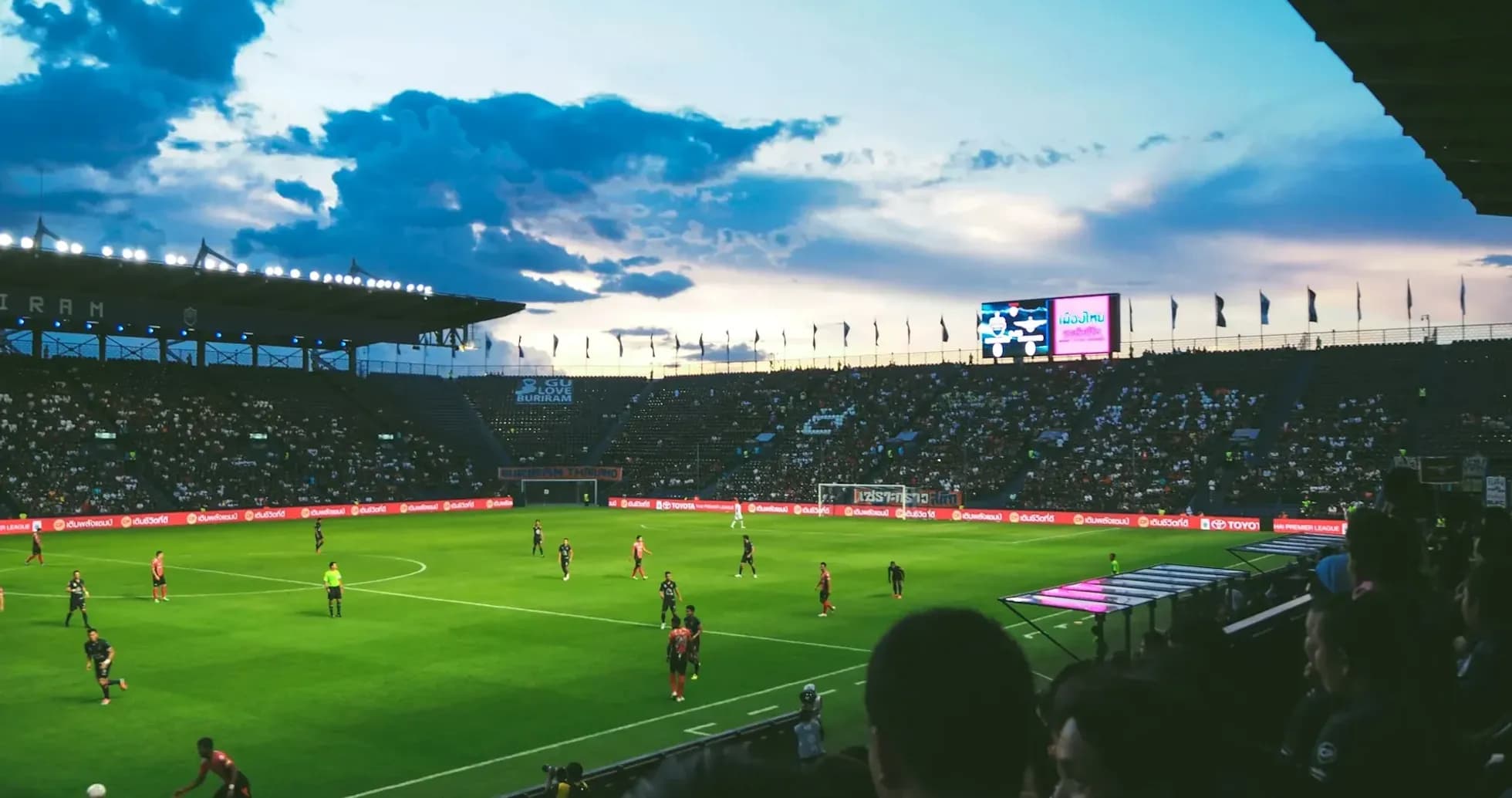
Under the lights of the Estadio Ramón Sánchez Pizjuán, this was a night where survival instinct met European ambition. Following this result, Sevilla’s 1-0 home win over Real Sociedad in La Liga’s Regular Season - 34 felt bigger than the scoreline: a 17th‑placed side clawing for air against a 9th‑placed visitor still carrying the weight of Europa League aspirations.
Sevilla came in with a season-long identity crisis. Overall, they had taken 37 points from 34 matches, with a negative goal difference of -14 (41 scored, 55 conceded). At home they had been fragile: 6 wins, 4 draws, 7 defeats, scoring 22 and conceding 23. Real Sociedad, by contrast, arrived as a more balanced, if inconsistent, side: 43 points from 34 games, their overall goal difference at -1 (52 for, 53 against), with a strong home profile but a shakier record on their travels — 3 away wins, 6 draws, 8 defeats, 20 goals scored and 28 conceded.
Into that context stepped two very different shapes. Luis Garcia Plaza rolled the dice with a 4-4-2, a bolder stance than Sevilla’s more common 4-2-3-1 or back-five structures. O. Vlachodimos anchored a back four of J. A. Carmona, Castrin, K. Salas and G. Suazo. Ahead of them, a flat but aggressive midfield line of R. Vargas, L. Agoume, N. Gudelj and C. Ejuke supported the front two, I. Romero and N. Maupay.
Across from them, Pellegrino Matarazzo’s Real Sociedad stayed true to a possession-friendly 4-2-3-1, a shape they have used 11 times this campaign. A. Remiro started behind a back four of J. Aramburu, J. Martin, D. Caleta-Car and S. Gomez. The double pivot of B. Turrientes and J. Gorrotxategi sat under a creative band of three: A. Barrenetxea on the right, C. Soler centrally, P. Marin from the left, all servicing M. Oyarzabal as the lone striker.
The tactical voids were significant on both sides. Sevilla were without M. Bueno (knee injury), Marcao (wrist injury) and the suspended D. Sow, all of whom would normally deepen the defensive and midfield rotations. That absence put extra responsibility on K. Salas and Castrin at centre-back, and on Gudelj and Agoume to control the middle without Sow’s energy.
Real Sociedad’s absentees were more about depth and variation than pure volume: G. Guedes (toe injury), J. Karrikaburu (ankle injury), A. Odriozola and I. Ruperez (both knee injuries) all missed out. The biggest tactical loss was Guedes, whose direct running and ability to attack space in behind could have stretched a Sevilla side that has conceded an overall average of 1.6 goals per game (1.4 at home).
Discipline, too, was a quiet subplot. Sevilla are a side that lives on the edge: overall they have collected a flurry of late yellow cards, with a 19.79% spike between 76-90' and another 18.75% between 91-105'. Carmona embodies that edge. Across the season he has amassed 11 yellows, the most in La Liga, while still contributing 59 tackles, 7 blocked shots and 34 interceptions. L. Agoume is not far behind with 10 yellows, a marker of how combative Sevilla’s midfield can be.
Real Sociedad bring their own disciplinary shadow. J. Aramburu, starting at right-back, has 10 yellows this season and 63 fouls committed, the profile of a full-back constantly operating at the physical limit. Their team yellow distribution shows a pronounced aggression after the break: 22.22% of their bookings arrive between 46-60', with another 16.67% from 76-90', and they have already seen red in those windows as well. This is a team that often grows more desperate as the second half unfolds.
Within that landscape, the “Hunter vs Shield” duel revolved around M. Oyarzabal against a Sevilla defence that has been porous overall but more controlled at home. Oyarzabal arrived as one of La Liga’s elite finishers: 14 goals and 3 assists in 30 appearances, with 58 shots (34 on target) and 6 penalties scored from 6. His movement between the lines and ability to drop off the centre-backs was designed to pull Castrin and K. Salas into uncomfortable zones, especially with Soler and Barrenetxea threading passes into the half-spaces.
Yet Sevilla’s “Shield” held. The home side’s defensive unit, often criticized for conceding an away average of 1.9 goals per game, leaned into the compactness of the 4-4-2. Carmona’s aggression on the right, Suazo’s balance on the left, and Gudelj’s screening in front of the centre-backs gave Vlachodimos the platform to protect a rare clean sheet in a season where Sevilla have only managed 6 overall.
The “Engine Room” battle was fought between L. Agoume and N. Gudelj on one side, and the Turrientes–Gorrotxategi axis on the other. Agoume’s season profile — 1 goal, 2 assists, 1199 passes with 26 key passes, 59 tackles and 43 interceptions — underlines a midfielder who not only breaks up play but also starts it. Against a Real Sociedad side that averages 1.5 goals per game overall and 1.2 on their travels, cutting off supply into Oyarzabal was as important as any attacking plan.
For the visitors, Barrenetxea was meant to be the creative spark. With 5 assists and 42 key passes this season, he is Real Sociedad’s primary conduit between midfield and attack. His duel with Suazo and the covering Agoume was a tactical hinge: whenever he found space to drive inside, Real Sociedad could overload central zones; whenever he was forced wide and backward, Sevilla’s block breathed easier.
On the flip side, Sevilla’s forward pairing offered contrasting threats. I. Romero, who appears among the league’s notable red-card recipients with 1 dismissal and 6 yellows, played on the edge, attacking the space between J. Martin and S. Gomez. Maupay dropped off to combine with Vargas and Ejuke, creating small overloads on either flank. With Sevilla averaging 1.3 goals at home, the margin for error was thin; every combination had to count.
Following this result, the statistical prognosis tilts slightly back toward Sevilla’s survival narrative. Their overall goal difference remains negative, but holding a side that scores an away average of 1.2 goals to zero suggests a defensive solidity rarely seen this season. Real Sociedad, meanwhile, continue to be undermined by their away fragility: 8 defeats on their travels, 28 goals conceded, and only 1 clean sheet away all campaign.
In Expected Goals terms, even without the raw xG values, the patterns are clear. Sevilla’s structure and intensity at home tend to generate enough volume to justify their 1.3 home goals average, while Real Sociedad’s away record suggests they often underperform their creative talent on the road. On a night when the Hunter was muzzled and the Shield finally held, Sevilla’s narrow 1-0 win felt like the logical, hard-earned outcome of a tactical plan executed with rare clarity.