.svg&w=384&q=75 "Pitchgist logo")
RB Leipzig's Rebuild: Werner's Success Amid Doubts
The numbers say one thing. The mood in Leipzig says something very different.
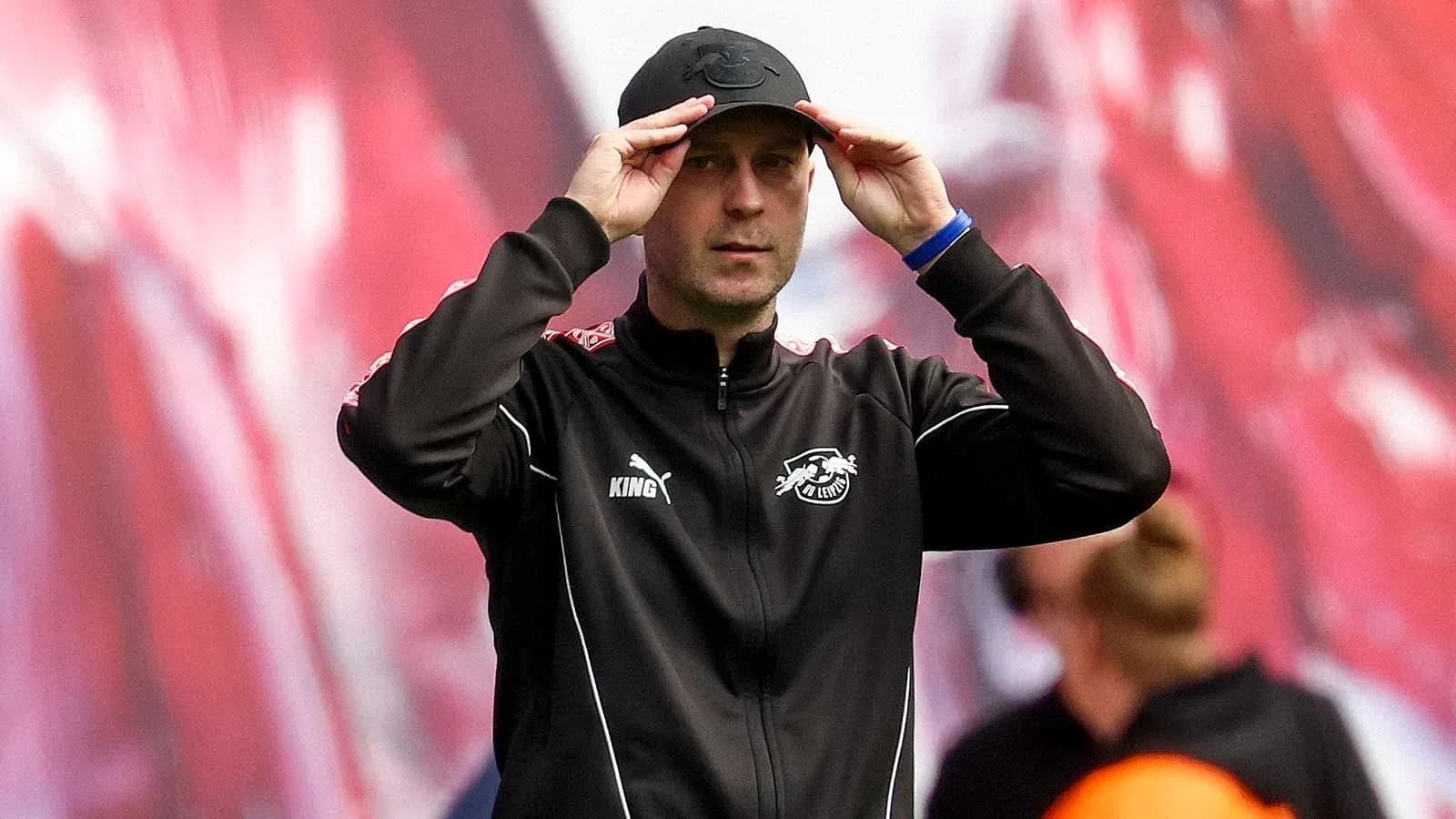
After the chaos of 2024/25 – RB Leipzig’s worst Bundesliga season and a year without European football – René Werner walked into a club that looked closer to a construction site than a Champions League contender. Twelve months on, the table paints a flattering picture: Leipzig finished just two points shy of their record haul from the 2016/17 campaign.
On paper, that’s a job not just done, but done well.
A rebuild that worked – statistically
Werner’s record is hard to argue with. Across 38 matches, he has averaged 1.95 points per game, a return that places him among the most successful coaches in Leipzig’s short but turbulent history.
He did it while the squad was being ripped up around him. The club’s three top scorers from the previous season – Benjamin Sesko, Xavi Simons and Lois Openda – all gone. Yussuf Poulsen, a symbol of Leipzig’s rise, departed. Kevin Kampl, another pillar of experience, followed him out.
The spine of the team disappeared. The expectations did not.
Werner steadied what could easily have become a listing ship. He leaned into the new faces, coaxing more from players who had yet to fully convince. Christoph Baumgartner grew in influence. Nicolas Seiwald stepped up. And then there was Yan Diomande, the marquee arrival whose impact often dragged Leipzig through tight games.
Inside the dressing room, the coach is said to have the players with him. Performances improved. Results followed. The club returned to Europe.
And yet Werner is not sleeping easy.
Progress under suspicion
The unease around his position has been simmering for months. A Sky report captured the tone inside what is often referred to as the “Global Team”: doubts about the coach’s future, questions over the substance behind the results.
“A bit of luck here, a bit of chance there, too much of the Diomande factor, no entirely convincing game plan,” ran the pointed assessment of the scepticism surrounding Werner.
That scepticism did not wait for the end of the season. It surfaced openly as early as February.
Leipzig had just gone out of the cup in the quarter-finals, a 0–2 defeat to Bayern Munich. Against a Bayern side in commanding form this year, Leipzig’s display was widely viewed as “decent”, even “respectable”.
Red Bull CEO Oliver Mintzlaff used that word himself. Then he twisted the knife.
Almost in the same breath, he turned away from the cup and went straight for the Bundesliga record. Four points from matches against Mainz, St. Pauli and Cologne. For a club that still talks about itself as a Champions League regular, that return cut deep.
“In the league, that wasn’t anywhere near what we want. I hold the team accountable for that,” Mintzlaff said, pushing the pressure dial firmly in Werner’s direction.
Leipzig’s public line all season had been measured: massive overhaul, new hierarchy in the squad, and a single, realistic objective – qualify for any European competition. Survival, then consolidation.
Mintzlaff set a different bar.
“I want to be in the Champions League!” he declared, calling that goal “achievable” and dismissing the idea that inexperience was the problem. In his view, the squad had enough know-how. What it lacked was the consistency to “deliver what they’re capable of for 90 minutes in every Bundesliga match.”
The message was unmistakable. Results alone would not shield the coach if the football did not convince the people upstairs.
Not long after those comments, Bild reported that Werner was coming under increasing pressure and that the atmosphere around him at RB was turning “increasingly frosty”. The temperature in the boardroom had changed, and everyone could feel it.
Champions League secured, future unclear
Werner did what was asked of him in sporting terms. With a rebuilt side, he dragged Leipzig back into Europe and hit the target that had been publicly set at the start of the season. The table, the points, the progression from the previous year’s collapse – all of it speaks in his favour.
Yet the coach still looks over his shoulder.
His fate may now rest less on what happens on the pitch and more on what unfolds in meeting rooms. If the sporting management around Rouven Schröder and the leadership in Leipzig cannot sell Werner’s work to the powerful Red Bull board headed by Mintzlaff, the numbers will not save him.
The statistics back Werner. The results back Werner. The dressing room, by all accounts, backs Werner.
The only question left is whether that will be enough for a club that seems determined to judge him by something far harder to measure.