.svg&w=384&q=75 "Pitchgist logo")
Rayo Vallecano Dominates Villarreal with Tactical Mastery
Rayo Vallecano’s 2-0 win over Villarreal at Campo de Futbol de Vallecas was built on a clear, coherent game plan that maximised a 4-2-3-1 structure against Marcelino’s 4-4-2. With 53% possession, superior shot volume (15-11) and a 1.53 xG to Villarreal’s 1, Inigo Perez’s side controlled both territory and tempo, using their double pivot and narrow three behind the striker to overload central spaces and repeatedly unbalance Villarreal’s midfield line.
Out of possession, Rayo’s 4-2-3-1 compacted into a 4-4-1-1, with Sergio Camello dropping to screen the first Villarreal pivot and Oscar Trejo stepping onto the centre-backs on triggers. The wingers, Jorge de Frutos and Santi Comesana, tucked in aggressively to congest the half-spaces, inviting play wide to the full-backs. From there, Rayo’s press was man-oriented: Alin Ratiu and Pablo Chavarria stepped high on the Villarreal full-backs, trusting the central pairing of Pathé Ciss and Florian Lejeune to handle aerial balls into the channels. Villarreal still managed 9 corners, but the structure forced them into low-probability crosses and speculative shots, reflected in their modest 2 shots on target.
In possession, Rayo’s double pivot of Unai López and Oscar Valentin was decisive. With 472 total passes and 404 accurate (86%), they circulated with patience, frequently forming a 2-3 base in build-up: the full-backs spread wide, one pivot dropping between the centre-backs, the other staying higher to connect with the attacking midfielders. This created clean progression lanes into Trejo between the lines. The first goal on 28 minutes encapsulated the plan: Camello drifted off the front line into a pocket, combining with the right side before timing his movement into the box. Ratiu’s advanced positioning on the overlap allowed him to deliver the assist, exploiting the space outside Villarreal’s narrow midfield four. Camello’s finish rewarded Rayo’s insistence on attacking through structured right-sided overloads rather than hopeful crosses.
The second goal, just after half-time on 47 minutes, showed Rayo’s ability to attack early-phase disorganisation. Villarreal had just adjusted at the break, but Rayo immediately pressed high, recovered possession and connected quickly through Trejo, whose assist found Alemao. The centre-forward’s positioning between Villarreal’s centre-backs punished a back line still recalibrating, underlining the value of Rayo’s coordinated restarts and their intent to strike before Villarreal could settle into their block.
Villarreal's Struggles
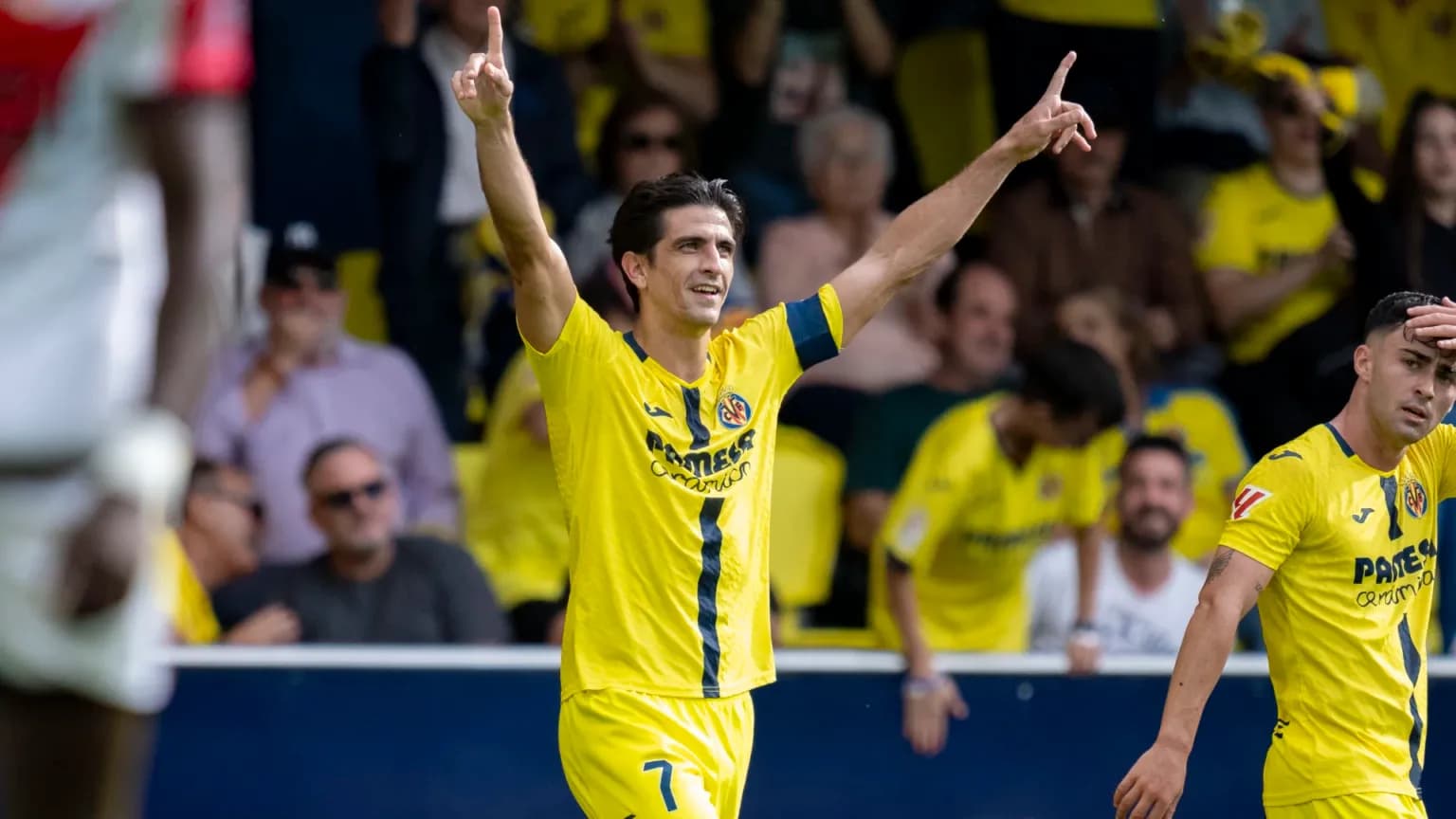
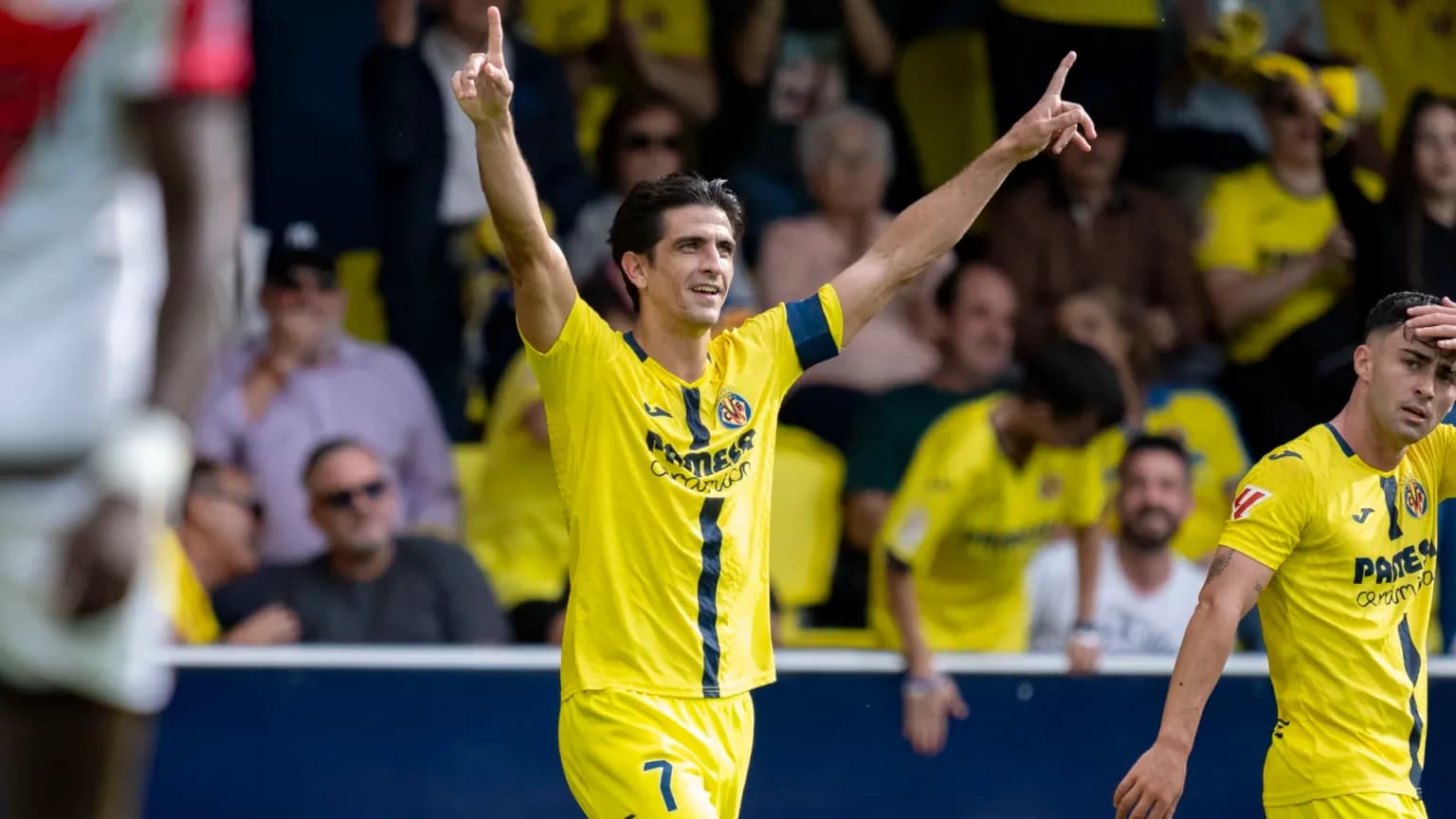
Marcelino’s 4-4-2 struggled to impose its usual verticality. The front pair of Alexander Perez and Tani Oluwaseyi were often isolated, forced to drop deep to receive because Rayo’s pivots screened direct passes into feet. Villarreal’s 403 passes (338 accurate, 84%) show they were not overrun technically, but their possession was more sterile, circulating around Rayo’s block rather than through it. The introduction of Andres Gonzalez for Tajon Buchanan at 46 minutes, followed by Gerard Moreno, Thomas Partey, Dani Parejo and later Lenny Costa from the bench, was clearly aimed at adding creativity and control in central zones. Yet Rayo’s mid-block spacing and disciplined shifting meant Villarreal’s extra technicians increased ball retention without significantly improving chance quality, as the 1 xG and just 2 shots on target confirm.
Defensively, Rayo’s back four managed risk with intelligence. Lejeune’s yellow card on 61 minutes for “Foul” came from stepping out to break a Villarreal transition, a calculated intervention to preserve structural integrity rather than a sign of panic. The second booking, to Unai López on 82 minutes for “Time wasting”, reflected game-state management at 2-0 rather than defensive instability. Villarreal, by contrast, collected only one yellow card – Santiago Mouriño’s “Foul” at 90+6’ – but that did not translate into defensive control; it was Rayo who consistently dictated where the game was played.
Goalkeeper dynamics further underline the tactical story. Aridane Batalla faced 2 shots on target and made 2 saves, aligning with Villarreal’s 1 xG and signalling that Rayo’s block largely kept attempts to manageable zones. His goals prevented figure of -0.25 suggests one of Villarreal’s efforts was marginally more dangerous than the model expected, but not enough to tilt the balance. At the other end, Arnau Tenas made 5 saves against 7 Rayo shots on target. With Villarreal’s goals prevented also at -0.25, the numbers indicate that both keepers were slightly below model expectation, yet Rayo’s superior shot volume and quality meant that marginal underperformance from Tenas was far more costly.
The substitution pattern from Perez was tactically consistent. Pedro Díaz for Trejo at 66 minutes, F. Perez for Camello at 73, and C. Martin for Alemao at 74 all served to refresh the pressing unit and maintain the capacity to counter into wide spaces as Villarreal pushed higher. Later, Pacha for Chavarria at 81 and A. Mumin for López at 82 helped lock down the flanks and add aerial presence for the closing phase, when Villarreal were forced into more direct play.
Statistical Analysis
Statistically, the verdict is clear: Rayo converted a narrow possession edge into territorial dominance, higher shot quality and better control of transitions. Their 15 total shots to Villarreal’s 11, superior shots on goal (7-2), and more effective use of central overloads matched the tactical eye test. Villarreal’s 9 corners and 47% possession show they were not absent from the contest, but their 1 xG and limited penetration inside the box underline how thoroughly Rayo’s structure neutralised their 4-4-2. Within the context of a late-season La Liga fixture, this was a mature, system-driven home performance that maximised Rayo’s collective strengths and left Villarreal chasing patterns they were never allowed to fully establish.