.svg&w=384&q=75 "Pitchgist logo")
Curaçao’s Historic Equalizer and the Impact of Hydration Breaks
The roar from the Curaçao end in Houston said it all. Livano Comenencia had just slammed the ball past Germany and, for a few wild seconds, the World Cup tilted on its axis.
At 1-1, the smallest nation by population ever to reach this stage had the four-time champions rattled. The Germans stared at each other in disbelief. Curaçao’s players bounced back to the center circle, riding a surge of adrenaline you only get when history suddenly feels close enough to touch.
Then the whistle went.
Not for offside. Not for a foul. For water.
A break that broke the spell
The new FIFA-mandated hydration break arrived barely half a minute after Curaçao’s equalizer. The game stopped. The noise didn’t, but the rhythm did.
“I actually felt sorry for them,” Alan Shearer said on The Rest is Football podcast. “They scored and then it was maybe 30 seconds after that it stopped. So it’s killed their momentum.”
When play resumed, it was a different match. Germany regrouped, reset and ruthlessly took control. Curaçao, stripped of that raw surge of belief, conceded twice before halftime and eventually collapsed to a 7-1 defeat. The upset that had briefly felt possible dissolved in the Texas heat — and in three minutes of enforced pause.
That sequence has become the sharpest example yet of a World Cup experiment that is reshaping the flow of games, and not everyone is happy about it.
Timeouts in a sport built on flow
Hydration breaks midway through each half are new to this World Cup, brought in to protect players from the summer conditions in the United States, Canada and Mexico. With temperatures expected to push past 90°F (32°C) in some venues, player welfare is a genuine concern.
But what was sold as a medical measure has quickly turned into a tactical and commercial tool.
“We’re in America, right? So, it’s like it is it’s like it’s a timeout,” Roy Keane said on The Overlap with Gary Neville. “We love football because of the pace of the game ... what it’s doing is stopping the flow of the game, the momentum.”
This isn’t just about players grabbing a drink. Coaches have turned the breaks into mini huddles, rushing on instructions that would usually have to wait until halftime. The impact has been immediate and measurable.
In eight of the first 16 matches, a goal has been scored within 10 minutes of a hydration break. That’s not a quirk of the data; that’s a pattern.
Ronald Koeman made no attempt to hide how valuable he finds the pause.
“You can use the break to tell the players what they need to improve or what is good or what they should do better,” the Netherlands coach said. “So you can use it in different ways to your advantage, and this is what we will be doing.”
Momentum, interrupted
Curaçao’s collapse was the most brutal example, but hardly the only one.
Morocco, bright and aggressive against Brazil in New Jersey, struck first and looked in control heading into the opening hydration break. The pause arrived, the dynamic shifted, and less than 10 minutes after the restart Vinicius Junior had dragged Brazil level.
Canada, the United States, Australia, Scotland, Sweden and Iran have all scored in the immediate aftermath of these breaks. Momentum maps tracking the ebb and flow of matches show clear swings tied to the stoppages.
The crowd has noticed too. In Foxborough, Massachusetts, boos rang around the stadium when play halted for the first hydration break during Iraq vs Norway. Supporters had paid for a 45-minute half, not a game carved into quarters.
That, though, is effectively what they are getting.
Referees now stop play at around 22 minutes in each half. Players have three minutes to drink, cool down and listen. FIFA has ruled that these pauses will happen regardless of the weather, venue or conditions.
So even Spain vs Cape Verde in Atlanta — under a roof, in air conditioning — came to a halt for a scheduled water break.
The explanation from Zurich was simple: “equal conditions for all teams, in all matches.”
Luis de la Fuente accepts the logic when the heat is extreme, but not the blanket policy.
“Pause, freshen up and continue,” the Spain coach said. “Tomorrow, when the temperature that we’ll have in this stadium is chill, maybe these breaks are not so needed, but we need to abide by the rules.”
Norway’s Staale Solbakken echoed the frustration.
“I can understand it when it’s like it’s been in Greensboro, when it’s been 35 degrees and a really hot climate and there’s a bit of vibration in the air – then I think it’s fine,” he said. “But I don’t like it otherwise. I think it’s unnecessary.”
The TV cutaway that tells its own story
On television, the breaks have opened a door broadcasters had long been knocking on.
In the United States, Fox cuts straight to commercials as soon as the referee signals the pause. Telemundo, by contrast, stays with the game. The split says a lot about where the sport is heading.
Football has always prided itself on being different from US sports such as baseball, basketball and American football, where timeouts and media breaks are baked into the structure. In the global game, advertising slots are traditionally confined to halftime and pre- and post-match coverage.
Hydration breaks change that.
“Every time going to a commercial is a bit ... not really (something) that I like,” said Netherlands captain Virgil van Dijk, who watched early World Cup matches on TV before his side’s 2-2 draw with Japan. “I think for the neutral watchers on TV it’s also not great.”
Didier Deschamps, though, sounded resigned rather than outraged.
“It’s not two half times, it is four quarter times basically that we’ve got,” the France coach said. “This is what’s been decided and so the players and the coaches adapt to this new reality.”
FIFA has not yet said whether hydration breaks will become a permanent feature of future World Cups. The English FA has already indicated it is unlikely to adopt them for Euro 2028 in the UK and Ireland.
For now, the sport sits in an uneasy in-between: still sold as the same 90-minute spectacle, but increasingly chopped into segments that suit TV, tactics and heat maps more than the game’s natural rhythm.
Ronaldo’s sixth World Cup, with first-timer hunger
While the structure of the sport shifts around him, one figure at this tournament remains stubbornly familiar.
Cristiano Ronaldo is preparing for his sixth World Cup, and if you listen to Roberto Martinez, you’d think he was about to make his debut.
“He is an example and a reference for football,” the Portugal coach said ahead of their opener against DR Congo. “For all those children on the street who begin to feel the love for sport, following the example of Cristiano Ronaldo is wonderful.
“It is his sixth World Cup, but I can say that internally it seems to be his first World Cup in terms of intensity, in terms of emotional output, of how important it is for him to be prepared to lead the group.”
The debate over Ronaldo’s role has followed Portugal into this tournament as relentlessly as any defender. His record — 143 international goals, five Ballons d’Or — towers over the sport, yet he has gone nine matches at major tournaments without scoring and offers little when his team is out of possession.
Martinez, though, is unequivocal.
“Within the team he is a vital player because he is the finisher, he is the player in the penalty area, he is the player who has those movements that can open spaces for other players,” he said. “Within our attacking game, his numbers reflect the importance he has.”
Bruno Fernandes doesn’t need persuading. His first vivid memory of a major tournament came at Euro 2004, when a teenage Ronaldo lit up Portugal on home soil.
“All of us in this national team we have grown up watching Cristiano Ronaldo play and for us it’s such an honor to play next to him now in the same team,” the Manchester United captain said. “We’re all here to support him and to support Portugal to go as far as possible.”
A golden generation with no hiding place
Portugal arrive with more than just nostalgia and a global icon. They bring one of the deepest midfields in the competition.
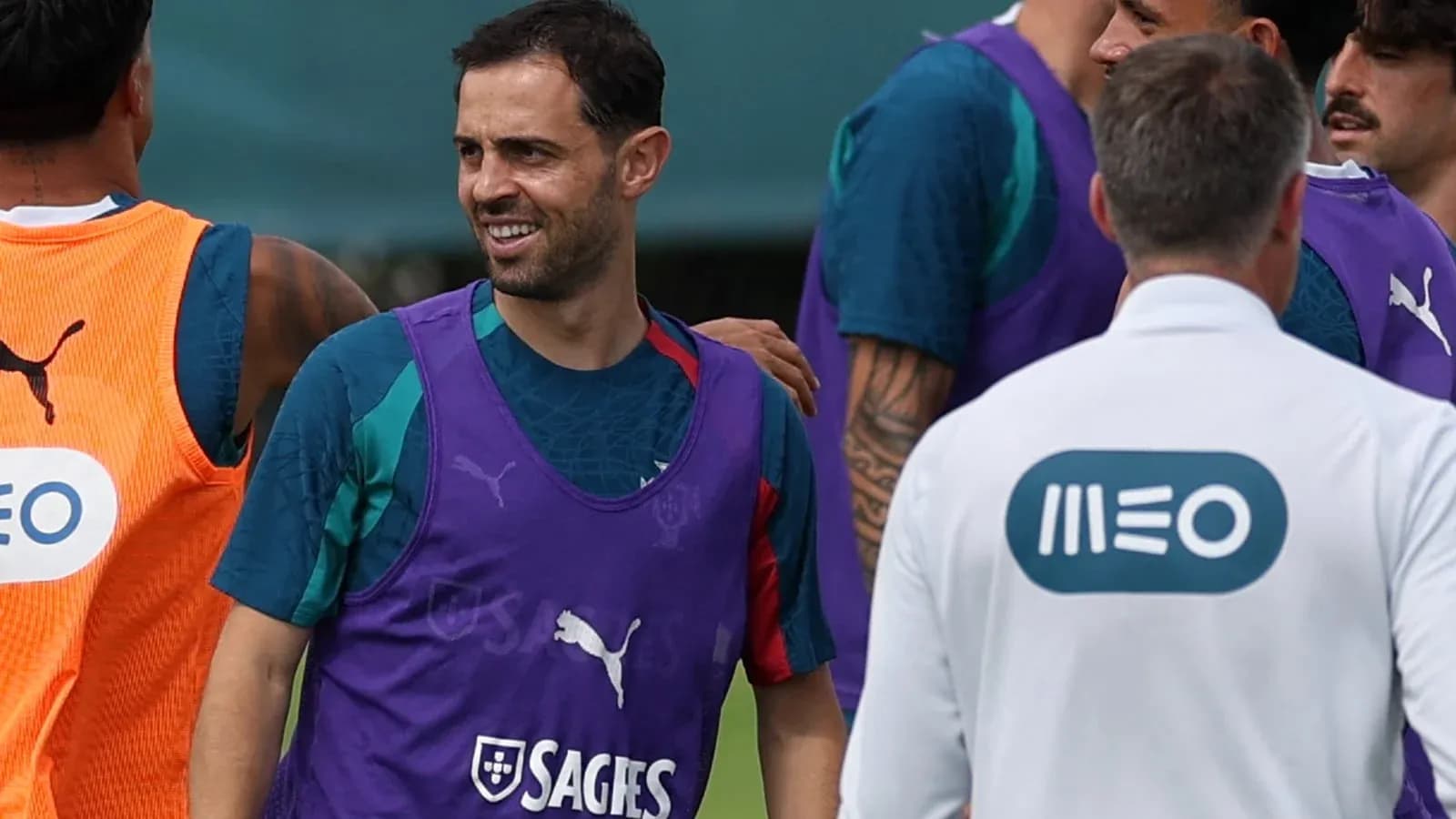
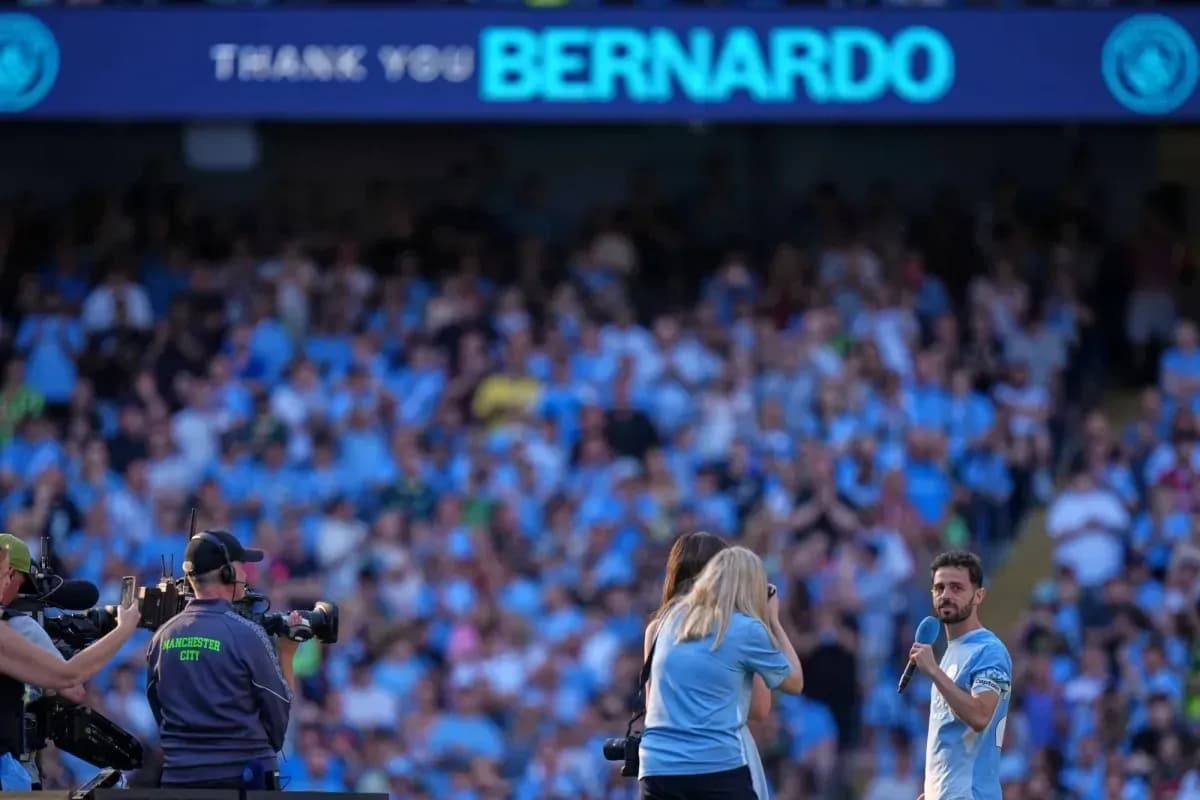
Fernandes himself is fresh from sweeping Premier League player of the year awards. Vitinha and Joao Neves have just lifted a second straight Champions League with Paris Saint-Germain. Bernardo Silva, after a medal-stacked nine years at Manchester City, is set to join Real Madrid.
“We have a very strong team, great individual quality,” Fernandes said. “And beyond the individual quality and the strengths that we have as individual players, I think we are a very cohesive team, a very united team.
“Obviously our dream is to be there (winning the World Cup) and I think that dreaming is not forbidden.”
On paper, Portugal have the tools to make that dream real. In practice, they must navigate a group that looks manageable but carries hidden traps: DR Congo first, then tournament debutants Uzbekistan and a dangerous Colombia.
Martinez knows exactly how quickly a big nation can be cut down to size. Spain’s goalless draw with Cape Verde on opening night was a warning to anyone tempted to look too far ahead.
“We’ve got very little to win tomorrow from the outside,” he said of the DR Congo clash. “If you win against Congo, it’s expected. If you win by one, it’s a big problem. If you draw, it’s a catastrophe. If you lose, this is the end of the world.
“They come with no expectations, they are enjoying being here. We’ve seen incredible performances from teams like Qatar, Cape Verde, exemplary performances, that shows you that there are no easy games in a World Cup.”
Martinez’s last dance
For Martinez, this World Cup is also a finish line.
“My contract ends after the World Cup. This is not news, this is just a fact,” he said. “We’re now focused on finishing the work that we’ve begun three-and-a-half years ago.
“When I came to Portugal the focus was to try to win everything, but most importantly to prepare for the World Cup.”
So here they are: a coach on his way out, a 41-year-old superstar chasing one last shot at the trophy that has always eluded him, and a squad stacked with players in their prime.
Around them, the sport experiments with quarter-time pauses and TV-friendly breaks, carving up the game in ways that can flip a contest in three minutes — just ask Curaçao.
In a tournament where momentum can be stopped with a whistle and restarted with a tactical huddle, the question for Portugal is brutally simple: can even this generation, with this Ronaldo, bend a fractured World Cup to their will?