.svg&w=384&q=75 "Pitchgist logo")
Portugal's World Cup Draw Leaves Ronaldo Under Pressure
Portugal’s World Cup plan was supposed to ease into gear in Houston. Instead, it juddered.
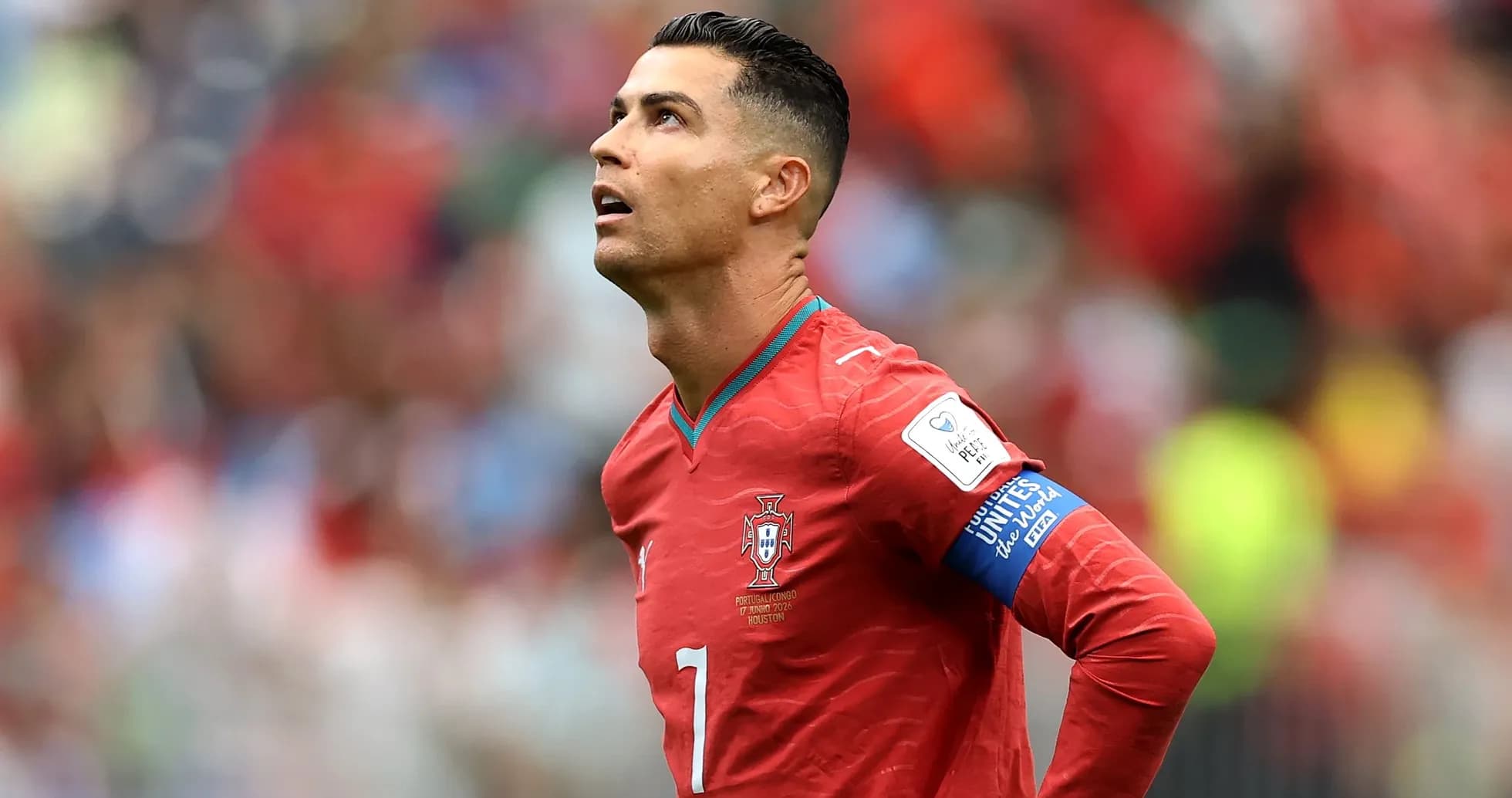
A 1-1 draw with DR Congo to open their 2026 campaign leaves Roberto Martinez’s side chasing early answers, and once again the spotlight burned hottest on the man who has lived under it for two decades: Cristiano Ronaldo.
Fast start, flat finish
On paper, this should have been a routine assignment. Portugal struck first, and early. Joao Neves, the latest jewel of their new generation, gave them the lead and briefly settled any opening-night nerves.
For a while, it looked like the script everyone expected. Control the ball, move DR Congo around, let the quality tell.
Then the game tilted.
Yoane Wissa dragged the African side level before half-time, punishing slackness and injecting doubt into a stadium full of Portugal shirts. From there, the favourites chased the game without ever truly grabbing it. Possession came, territory came, but the edge, the ruthlessness that has defined Portugal’s best nights, never did.
The pressure, already heavy in a group where stiffer tests are looming, ratcheted up another notch.
Ronaldo under the microscope
When Portugal fail to win, the conversation almost always finds its way back to one man. It did again here.
Ronaldo, playing at a record sixth World Cup, endured the kind of night that fuels every long-running debate about his place in this side. No shot on target. Two clear chances missed. Little influence on the patterns of play. The numbers were stark, the optics harsher.
For some, this is the natural arc of time. For others, it is a selection problem.
Former England striker Jay Bothroyd, speaking on Sky Sports, did not dance around the issue. He argued that Portugal would be stronger if their captain accepted a different role.
“Have to be honest, I think if Ronaldo is a team player, I think he should step down and understand that he has to be a player that comes off the bench as an impact player,” Bothroyd said. “Is he ever going to do that? Nope, I don’t think he is. And that’s my point.”
It was a blunt assessment, aimed not at Ronaldo’s past – which Bothroyd openly acknowledged as exceptional – but at his present value to a side brimming with younger, more mobile attacking options.
The Messi shadow and a shifting balance
Bothroyd went further, touching the rawest nerve in the Ronaldo discourse: the endless comparison with Lionel Messi and what that chase might be costing Portugal now.
“I look at Ronaldo and… the Ronaldo faithful are going to hate me today, but it looks like it’s all about him, yeah? You know, and he’s always chasing Messi all the time,” he added. “He’s never going to be Messi, but what he has throughout his career, he’s made the absolute most out of his career… But right now he’s becoming more of a hindrance for Portugal than help, and I think that’s where Martinez is going wrong.”
That word – hindrance – cuts to the heart of the tactical argument. To accommodate Ronaldo, Portugal must shape their attack around his presence in the box, his need for service, his reduced pressing. When the goals flow, it feels like a fair bargain. On nights like Houston, it looks like a weight.
The draw did not just cost two points. It reopened an old fault line: the tension between sentiment and cold competitive logic.
Martinez doubles down
Inside the Portugal camp, though, there is no hint of a rethink. Martinez stood firmly by his captain and his decision to keep him on the pitch as the game slipped away from them.
“It makes no sense to get the best goalscorer in world football out in a game that you need goals,” he told reporters afterwards. “For us in moments like this, the experience of Cristiano in the box is important.
The way that he attracts defenders is important, the way that we can use the space is important. And every player has a responsibility or a piece of quality on the pitch. And clearly when you look for goals, you need to have Cristiano.”
That is the crux of Martinez’s stance: Ronaldo is not just a finisher, he is a gravity well. Defenders drift towards him, space opens elsewhere, and Portugal’s runners should profit.
But that theory only holds if the team cashes in on those gaps. In Houston, they didn’t. The ball went into the box, the chances fell, the net stayed still.
A familiar storm, an unfamiliar urgency
None of this is new. Portugal have lived with the Ronaldo question for years: how long do you build around a legend, and when do you ask him to step aside for the good of the whole?
The difference now is the clock. This is not a warm-up tournament or a qualifying dead rubber. It is a World Cup group stage, with “tougher challenges still to come” already looming over Group K.
Drop points again and the narrative shifts from debate to crisis.
For now, Martinez is all-in on his captain. Ronaldo remains the reference point, the name on the teamsheet written in permanent ink, not pencil. Outside the camp, voices like Bothroyd’s grow louder, insisting that the team must come first, even if that means the greatest goalscorer of his generation becomes a late-game weapon instead of the main act.
Houston did not settle anything. It only sharpened the edges.
Portugal move on with a point, a problem, and a choice that will define their World Cup: keep trusting the old formula, or accept that even the biggest stars eventually shine brighter from the bench.