.svg&w=384&q=75 "Pitchgist logo")
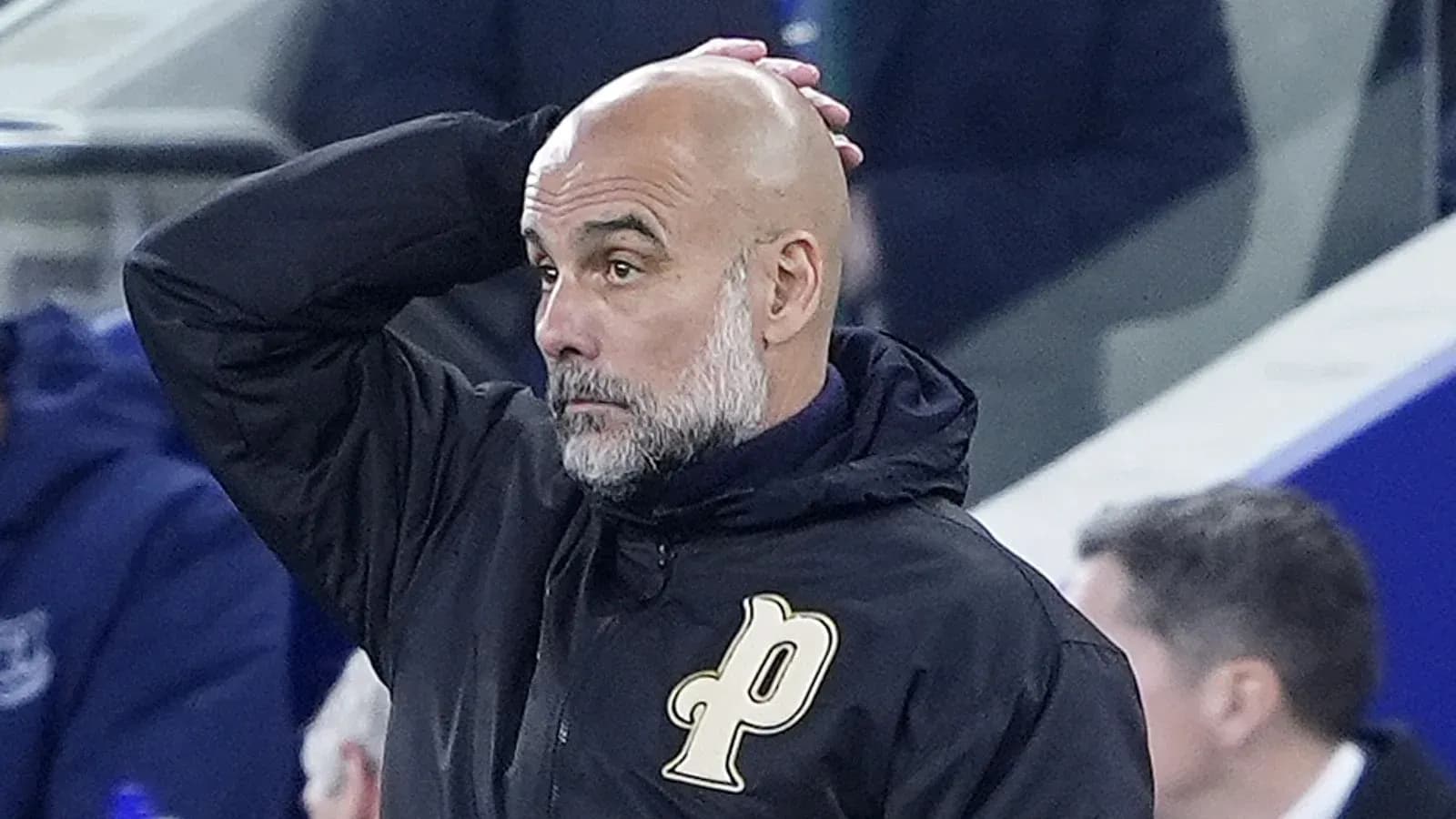
Pep Guardiola Rejects Italy Head Coach Offer
Pep Guardiola has rejected the chance to become Italy head coach, turning down an offer that would have made him the central figure in a sweeping rebuild of Italian football.
According to Sky in Italy, Guardiola informed the Italian Football Federation (FIGC) of his decision on Thursday night, citing personal reasons that stretch well beyond football. The federation had pushed hard. This was not a routine job pitch. It was a full-scale courtship.
Italy’s grand plan – and the man they wanted at the heart of it
The FIGC, still reeling from another failure to qualify for a major tournament, had identified Guardiola as the man to drag the Azzurri out of their spiral. They were prepared to bend their own financial limits to do it.
Paolo Maldini, drafted into the federation as part of a sweeping shake-up, and his advisor Leonardo spent three days with Guardiola in Barcelona. They did not simply slide a contract across the table and talk about starting XIs and formations. They laid out what was described as an ‘Azzurro project’ – a long-term vision to rebuild Italian football from the ground up.
The idea was bold. Guardiola would not just coach the senior national team. He would become the axis around which the entire national structure turned: senior side, youth teams, a new philosophy, a new identity. A reset after years of underachievement.
Italy did not qualify for the expanded World Cup this summer. They have now missed the last three major tournaments since lifting the European Championships in 2021 under Roberto Mancini. For a four-time world champion, the decline has been brutal.
The federation’s response was radical. Gennaro Gattuso stepped away after failing to reach this summer’s tournament in North America. Maldini and Leonardo were brought in with a clear brief: find a successor capable of transforming the landscape, not just the next matchday squad.
They went straight for the biggest name available.
Guardiola says no – and sticks to his word
For the first time in a decade, Guardiola is a free agent. His 10-year spell at Manchester City, which yielded 20 trophies and a staggering 70.8 per cent win ratio, ended with him on top of the English and European game. It also ended with a promise.
He had said it long before his final press conference at the Etihad. When the City chapter closed, he would step away.
“No plans for [coaching] for a while. Otherwise I would be here. I need to step back. I will not [coach] for a while,” he said in that last media appearance as City manager.
“I feel I will not have the energy every day, with expectations to fight for the title. I know myself, I have that energy, but I feel like I will not have it [in the future].”
After his departure was confirmed, he doubled down on the personal reasons behind it. In an interview with Sky Sports, he spoke not as the obsessive tactician, but as a son and a father.
“There are things that I have not done that I want to do. I still have my father alive. I want to spend more time with him. My kids... And a lot of things as a human being I can do. I'm fortunate I can decide, that's why I took this decision.”
Those words now frame his refusal of Italy. The FIGC offered him power, prestige and a nation’s hopes. He chose distance instead.
The ones waiting in the wings
With Guardiola out of the picture, Italy must turn back to more familiar names. Roberto Mancini, who delivered Euro 2021 but could not steer them to subsequent tournaments, and Andrea Pirlo are understood to be among the leading alternatives.
Neither brings the shockwave impact of Guardiola, but both carry strong ties to Italian football and a deep understanding of its culture. The FIGC’s challenge now is to maintain the ambition of the project without the global star they built it around.
Maldini and Leonardo were brought in to change the direction of the sport in the country, not just to land one man. That mission does not disappear with a single “no”.
England, the FA and the road not taken
Guardiola’s name has hovered around international football for years. In 2024, it was widely reported that he had a verbal agreement with the FA to replace Gareth Southgate as England manager. Then came the twist: he stayed at Manchester City, and Thomas Tuchel took the job instead.
Tuchel has since guided England to their best World Cup finish on foreign soil. His contract runs until the end of Euro 2028, and he has publicly committed to seeing it through. Whatever window once existed for Guardiola and England has closed, at least for now.
Yet the idea of Guardiola in international football refuses to go away, not least because he has fuelled it himself.
In a 2024 conversation with chef Dani Garcia, he drew a clear line between club football and the international game.
“What I'm not going to do is leave Manchester City and go to another country to do the same thing as I am now,” he said. “I wouldn't have the energy to do so. I'm still here doing what I am today. But the thought of starting somewhere else, with all the process of the training and so on... no, no, no! Maybe a national team, but that's different.”
A different kind of challenge still waiting
That last line continues to hang over his future. Guardiola has conquered club football in three countries, reshaped how the sport is played and left an imprint on a generation of coaches and players. The one arena he has never stepped into is the international stage.
It is also the one that might best suit the version of Guardiola that exists now: older, tired of the relentless daily grind, but still consumed by ideas.
A national team job offers something he has never had – space. No daily training, no 60-game club seasons. Long stretches with family, punctuated by intense bursts of preparation and competition around a Euros or World Cup cycle. Enough time to recharge, but enough football to satisfy the obsession.
As Sky Sports’ Callum Bishop has pointed out, Guardiola remains the most coveted manager in the game. That was true when he left Barcelona and paused before joining Bayern Munich. It is true again now. The difference this time is that he has been explicit about his limits.
He wants to rest. He wants to be with his family. He wants, for once, to choose life over the touchline.
Yet football history is full of managers who said they needed a break, only to feel the pull again far sooner than they expected. Guardiola is no different in one respect: he lives the game.
Italy tried to tempt him back into the arena with a grand, nation-shaping project. He listened, he understood, and he walked away.
The question now is not whether another federation will call. It is which national team, at which moment, will finally offer him a challenge he cannot resist.