.svg&w=384&q=75 "Pitchgist logo")
Ousmane Dembélé's Hat-Trick Dominates World Cup Clash
Ousmane Dembélé walked into a World Cup billed as Mbappé v Haaland and tore up the script in half an hour.
No Haaland. A quieter Mbappé. And in Boston, under a heavy, humid sky, France’s No. 11 stole the entire show.
A hat-trick that rewrites the night
Ståle Solbakken’s teamsheet told its own story. Ten changes, Erling Haaland on the bench, a clear nod to the knockouts after two wins from two. Norway needed victory to top Group I, but their manager was happy to play the long game.
That gamble left a vacuum. Dembélé filled it with 32 minutes of ruthless brilliance.
France, led on the touchline by assistant coach Guy Stéphan with Didier Deschamps back home after the death of his mother, came out snarling. They pressed high, snapped into duels, and had Norway penned in before the crowd had settled.
The breakthrough came in the seventh minute and it was devastatingly simple. France won the ball in Norwegian territory, Kylian Mbappé drifted inside and sprayed a pass wide right. Dembélé isolated his full-back, squared him up, and smashed his finish past Egil Selvik at the near post. One touch to set, one to bury. Statement made.
Norway barely had time to breathe before the second wave hit. On 20 minutes, France broke at pace, blue shirts flooding forward. Dembélé again picked it up on the right, chopped inside onto that left foot that defenders know is coming but still cannot live with, and whipped a glorious, curling shot into the far corner. A lightning counter, a finish of pure arrogance. 2-0, and Norway’s rotated XI looked overwhelmed.
A brief twist, then the masterpiece
Norway’s response was instant and, from a French perspective, infuriating. Straight from the restart, Les Bleus switched off. The defence backed off, the lines stretched, and Rangers forward Thelo Aasgaard took full advantage, sweeping a low finish past a wrong-footed Mike Maignan. Two passes, one lapse, and the game was alive again within 79 seconds.
It didn’t stay that way for long.
Dembélé, now playing as if in his own private arena, pushed himself into Golden Boot territory. His third goal was the kind that lives in highlight reels for decades, not just because of the finish but the journey that led to it.
Seventeen passes. All eleven French players involved. The ball moved from back to front, side to side, Norway chasing shadows. When it finally arrived at Dembélé’s feet, just outside the box, four defenders formed a nervous ring around him. Nobody committed. Everybody feared the feint.
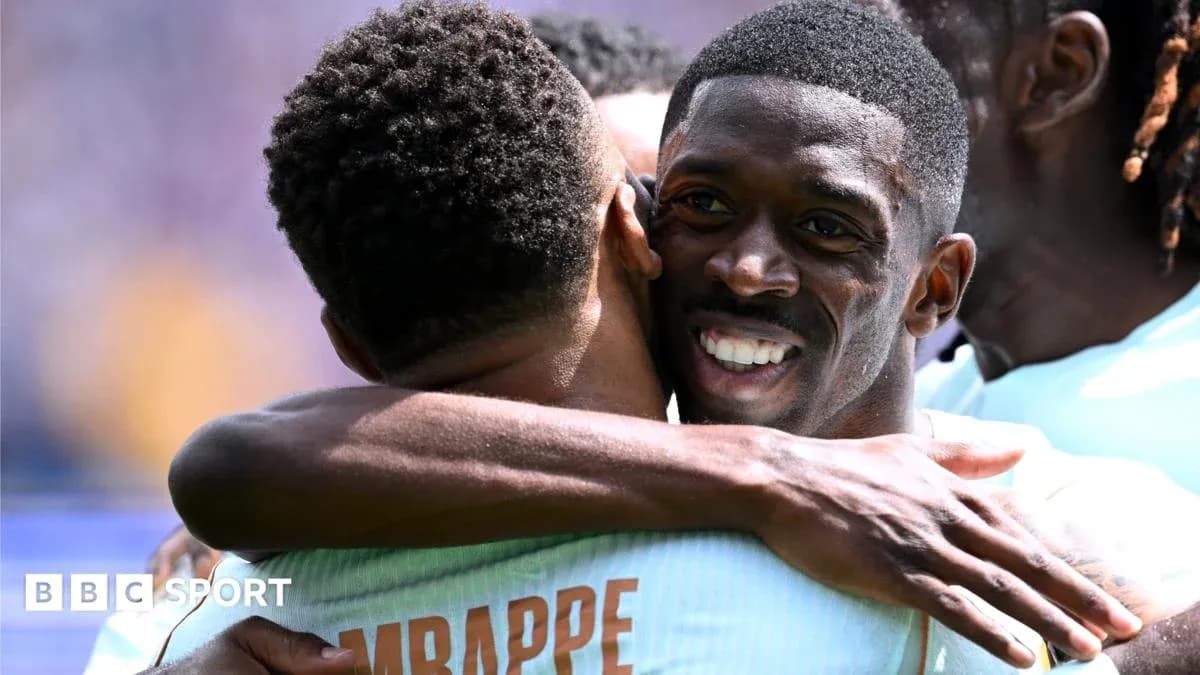
He shifted onto his left once more and curled another precise effort beyond Selvik. Hat-trick complete. The second-fastest from the start of a World Cup match in men’s history, behind only Erich Probst’s 24-minute treble for Austria in 1954. The first time anyone had scored three in the opening half of a World Cup game since Oleg Salenko in 1994.
For Dembélé, it was uncharted territory in a France shirt: never before had he scored more than once in a game for his country. On this stage, on this night, he produced three of the highest quality.
From supporting act to ringmaster
Across the first two group matches, Dembélé had largely lived in Mbappé’s shadow, a willing foil to his former Paris Saint-Germain team-mate. Here, the roles flipped.
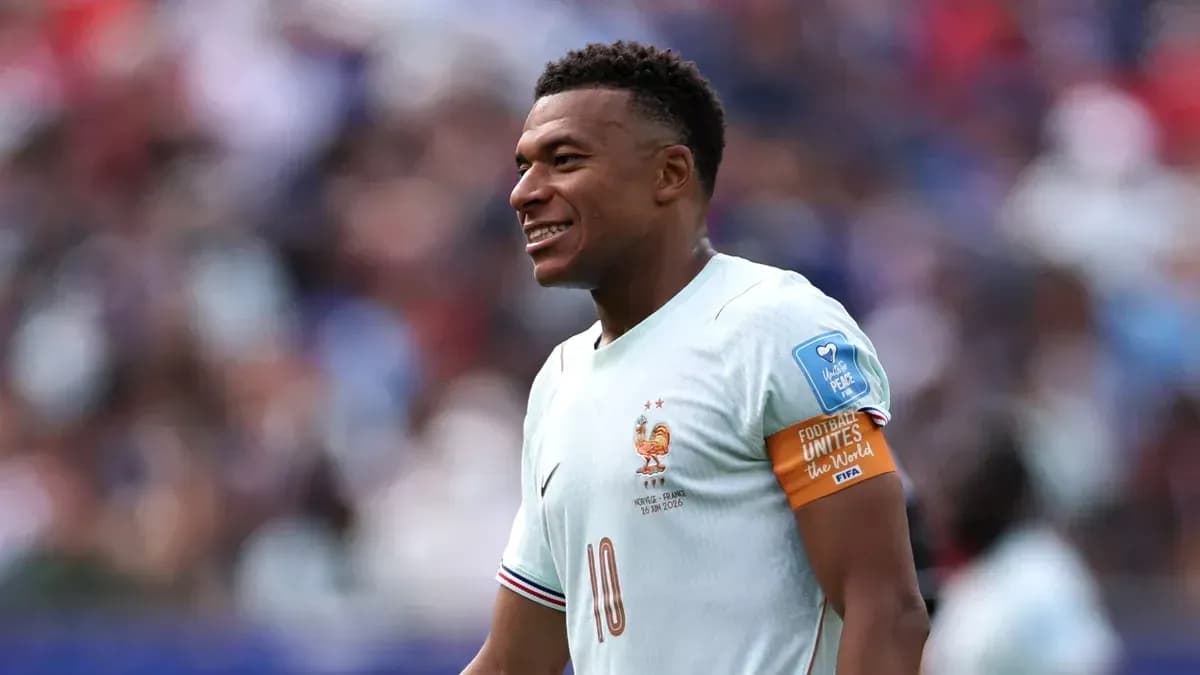
Mbappé almost claimed an early headline when he rattled the underside of the crossbar after just 21 seconds, but his influence faded. By half-time, he had registered the fewest touches of any French outfield player. It was a reminder of France’s 2022 quarter-final against England, when the focus on Mbappé allowed Antoine Griezmann to orchestrate everything around him.
In Boston, Dembélé took that conductor’s baton. He drove at defenders, stretched the pitch, and finished with the cold efficiency of a centre-forward. When Stéphan finally withdrew him on 65 minutes, the stadium rose. The job was done, the tempo dipped, and the game drifted towards its conclusion.
Stéphan later pointed to the criticism Dembélé has faced in France, particularly around his injuries and inconsistency, as fuel for this eruption.
“Ousmane is a human being, just like anyone he can hear the criticism,” he said. “He has unfortunately had injury issues but every time he comes back harder and harder. Three goals in a World Cup game is exceptional.”
Exceptional, and potentially era-shifting for this France side.
Maignan’s moment and Norway’s calculation
Norway, for all the rotation, still had their chance to turn the night. Early in the second half, Jørgen Strand Larsen stepped up to the penalty spot with a chance to drag his team back into contention.
Maignan guessed right, plunged low, and pushed the spot-kick away. It was more than just a save; it was a line in the history books. He became the first French goalkeeper to stop a World Cup penalty in regular play since Joël Bats in 1986.
The stop underlined why many view this France team as favourites to claim a third world title. They can dazzle in attack, then slam the door shut at the other end.
For Norway, the missed penalty only sharpened the focus on Solbakken’s selection. Resting Haaland, with top spot still on the line, sent a clear message: second place and a fresher superstar for the knockouts was a trade-off he was willing to make. Haaland, level with Mbappé on four goals for the tournament, will now be expected to return fully charged next week. After this subdued display, Norwegian fans will demand it.
Doué’s late flourish and France’s ceiling
As the match meandered towards stoppage time, France controlled without over-exerting. The intensity of the first half had vanished, replaced by a side content with their work and already glancing towards the last 16.
Deep into added time, another Parisian touch added gloss. Desire Doué rose to meet a cross and looped a header over Selvik for 4-1, a neat reward for his persistence and a reminder of the depth at France’s disposal.
Three group games. Three wins. It is the first time since 1998, the year they hosted and lifted the trophy, that Les Bleus have swept a World Cup group with maximum points.
Stéphan, though, refused to be drawn into talk of destiny or revenge for the final lost in Qatar.
“This team is totally different to 2022,” he said. “More than half the squad had never played a World Cup. We can only see as the World Cup goes on, then up our level as we play strong teams. There is the offensive and defensive side, we need to have that balance, and for that we need to wait.”
Wait, yes. But nights like this shift the conversation.
France came to Boston expecting Mbappé and Haaland to define the narrative. Instead, a frequently doubted winger, long judged on what he might be rather than what he is, delivered one of the great individual group-stage performances in World Cup history.
If this is the version of Ousmane Dembélé that France can keep on the pitch, how much higher can this team climb?