.svg&w=384&q=75 "Pitchgist logo")
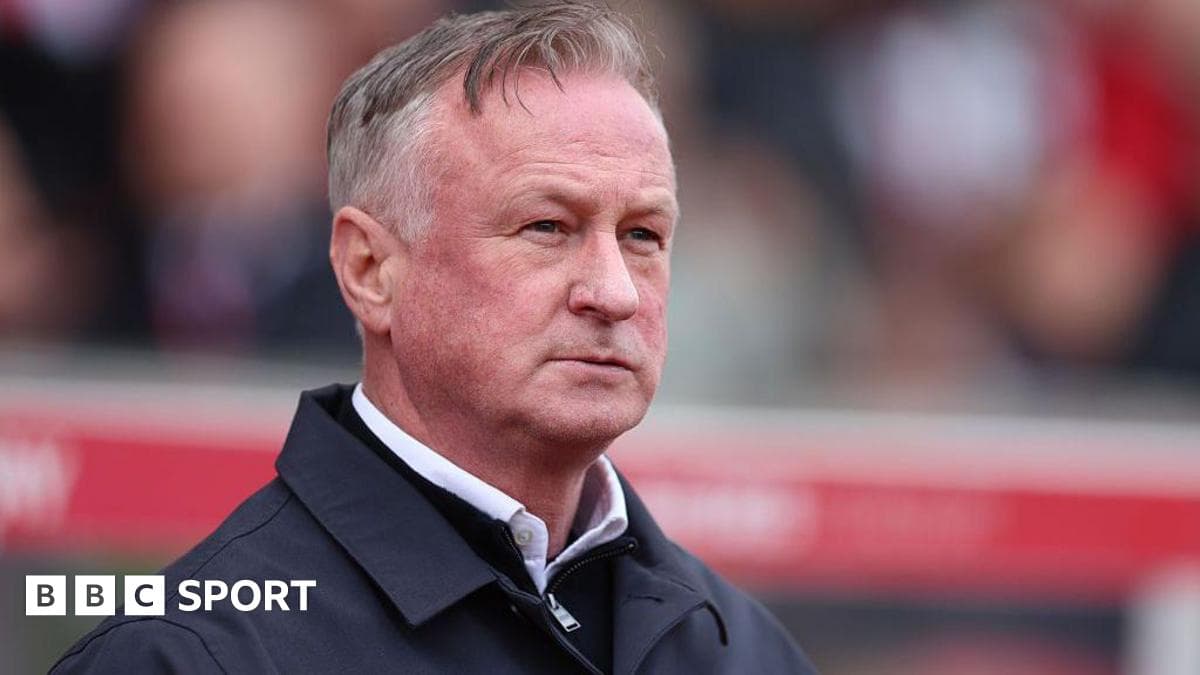
Michael O’Neill Commits to Northern Ireland Ahead of Euro 2028
Michael O’Neill has made his choice. The Blackburn Rovers tracksuit goes back on the peg; the Northern Ireland blazer stays on his shoulders.
After three intense months juggling club and country, the 56-year-old has turned down the chance to take the Blackburn job permanently and will remain as Northern Ireland head coach, committing himself fully to the push towards Euro 2028.
Club experiment over, country comes first
O’Neill arrived at Ewood Park in February as an interim fix, asked to steady a listing ship without abandoning his international post. It was always billed as a short-term arrangement, a job share running until the end of the 2025-26 campaign, but the reality was harsher: he repeatedly warned he could not do both roles long term.
On the pitch, he did exactly what Blackburn needed. Fifteen games. Five wins, five draws, five defeats. No flourish, but no collapse either. Rovers finished 20th in the Championship, survived, and avoided a relegation that would have ripped through the club’s finances and plans.
The numbers were solid enough to tempt Blackburn’s hierarchy. They opened talks. O’Neill listened. Then he walked away.
“Following discussions with the club, Michael has decided to continue his long-term commitment to his role as Northern Ireland head coach, with a focus on leading the national team towards qualification for the Uefa European Championships in 2028,” the club confirmed in a statement that underlined where his priorities now lie.
O’Neill himself left with respect and a touch of affection.
“Blackburn Rovers is a historic football club with a proud tradition and passionate supporters. I have thoroughly enjoyed my time working with the players, staff and everyone around the club,” he said, before drawing a clear line. His “long-term focus” must remain with Northern Ireland and the European Championship journey ahead.
Blackburn, left without their preferred candidate, will now start the search for a new permanent head coach, with updates promised “in due course”. They at least have time on their side before the 2026-27 season.
A second act with Northern Ireland gathers pace
For Northern Ireland, this decision lands like a statement of intent.
Across his two spells in charge, O’Neill has already reshaped the national side once. His record reads 38 wins, 23 draws and 43 defeats from 104 games, but the raw numbers never tell the full story. He took them to Euro 2016, their first European Championship finals, and now he is tasked with doing it again.
He returned in 2022 to find a team struggling under Ian Baraclough’s tenure. Results were patchy, confidence thin. They missed out on Euro 2024 and this year’s World Cup, yet the squad that has emerged under O’Neill’s second reign looks younger, sharper, and far more ambitious.
The evidence came in March, in defeat. Northern Ireland’s starting XI in their World Cup play-off loss to Italy had an average age of just 22.5 – the second youngest in the country’s history since World War Two. That figure did not even include three key absentees: Conor Bradley, Dan Ballard and Ali McCann. Factor them in and the age profile barely shifts, a sign of just how high the ceiling is for this group.
The Irish FA knows it. “We are delighted Michael has decided to stay on as Northern Ireland manager. He has built another exciting squad of players and we now look forward to building on this momentum as we plan for both the Uefa Nations League campaign this autumn and the subsequent qualifiers for Euro 2028 with Michael at the helm,” read their statement.
They also know the market. With a promising young squad and a manager who had already made them competitive again, the Northern Ireland job would have attracted strong candidates had O’Neill walked away. Instead, there will be no upheaval before the Nations League kicks off in September.
Clarity at last
This decision has not arrived without tension. In March, when asked about his future, O’Neill spoke of “returning to the status quo” for Northern Ireland’s June fixtures, hinting he would revert to a country-only role. By April, he admitted a decision was still pending. That wobble set alarm bells ringing among supporters who had seen him transform their fortunes once before.
Now the uncertainty is over. O’Neill can throw himself into the international calendar without distraction; Blackburn can plan for a future without him.
The immediate focus is clear. Northern Ireland face two June friendlies – Guinea in Cadiz and France in Lyon – a valuable testing ground for a squad still learning its craft. Then comes the Nations League, where O’Neill’s side have been drawn into Group B2 alongside Hungary, Georgia and Ukraine.
These are not glamour fixtures, but they are the kind that shape a team’s identity. Hard away days, tactical battles, the sort of nights where a young group either grows up or gets exposed. O’Neill has always thrived in that space, building cohesion over cycles rather than chasing quick fixes.
Belief returns
For Northern Ireland fans, the relief is obvious. The manager who delivered their modern golden summer in 2016 is staying to oversee the next phase. The foundations are already in place: a youthful core, a more attractive style, a squad that has begun to believe it can go toe to toe with stronger nations.
O’Neill’s choice closes one door in Lancashire but swings another wide open in Belfast. He has turned down the weekly rhythm and relative security of club football to chase something rarer – the chance to lead his country back onto the European stage, this time with a new generation at his back.
The question now is not why he stayed. It is how far this young, fearless Northern Ireland side can go with him locked in for the journey to Euro 2028.