.svg&w=384&q=75 "Pitchgist logo")
Mexico's World Cup Journey: Aguirre's Farewell and Young Talents
The wait has lasted generations. The demand has not changed.
Mexico arrive at this World Cup carrying the familiar weight of a nation that no longer celebrates simply getting out of the group. That is the minimum. Topping the group is the real target, a route that might delay a collision with the tournament’s giants until the last 16. Anything less will feel like a step backwards for a team that has lived too long with its own round‑of‑16 ghost.
Aguirre’s last stand
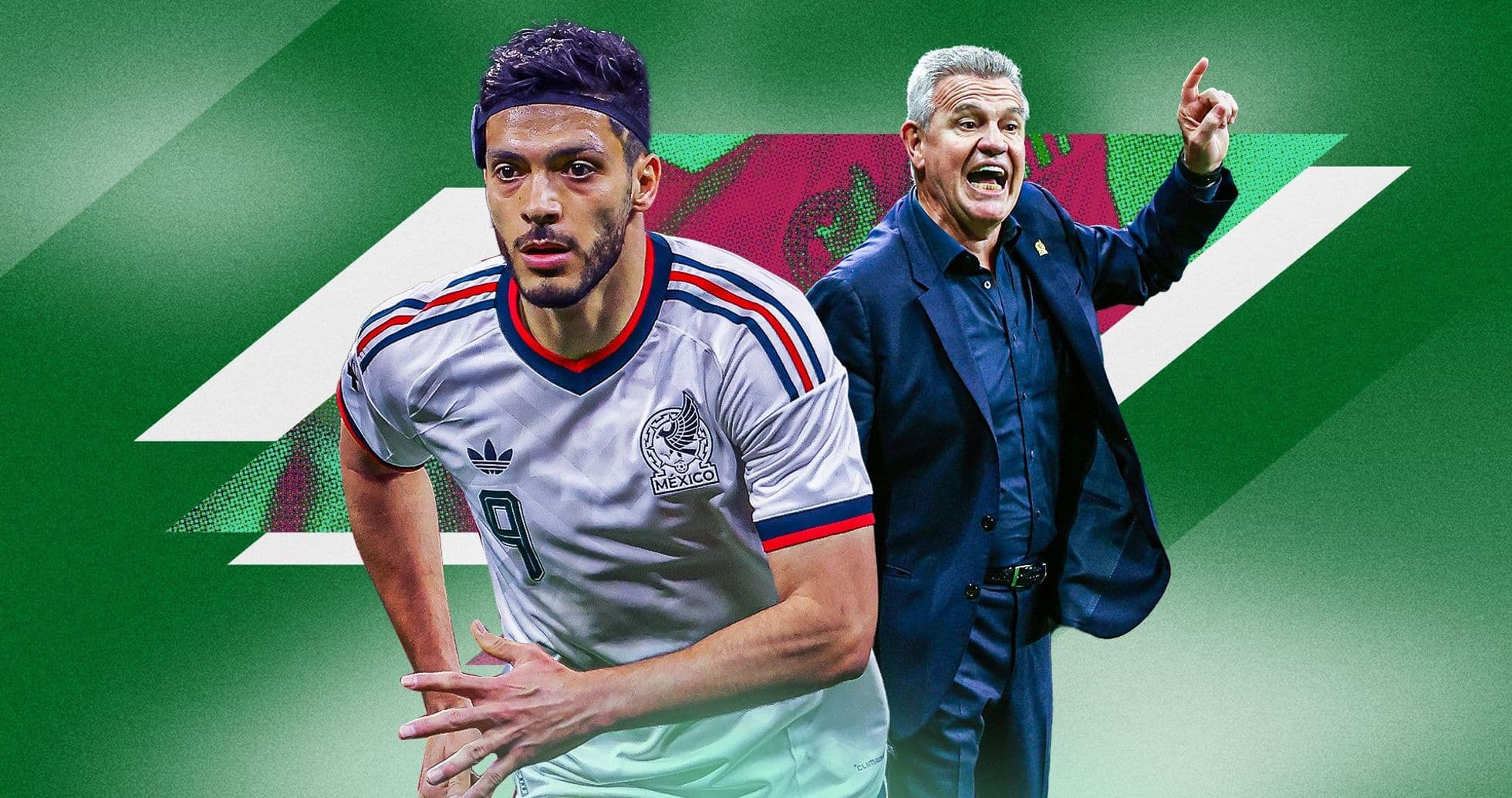
On the touchline, a familiar figure returns for one last mission. Javier Aguirre, ‘El Vasco’, leads El Tri for a third World Cup campaign, knowing he will hand the job to his assistant Rafa Marquez when it’s over. It gives this run a clear edge: this is a farewell tour with no room for sentiment.
Aguirre’s record speaks loudly enough. Two-time Gold Cup winner. Serial firefighter at club level. But at home, his name still divides opinion. Mexican fans have long bristled at his conservative streak, at the functional, risk-averse football that often smothers the flair they crave.
He has doubled down on what he trusts. Liga MX forms the spine of this squad. Long before the domestic season wrapped up, the league had already supplied a dozen players to the preliminary camp. Only later did the foreign-based contingent fold in. For Aguirre, the familiarity of the domestic core is a strength, not a limitation.
Steel at the back, questions in the middle
If Mexico are to go deep, their centre-backs will have to carry them. Johan Vasquez and Cesar Montes give El Tri a sturdy, composed axis in defence, the kind of pairing that can absorb pressure and keep games tight when the margins shrink.
Ahead of them, the picture is more intricate. Alvaro Fidalgo offers control and passing range, the metronome who can set the tempo. Alongside him, 18-year-old Obed Vargas is expected to shoulder responsibility well beyond his years, injecting legs and energy into a midfield that must both protect and create.
Then there is Edson Alvarez. The captain has battled through an injury-hit campaign but still stands at the heart of this team. His presence alone changes Mexico’s posture: he screens the defence, snaps into tackles, and brings a snarling authority that has been missing when he is not there.
Not everyone has made the cut. Big names from recent cycles – Diego Lainez, Chucky Lozano – have been left out. Aguirre has chosen structure over sentiment, balance over nostalgia.
Jimenez, the standard-bearer
Up front, there is no debate. Raul Jimenez remains the reference point.
At 35, the Fulham striker arrives as the face of this side and the man around whom the attack still orbits. Mexico lifted two trophies in 2025; Jimenez scored nine of their 22 goals. That is not a contribution, it is a dependency.
This will be his fourth World Cup. It may also be his last. Much of El Tri’s attacking hope rests on his shoulders, especially after a difficult year for Santiago Gimenez at AC Milan. Gimenez was supposed to be the heir. Instead, Jimenez still carries the crown.
Mexico have options around him, but none with his blend of experience, presence, and penalty-box instinct. If this campaign turns into a series of tight games decided by a single chance, the country will look for No 9.
Ochoa, the eternal guardian
Behind them all, the most enduring figure of Mexico’s modern era has walked back through the door.
Guillermo Ochoa appeared to have slipped out of the national-team frame, his time finally up after years of World Cup heroics. Then Luis Malagon suffered injury, and the narrative flipped. The veteran goalkeeper now stands on the brink of a sixth consecutive World Cup, a milestone that will place him alongside Lionel Messi and Cristiano Ronaldo at this tournament.
Ochoa’s presence is about more than nostalgia. He brings a calm that cannot be coached, a sense that the chaos of a World Cup night can be held at arm’s length for just long enough. For a squad blending veterans and teenagers, that matters.
A 17-year-old spark
The real intrigue lies further up the pitch, in the boots of a teenager who has barely begun his professional journey.
Gilberto Mora is 17. He has already spent more time in treatment rooms than most youngsters would dare contemplate, his recent injury ruling him out of much of the Liga MX season with Tijuana. Yet every time he returns, he seems to accelerate the hype.
Mexico do not produce many like this. An attacking midfielder who sees passes others do not, who drifts between the lines and treats the final third as a canvas, Mora is already ripping up records in Mexican football and drawing scouts from Europe’s biggest clubs. They are not just watching; they are planning.
In a team that often grinds rather than glides, Mora’s creativity could change the entire tone. He may not start every game. He may not even finish the ones he does. But when Mexico are stuck, when the patterns become predictable and the crowd grows restless, it is easy to imagine Aguirre turning to the teenager and asking him to unlock a defence and, by extension, a nation.
The same old curse, a new cast
The story, then, is familiar. Mexico arrive with a solid spine, a polarising coach, a veteran goalkeeper chasing history, and a centre-forward carrying the dreams of millions. Around them, a new generation edges into the spotlight, led by a 17-year-old playmaker whose talent has lit up the imagination.
The demand remains brutally simple: get out of the group, and then finally, at long last, step beyond that round-of-16 wall that has defined an era.
If Jimenez still has one more tournament in him, if Ochoa can produce one more World Cup performance to defy the years, and if Gilberto Mora really is as special as many inside Mexican football insist, then this might be the moment El Tri stop talking about a curse and start writing something else.